
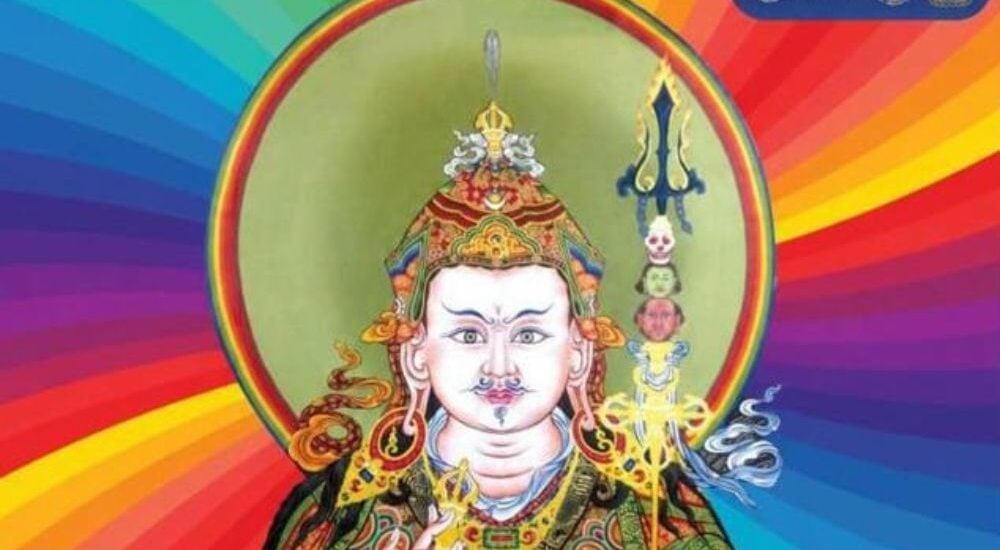
Some pilgrimages are chosen. Others choose you. When I sat down with Wangmo Dixey—Executive Director of the Light of Buddhadharma Foundation International and eldest daughter of Venerable Tarthang Tulku—it became clear that Udayagiri is not just a location; it is a living call. And that call is echoing across the Himalayas and beyond for the Third Guru Rinpoche Monlam, convening from 28 December to 5 January in the ancient “Diamond Triangle” of Odisha.
For the uninitiated, Udayagiri is no ordinary retreat center. Hidden beneath red-earth hills until its discovery in the 1980s, this sprawling 7th-century complex is the largest Buddhist excavation in the state. Yet its true power lies not in its age, but in its symbols—vajras and Tara imagery carved directly into the stupas. Scholars now believe this was a thriving hub of tantric practice, possibly frequented by Guru Rinpoche himself.
“This isn’t about sentiment,” Wangmo emphasized, her decades of lineage authority lending weight to her words. “We have held two academic conferences to substantiate these connections, and a third is planned with the IBC and Gyetrul Jigme Rinpoche in Delhi this October. The Dharma stands firm on research.”
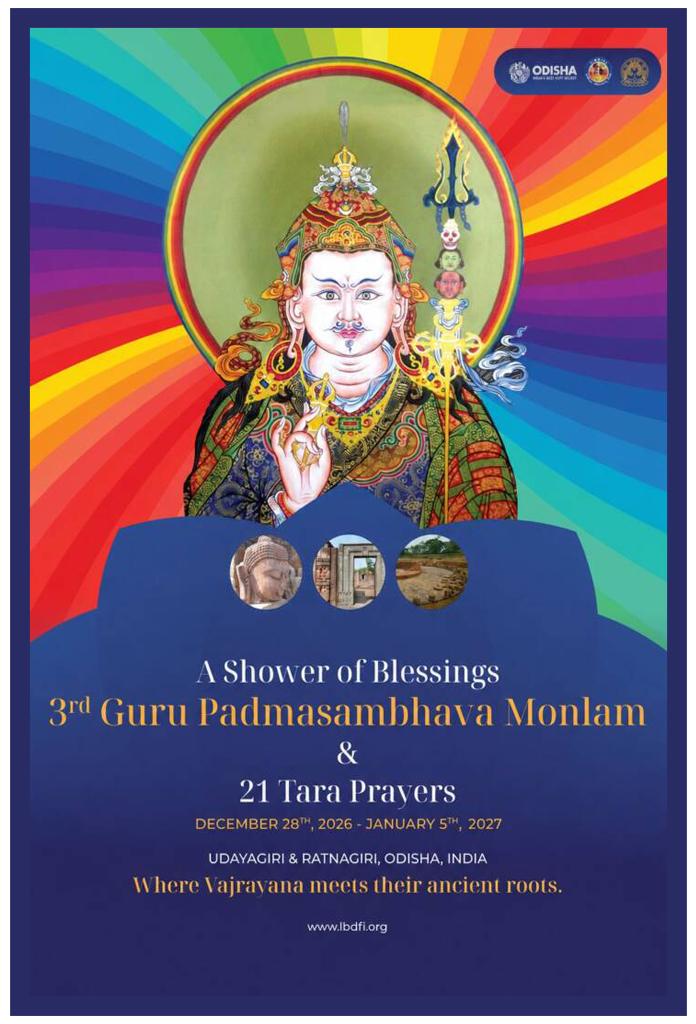
But make no mistake—this Monlam is not a symposium. It is a visceral, collective awakening. Picture this: nearly 3,000 practitioners chanting the Guru Rinpoche prayer cycle for six consecutive days, followed by transcendent Tara prayers. Last year, 2,500 gathered; this year, we aim higher. The Odisha Tibetan community has already pledged strong support, but the organizers are actively reaching out to Bhutanese Nyingma-pas, Sikkimese devotees, and Himalayan sanghas to cross-pollinate this spiritual revolution. Adding to the sacred vibration, the Tara prayers will be led by a young nun alongside other authoritative women of the Nyingma tradition—a beautiful testament to Dharma’s inclusivity.
Naturally, the logistical question arises: how to get there?
The organizers have been refreshingly transparent. While participants must arrange their own travel to India (a small offering for such immense merit), support is abundant upon arrival. Monastic attendees receive accommodation, nourishing food, and ritual texts. If you arrive by train in Bhubaneswar, buses will transport you to the Diamond Triangle: a scenic 2.5-hour journey through Odisha’s sacred geography. The site itself is less than two hours from Bhubaneswar airport, making it accessible for international pilgrims willing to take that leap of faith.
“We are not just holding a prayer event,” Wangmo told me, her eyes lighting up with passion. “We are activating a sacred site, building bridges between Bodh Gaya and Odisha, and creating a living pilgrimage circuit. “ Every chanted mantra echo will re-sanctify this soil.
The invitation extends beyond participation. In a parallel project, the foundation is crafting 200 stone Buddha statues locally in Odisha, distributing them to new temples across India. Sponsoring one of these statues offers a way to plant your roots permanently in this ancient land, even if you cannot make the journey this year.
So, what are you waiting for? The stones of Udayagiri have been silent for centuries, waiting for the right voices to wake them. When you chant the Guru Rinpoche mantra among those vajra-inscribed stupas, you are not just praying—you are reclaiming history and forging the Dharma’s future. This January, step out of the winter chill and into the blazing warmth of collective practice. Let your voice join the choir of 3,000. Let your presence consecrate the diamond land.
For details on registration, bus pickups, and the full prayer schedule, please reach out to the Light of Buddhadharma Foundation.
The journey begins with a single step—toward Odisha, toward Guru Rinpoche, toward yourself.