Tung Lin Kok Yuen 90th Anniversary International Conference: Interviews with Scholars
Held from 30–31 August 2025, the conference “Tracing the Threads – The Enduring Legacy of Buddhist Transmission” seeks to illuminate the rich tapestry of Buddhism’s transmission, offering insights into its past, present, and future trajectories. The conference was held to commemorate the 90th anniversary of Tung Lin Kok Yuen. In this series, following on from our keynote speaker interviews, we spoke to select participants of the conference.
The Buddhist-dominant autonomous republic of Buryatia, along with Kalmykia and Tuva, form three unique ecosystems of Mahayana Buddhism in the expansive Russian Federation. Buryat-born Zinaida Debenova spent the majority of her life in Ulan-Ude, Buryatia’s capital. She is a junior research fellow at the Institute for Mongolian, Buddhist and Tibetan Studies of the Siberian branch of the Russian Academy of Sciences. Her lecture was titled, “Buddhism in Buryatia: Historical Adaptation, Syncretic Practices, and the Devotional Tradition.”
Buddhistdoor Global (BDG): Let’s start with a bit about yourself and your research focus. How did you become interested in Buddhism in Buryatia?
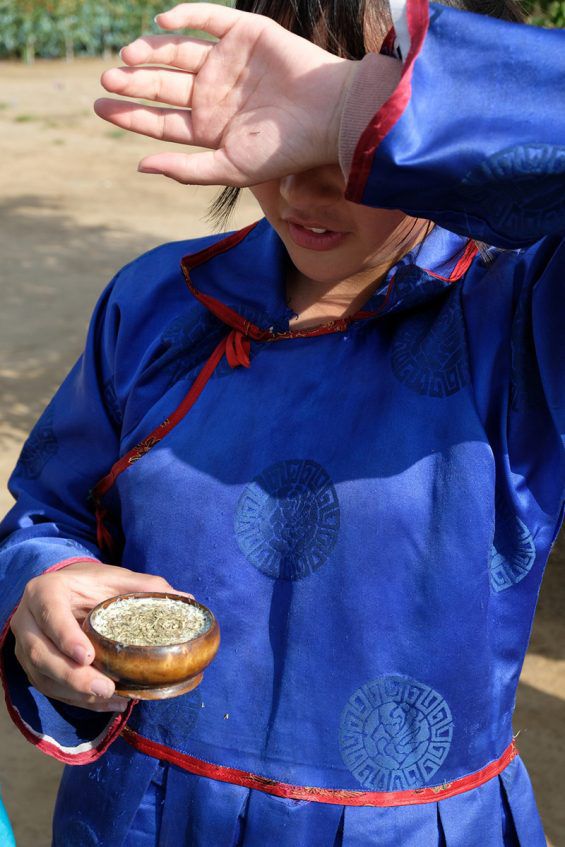
Zinaida Debenova (ZD): I do not consider myself as a religious studies scholar, but anyone who lives in Buryatia is surrounded by Buddhism on a daily basis. We grow up surrounded by its culture basically every day. It is so tightly incorporated into our everyday life, that even those friends of mine who are not really religious at some point say, “I am Buddhist.” It is like non-Catholics in Catholic countries. This makes Buddhism integral to Buryat society.
And as I started learning folklore, and in particular genealogical narratives, which is the topic of my PhD thesis, I began to see how interwoven folklore and the traditional Buddha culture are. To illustrate, there are Buryats who get interested in shamanism, because there is this tendency to believe that Buddhism is something that was brought from “outside.” So that’s why while I was doing my research, I did not pay this much attention to Buddhist elements in the genealogical narratives and in folklore. But I must say that the result of my participation in this conference and my interest in Buddhism is the direct result of our country’s increasing interest in Buddhism.
I credit much of my current career progress to Prof. Irina Safronovna, who is a Buddhist nun and a philosopher, so she approaches the subject from a point of view of from someone who is much deeper into the teachings. By the way, at this conference at HKU, she spoke on how Buddhism diffused in Russia, the challenges it faced (especially during the Soviet era), and how is it being revived.
I was participating in the International Buddhist Forum that took place in Ulan-Ude from 12th to 14th August last year. I met two participants from Hong Kong: Ven. Sik Hin Hung from HKU’s Center of Buddhist Studies, and his student, Anita. When Prof. Safronovna was invited to this conference, she kindly invited me to join her.
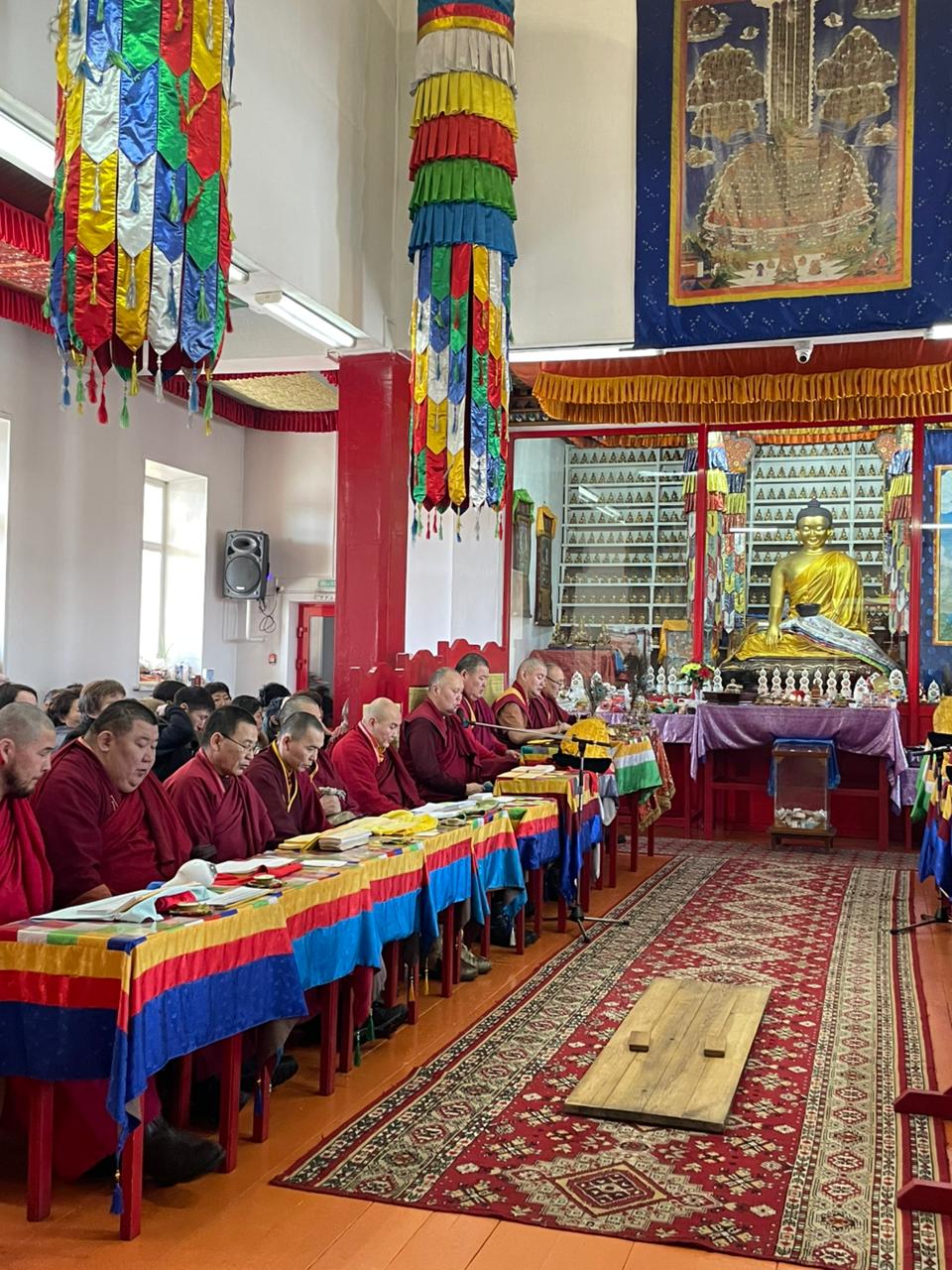
During my career, I’ve been engaged in different projects. I primarily work at the Institute for Mongolian Buddhist and Tibetan Studies in a department that specializes on translation. And therefore, while working here, I have been engaged into translation of texts from vertical, classic Mongolian script into Russian. And some of them were Buddhist texts, while one of them describes the ceremony of worshipping the deity of the mountain in one of the regions of Buryatia.
BDG: The transmission of Tibetan Buddhism to Buryatia covers a large chunk of geography across Eurasia. Is there a clear line between, you know, sort of like a pre-Buddhism and a post Buddhism era, or was It more of a gradual process that came to be acquainted with what scholars would consider shamanistic beliefs?
ZD: As you said, Buryatia is a very large piece of territory and Russia is the geographically largest country in the world. Some researchers say that the process of the nation-formation for the Buryat people is incomplete, ongoing. because this process is still going on. Because to the Buryat people, we usually mention ethnic groups that were inhabiting the territories of current Buryatia.
The term “ethnic Buryatia” or “historical Buryatia” refers to an even broader piece of land, because those groups ethnically related to the present people of Buryatia were inhabiting like certain parts of Irkutsk Oblast, which is west to the contemporary republic of Buryatia, and Zabaikalsky Krai to the east. During the Soviet Union, these territories were unified under the territorial name of the Buryat-Mongolian Autonomous Soviet Socialist republic, before being split up. There are also Buryats that inhabit modern Mongolia and Inner Mongolia in China.
In Buryatia, it is said that the Buryats to the east of Lake Baikal, closer to Mongolia, are predominantly Buddhist. But the Western Buryats that live on the other side of Lake Baikal, much further from Mongolia, predominantly practice shamanism and Christianity. My family would call themselves Western Buryats, and you could tell from both my name and surname, which are more “Russian.” If someone has a Mongolian name or Tibetan name, they are most likely from the east.
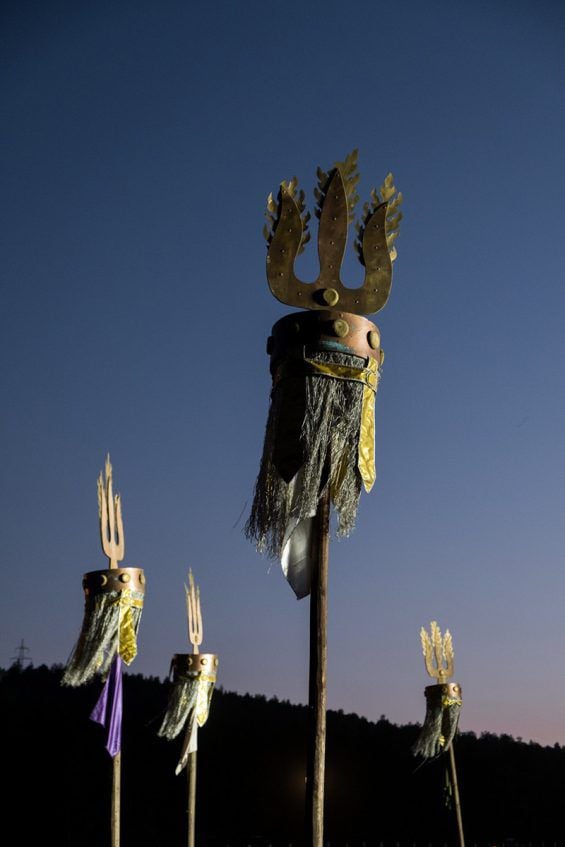
The traditional or pre-Buddhist mentality and worldview was defined by what we might call nomadic ancestor worship. This is a worldview seen through the lens of your lineage. You are not just someone, you are a descendant of the people that were before you. And all these bygone souls have direct influence on you and your choices. All the important things in life were marked by the elders of the community, not shamans. So some researchers say that this was the pre-shamanic belief. Only afterward did shamanism in the form of Tengriism developed. I try to divide ancestor worship and shamanistic beliefs, because they are not one and the same.
Shamanism is not the best term for describing the religious practices of indigenous people. But since it is a widely used term, we can call it a system of belief in which you are deeply connected to the world around you, to the spirits, to the forces of nature. And the main deity of the Mongolian shamans is the eternal blue sky or the God of Heaven, Tengri. There is also a cult of land deities. It is believed that each piece of land has a spirit usually referred to as a lord that demands worship. You need to bring certain sacrifices to these deities constantly if you want to have a good life and be in harmony with the world around you.
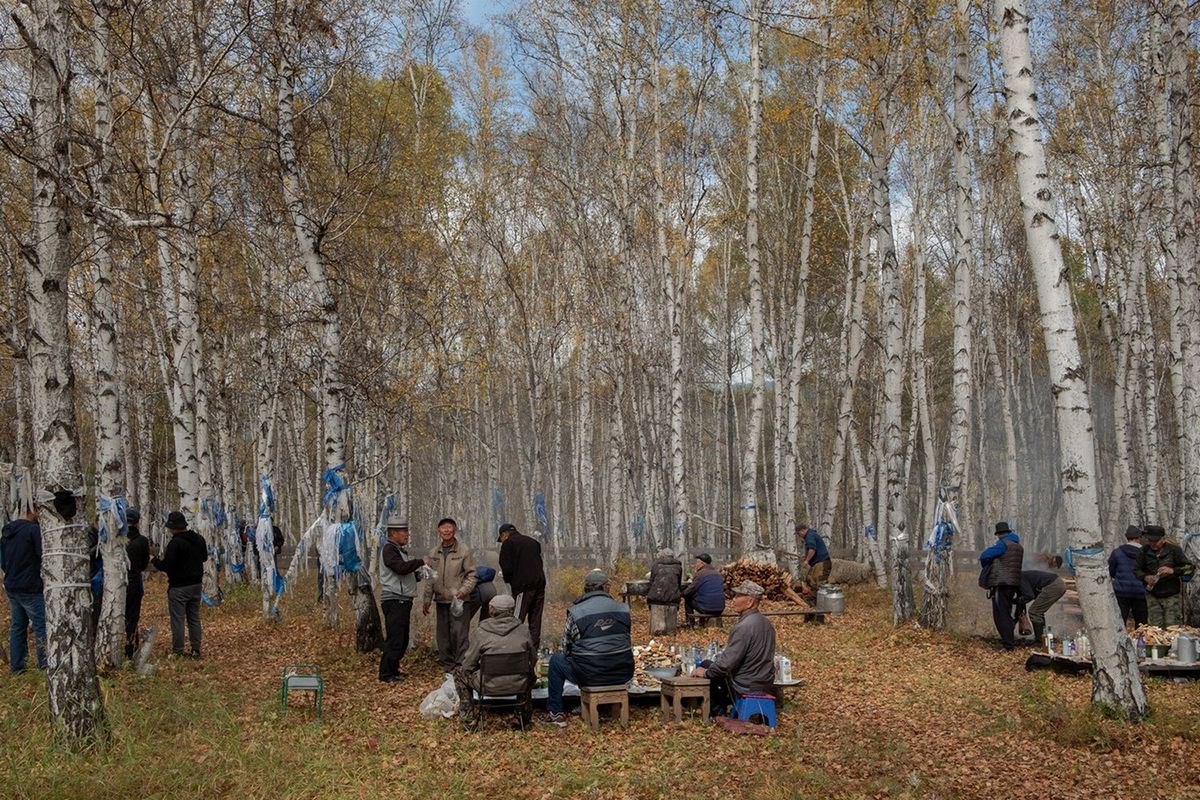
Prof. Irina uses the terms “low syncretism” and “high syncretism.” In this context, Buryatia’s situation of a lower syncretism because the local religious beliefs did not reshape the new religion of Buddhism drastically. Buddhism was preserved but became enriched by a local culture. So usually it is manifested through changes in the rituals and ceremonies. For example, the pre-Buddhist “lords of the lands” get Buddhist names, and it’s said the deities took refuge in the three treasures and want to be worshipped in a Buddhist manner. For example, blood sacrifices are replaced with milk or packaged food.
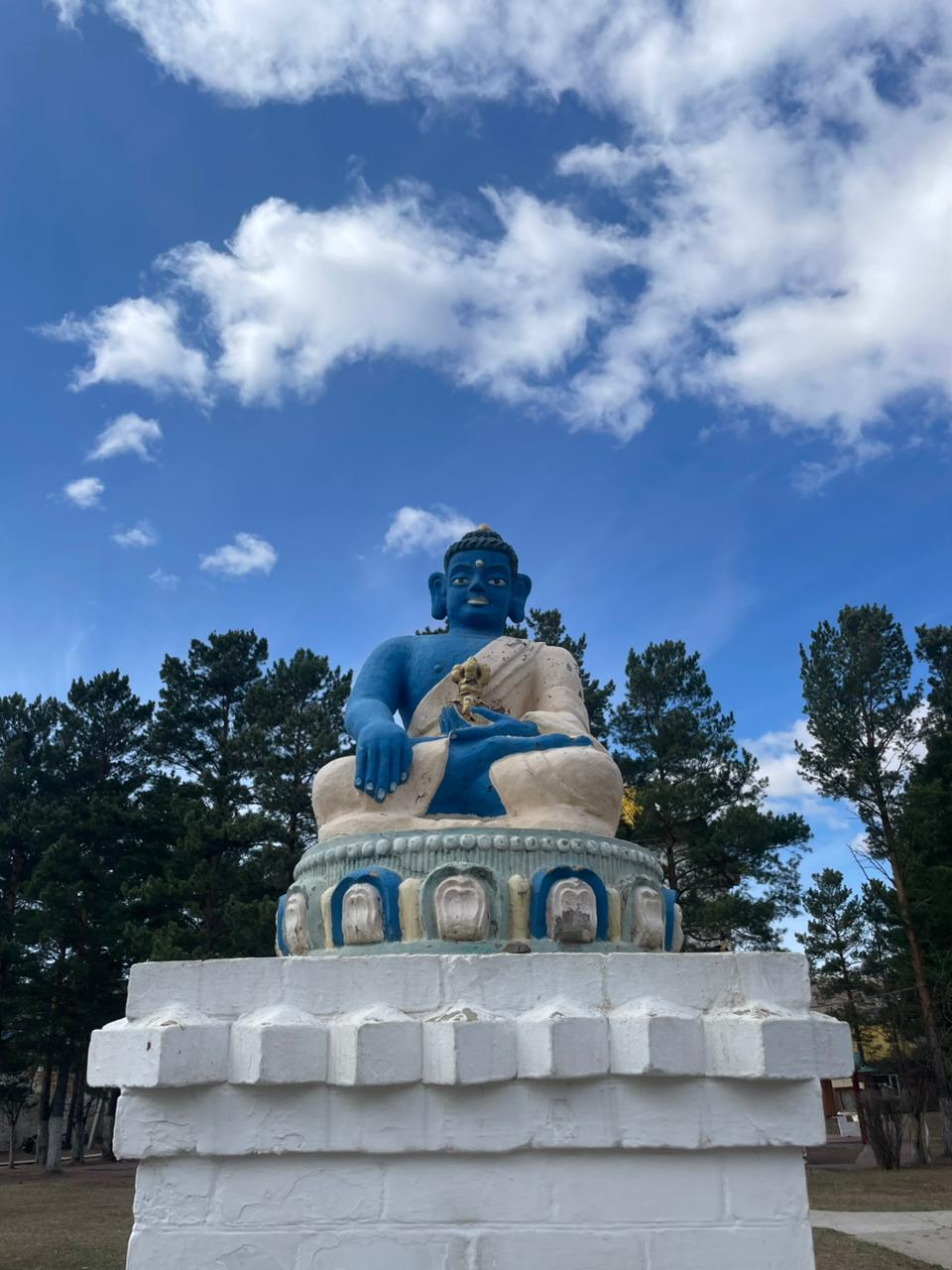
This syncretism is also vividly represented in how the lama, or guru, came to take on different roles aside from merely teaching. At some point, lamas started functioning as shamans. So they were providing services like divination, prophecy, astrology, and so on. And that’s why Tibetan astrology is also quite popular among the people, especially nowadays. There has been an increasing interest in it. And so the same person might go to a temple, to a lama, then the next day they might go to a shaman or a shaman for advice.
The lama started to provide services like foretelling the health of livestock, helping people make decisions about their animals. Buddhism was in this curious position of advising nomads that would never be able to fully fulfil the precepts, especially the commitment to vegetarianism. But like with much of the Himalayan regions, there was a comfortable tension maintained.
Buddhism is one of the most tolerant faiths for intercultural and interreligious relationships. A lot of shamans actually use images of Buddhist deities and vice versa. Buddhist rituals also incorporate shamanic practices, such as making offerings to the lords of the lands and tying ribbons to mark spots of worshipping these deities.
BDG: How long has this syncretism been going on? It must have been going on for centuries and centuries. Do researchers have an estimate?
ZD: Yes, there is a system of periodization of how Buddhism got introduced. Some researchers argue that Buddhism was present in the territories of contemporary Buryatia as early as the periods when these lands formed part of nomadic confederations such as those of the Xiongnu, the Xianbei, and the Rouran, which were already acquainted with Buddhism.
The active introduction of Buddhism among the Buryats was far later, during the reign of Altan Khan (1507–82). Altan Khan decided to use Buddhism as sort of a glue for his empire. Nomadic people are usually really hard to control, with certain aspects of nomadic lifestyle making it difficult to create a large cohesive state. Buddhism was seen by Mongolian rulers as a way to consolidate people, to help them have a common ground. The princely lamas of Tibet supported this, of course, so the nomadic people of Mongolia and modern Buryatia converted to Buddhism with the help of political forces.
What I find interesting is how ancestor worship is key to pre-Buddhist belief and how it contradicts karma and rebirth, two key Buddhist teachings. Yet they were incorporated into Buryat Buddhism. There is also traditional narratives in Buryat literature that mentions the lineage of Tibetan kings and other personalities from Mongolian chronicles. These are attempts to tie Buryatia closer to Tibet and Mongolia.
In the past there was real tension between traditional beliefs, Christianity, and Buddhism. But nowadays it is much less contradictory and far more harmonious. My family continues to celebrate ancestral ceremonies at certain times of the year, but my mum will continue to go to Buddhist temples.
BDG: After the destruction wrought during the Soviet period, would you say this sort of resurgence of interest in preserving Buryat culture or heritage is specifically to do with Buddhism? Or is there a syncretic quality to Buryat culture?
ZD: I believe there has been a boom in people getting more involved, who exhibit an interest to preserve and continue the traditional ways. But this can mean different things to different people. For some people, to be Buddhist means to get back into shamanism. So there’s that reconstructionist movement as well. The revival of shamanism is really prominent on social media like Instagram, who we could call influencer shamans. There are Buryats who moved to the US, and they have been carrying out special ceremonies online, promising that participants will be blessed by their power. Sort of like, “I will speak to your ancestors and I will ask them to protect you. I will deliver your message if you pay me.” Wrapped up in all this is an interest in Buddhism, though it manifests in different ways according to the influencer shaman.
Also, public discussions around cultural appropriation could be interesting. Nowadays if there is some artist or a musician that uses elements of Buddhism in, say, a music video, more people get really defensive about it, condemning it as not correct and improper. I suppose we are getting protective about it.
BDG: Could you explain a little bit about the paper you presented at HKU?
ZD: I tried to describe this current situation of Buddhism in Russia, and the distinction between Western and Eastern Buryats. And then I try to analyze how Buddhism interacted with the various components I’ve shared with you and they became an important part of Buryat-Mongolian identity. Buddhism is this part of the culture that keeps them connected to the motherland. There are lots of resonant themes with homeland and yearning for connection to the past, and even about what one is authentically connected to. I think that’s a big question for many societies, but for Buryatia, this bond is particularly vivid.
BDG: Thank you very much for sharing this very fascinating discussion on Buryat Buddhism.