
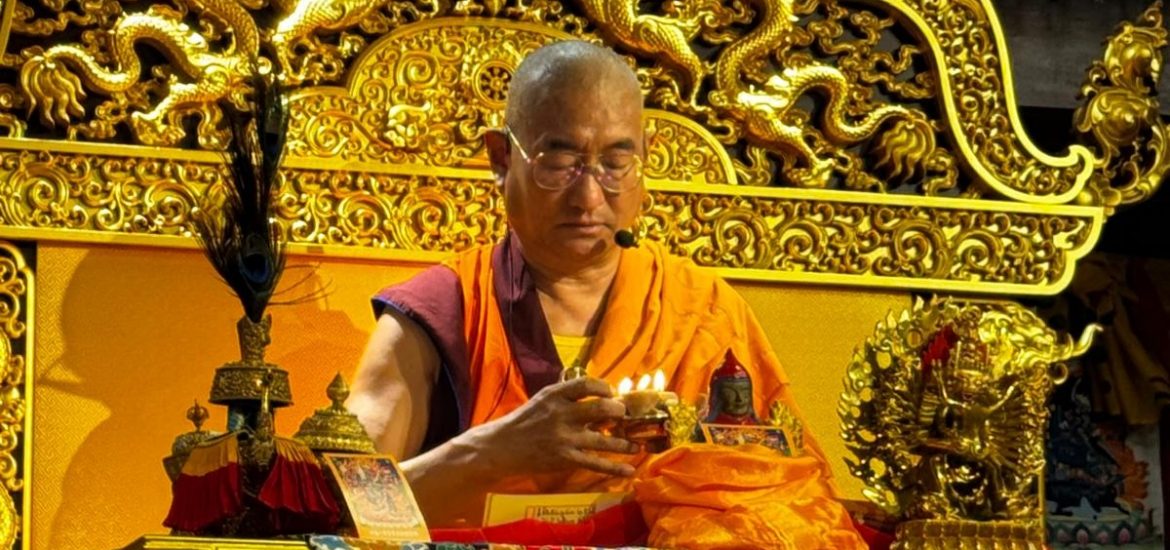
I visited Dharamshala on 3 May, where to my delight I was able to encounter my teacher, Jonang Gyaltsab Rinpoche. He and his entourage from Taiwan had been in McLeod Ganj to meet with HH the 14th Dalai Lama on the particularly auspicious date of 1 May, which marked not only Vesak but the third turning of the Dharma—the Buddha’s revelation of the Kalachakra Tantra—according to the Kalachakra tradition. Jonang Rinpoche had bestowed an award from his school, the Jonang, on the Dalai Lama.
I only caught wind of the fact that he was among the Tibetan community in-exile just before takeoff from New Delhi. While on the small and old plane to Dharamshala, I devised a set of questions centered on a seminal Buddhist work that I have drawn inspiration from since my university days: the Bodhicharyavatara or Way of the Bodhisattva by the great sage Shantideva. After we touched down, we rushed straight to the amusingly named Funky Town, where Rinpoche was waiting for us at the also-very-aptly-named Shambhala Café.
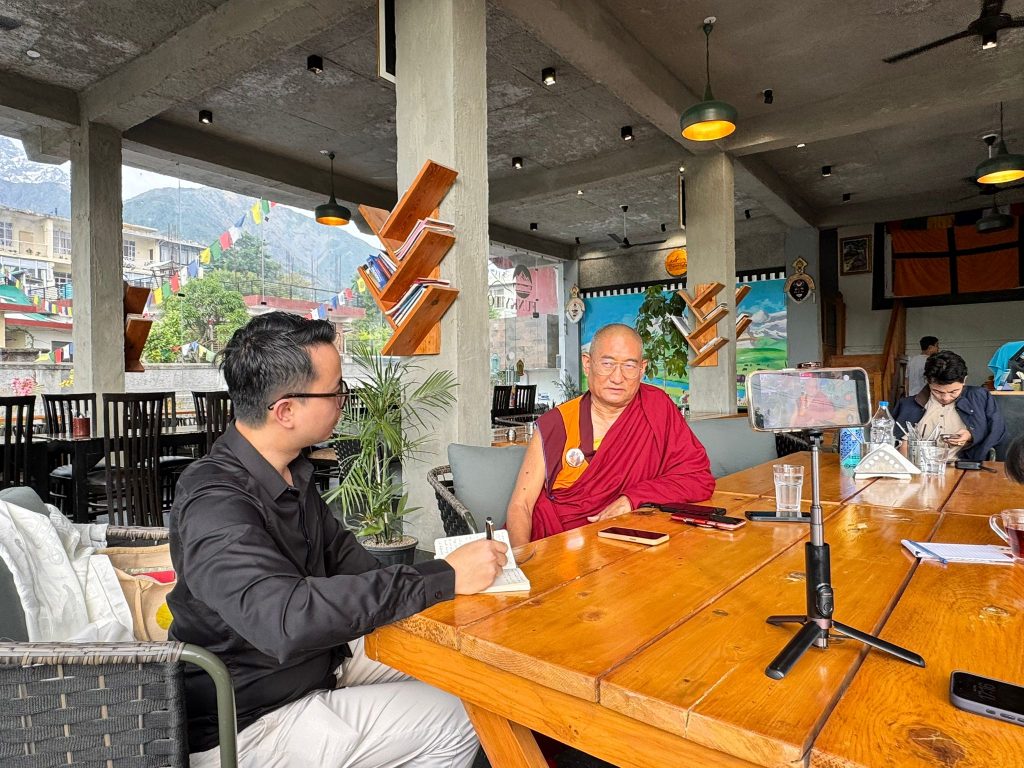
Rinpoche explained that Shantideva begins the Bodhicharyavatara with bodhicitta because it is the indispensable foundation of the Bodhisattva path, the motivation that transforms ordinary practice into a vehicle for liberation. He then described how the Six Paramitas or the Six Perfections—generosity, ethics, patience, diligence, meditation, and wisdom—must be cultivated in balance, each supporting and refining the others in daily life rather than being pursued in isolation. As per his usual habit, Rinpoche was meticulous and detailed, explaining exhaustively the nature and qualities of each perfection before insisting that as hard as they might be to practice together in balance, they must all be practiced: there are no shortcuts.
Furthermore, he gave a detailed account of the practice of exchanging self and other, showing how radical empathy arises as a logical and experiential conclusion of meditative reflection, dissolving self-centeredness and opening the heart to others.
Finally, His Holiness emphasized that whether one is engaged in pujas, devotional activities, or worldly responsibilities, the correct attitude is to hold wisdom and compassion as guiding principles, ensuring that even the pursuit of personal goals is aligned with the Bodhisattva’s vow to benefit all beings.
Related posts from Tea House
The Dalai Lama and the Jonang Gyaltsab Rinpoche Reunite at Thekchen Choeling