
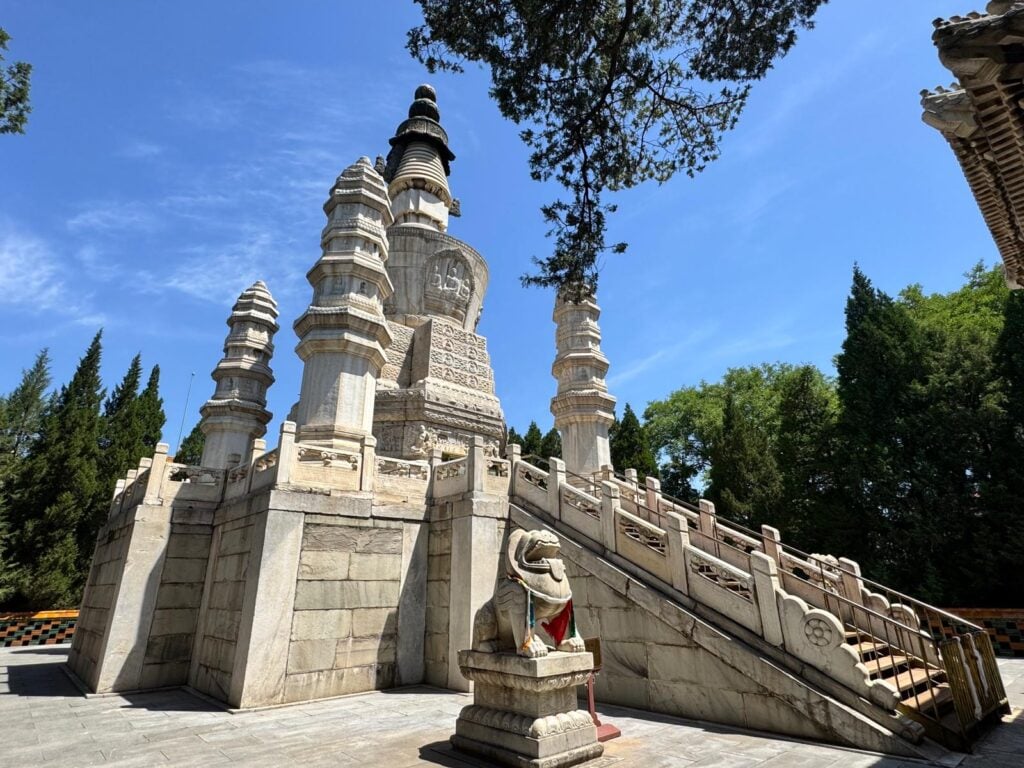
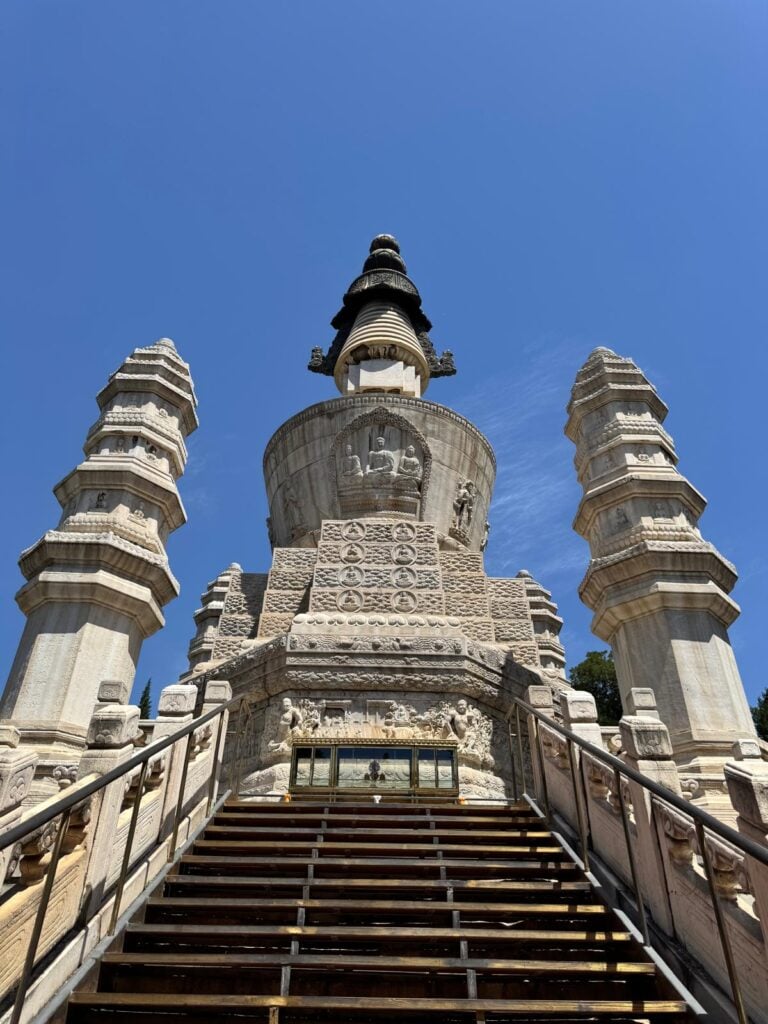
It started in Beijing, during an exclusive, closed door visit to the Xihuang Temple. The temple was built in 1652, under the orders of the Shunzhi Emperor, for the 5th Dalai Lama, the temporal ruler of Tibet. The temple later became the seat of the 6th Panchen Lama, who died of smallpox on his journey to see the Qianlong Emperor. The Qianlong Emperor erected this Huasheng Pagoda in tribute to the Panchen Lama in 1782.
My guide was Prof. Kirill Solonin of Renmin University, the global Xixia authority. He told me: “Of course, the stupa is most important, because it represents the Buddha himself.” Standing there, a sense of euphoria welled up in me. Dry summer wind brushed against my face as I stood in awe of the stupa built by one of my most revered Chinese emperors, who according to Dr. Solonin, modelled the stupa’s layout after Samye Monastery.
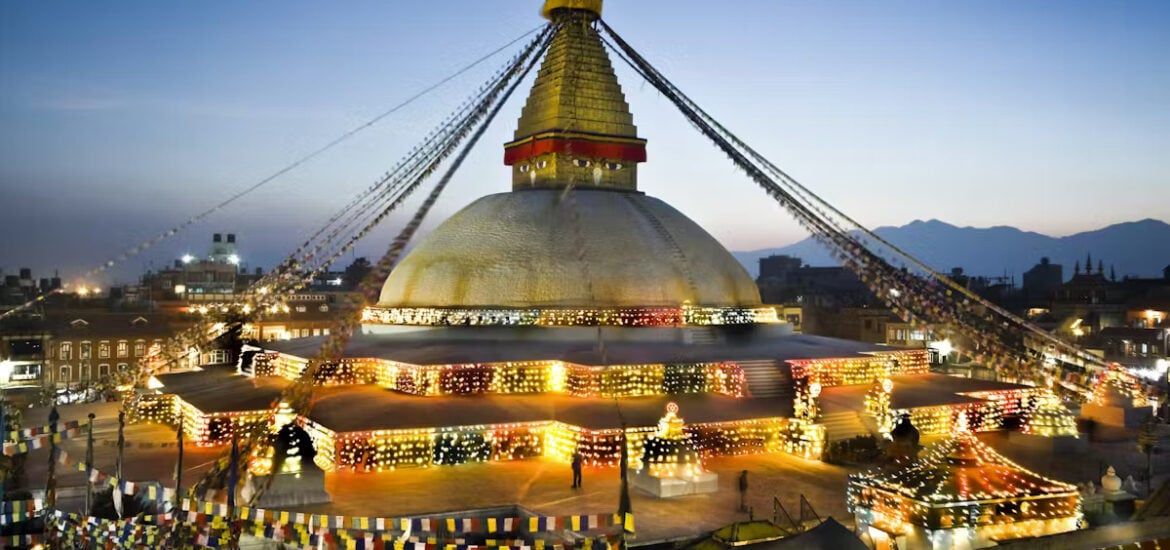
That moment reminded me of the first time I met my dear friend Khandro Bum in Nepal. She suggested that I walk ten times around the Boudhanath Stupa before she would meet me at the iconic Shambala Cafe. Ten full circumambulations: nearly four kilometers of slow, mindful steps. By the time I finished three rounds, I found myself lost in a trance. Time just seemed to snap at a finger. Then I felt filled with deep compassion, and the mantra filled my chest: Om Mani Padme Hum. That experience sent me searching for the most important stupas I have crossed paths with.
Stupa touring is not tourism. It is walking meditation with a cosmic purpose. For Buddhist practitioners, each stupa is a three-dimensional mandala: its dome is the universe, its spire is the path to liberation, and its relics are the living presence of the Buddha. Laypeople spin prayer wheels to purify karma; monastics circumambulate to break open the “dragon gate” of consciousness. This article cites the profound importance of stupa pilgrimage across Buddhist cultures, reviewing three of the most sacred I have encountered, and one miracle still to come.
Asia is a vast land where the entire continent is dotted with white domes. From the plains of central India to the frozen ridges of the Himalayas, these structures have anchored the Dharma for over two thousand years. They are lightning rods fixing sacred space to the earth, conduits between samsara and nirvana. Each one tells a story: who built it, why, and for whom.
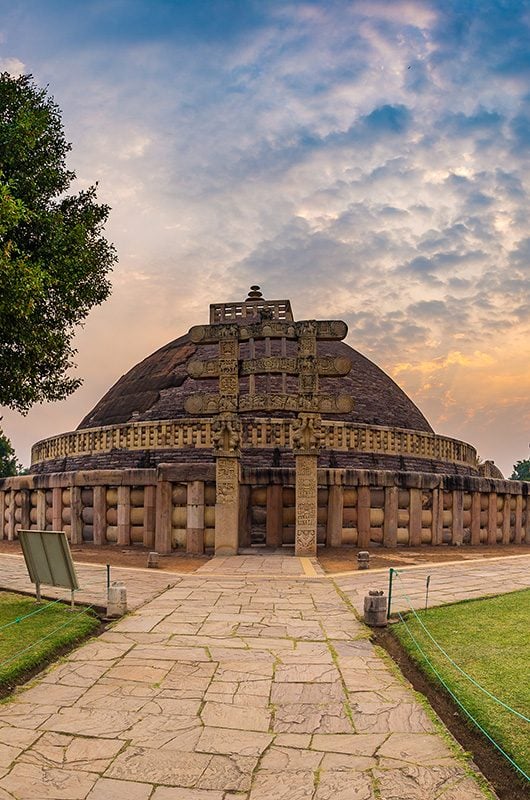
Sanchi Stupa: Ashoka’s Redemption
Sanchi Stupa, India. . . the root of it all. Emperor Ashoka the Great, after his bloody conquest of Kalinga, turned to the Buddha’s teachings and erected this vast mound, 36.6 meters wide and 16.5 meters high, in the 3rd century BC. For a Buddhist practitioner, Sanchi is our origin story. At first, it was originally a simple brick hemispherical dome built to enshrine relics of the Buddha. The structure was expanded in the 2nd–1st century BC and encircled by stone railings and four elaborately carved gateways (toranas). The site flourished from the Mauryan period through the Gupta era (5th century AD) until around the 12th century CE, making it a living monument for nearly 1,500 years. And today, it is one of the Buddhist world’s most ancient and beloved stupas.
Boudhanath: A prince’s search for absolution
Boudhanath Stupa in Kathmandu was built between the 5th and 7th century. This is the “Wish-Fulfilling Jewel” where my trance unfolded. Legend says it was built by a prince who unknowingly killed his own father, seeking a path to cleanse his sin. For Tibetan Buddhists, Boudhanath is the heart of the exiled Dharma. Its all-seeing eyes stare across the four directions. When I join the kora (the circumambulation path) I spin 108 prayer wheels, their squeaking iron mixing with the scent of butter lamps. Each step pins down the three poisons: attachment, craving, desire. And sometimes, if you are blessed, the sound of a bell—ding!—echoed through the air, and the mantra Om Mani Padme Hum arises naturally.
The Great White Stupa: A conduit to enlightenment
The Great White Stupa of Wutai Mountain was built in 1302 high up in Shanxi province. This 50-meter, Nepalese-style colossus stands at Tayuan Temple. It was expanded in 1407 and is said to enshrine a hair relic of Manjushri, the Bodhisattva of Wisdom. For Buddhist practitioners, the 252 bronze wind chimes that ring from its eaves are not decoration. They “break open the dragon gate at the crown of the head”: a fierce, sudden enlightenment. Pilgrims prostrate in the snow, their wooden blocks clacking against frozen earth. Monastics whisper Vajrakilaya mantras to dispel dark forces. This stupa is a phurbha (ritual dagger) pinning negative energies into the ground, banishing them from our lives.
Bhutan’s 108 stupas: The seed of enlightenment
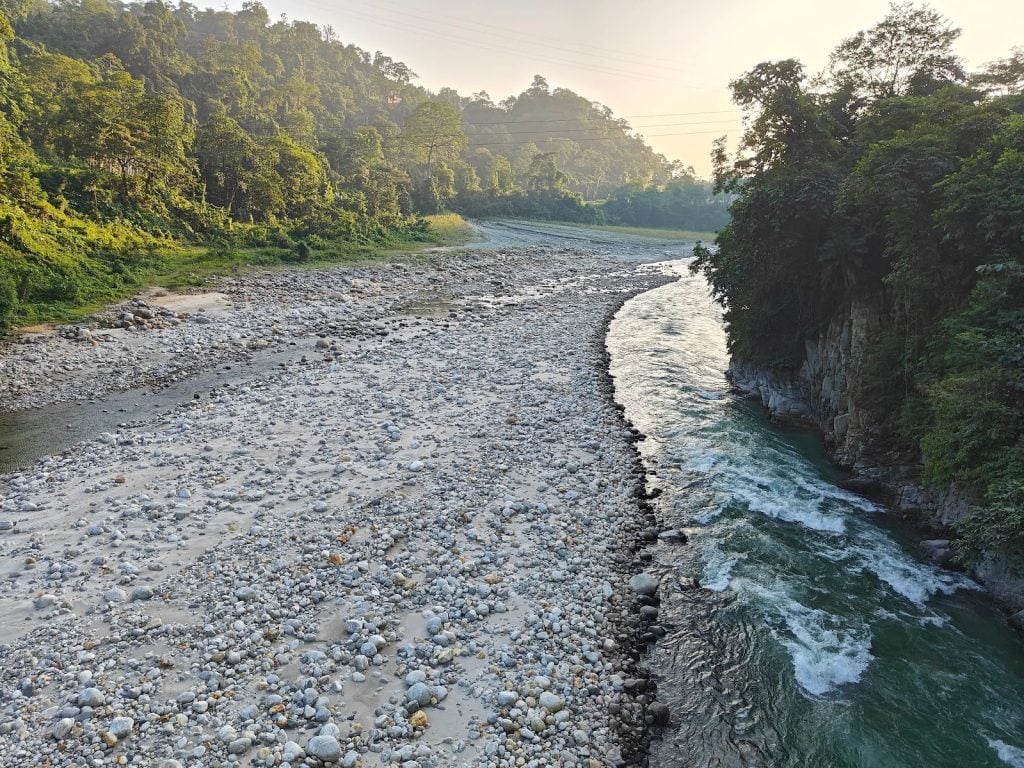
And now, a miracle in our lifetime. In Gelephu Mindfulness City, under the visionary leadership of His Majesty the 5th King of Bhutan, 108 Jangchub Chortens (Stupas of Enlightenment) will rise in a single day. Each stands 15 meters tall. Over 40,000 volunteers will pour concrete, stack bricks, and hoist spires simultaneously along the Mau Chu (Maukhola) River.
Projected to be completed on a single day, 1 November, Project 108 is a collective offering to the world and will need at least 40,000 trained volunteers working in coordinated teams across all 108 sites. I look forward to seeing this with my own eyes, standing on that ridgeline as the final Chorten is sealed, feeling the wind whip through my Bhutanese robes, and being reminded that the Dharma is not a relic of the past.
As the Buddha said in The Marvelous Dharma Discourse on the Merits of Constructing Stupas: “in that creating even a tiny stupa yields more merit than offering the entire universe to the entire monastic community.”
Related posts from Tea House
HH the Je Khenpo Directs HE Sangay Dorji to Continue Serving in Senior Monastic Role
Project 108: A Monumental Royal Initiative for the Kingdom and the World