
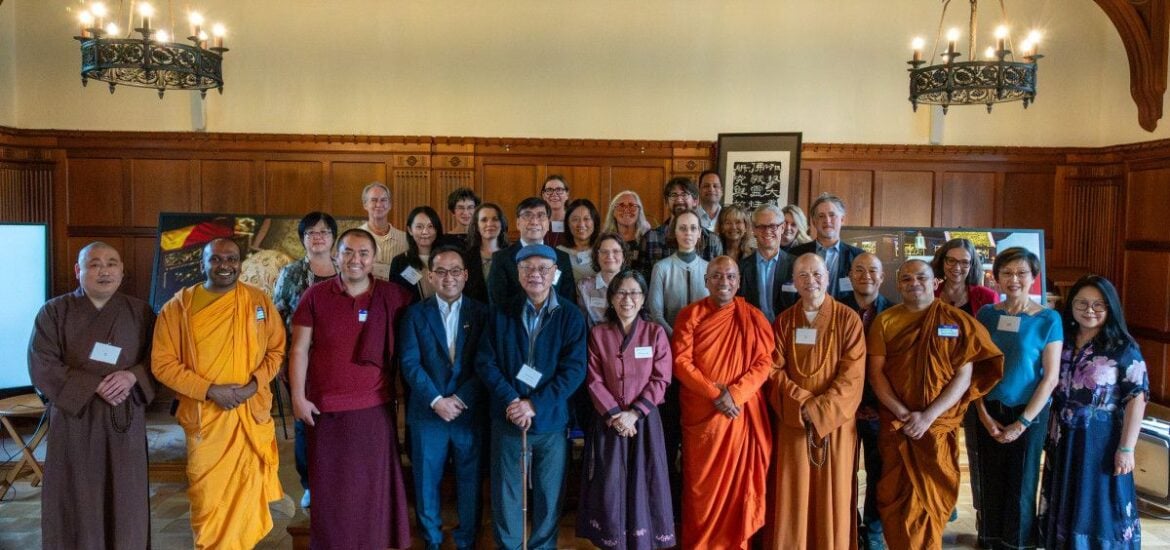
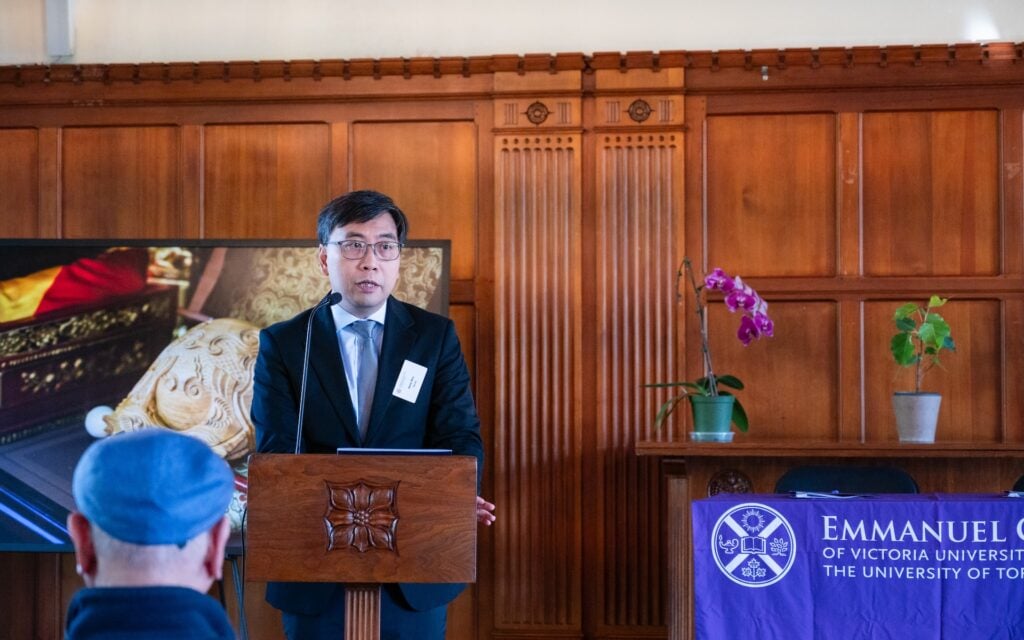
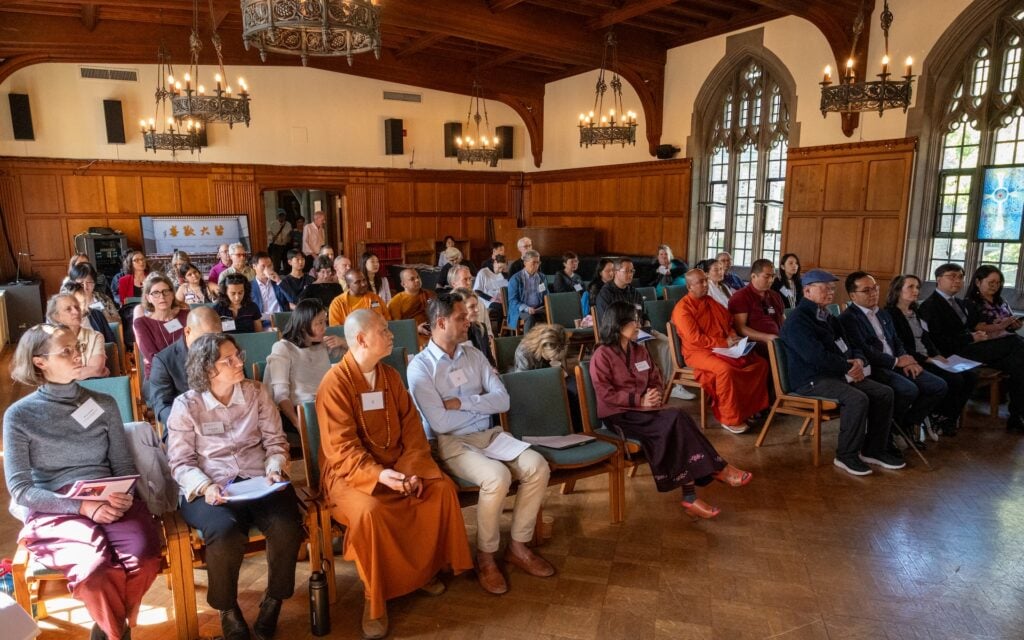
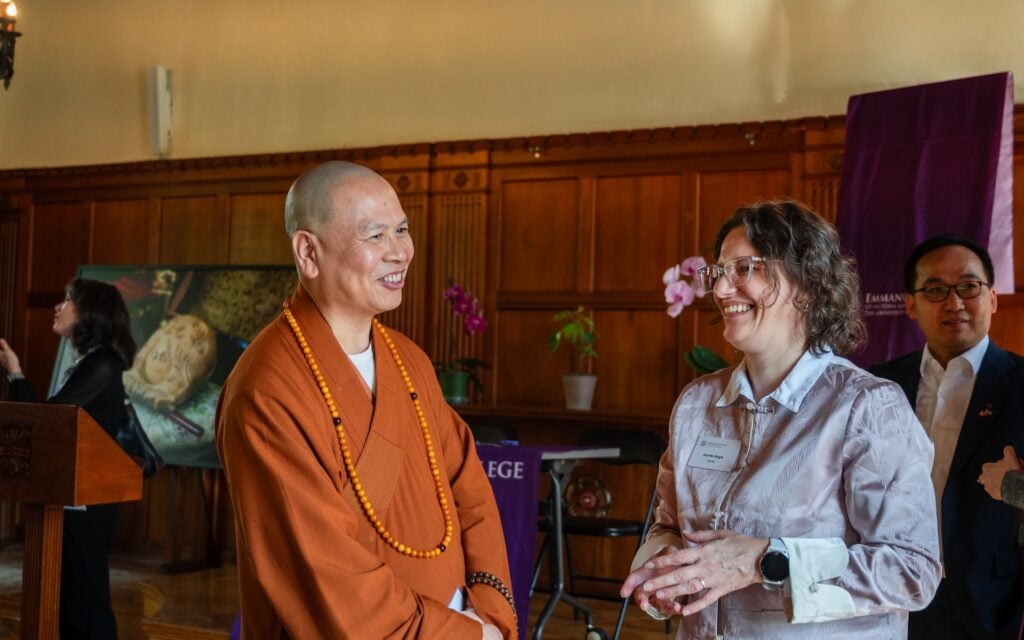
On 18 September, the Tung Lin Kok Yuen, Canada Society Research & Education Centre for Buddhist Spiritual Care and Counselling (TLKYCS Centre) opened at Emmanuel College of Victoria University in the University of Toronto. TLKYCS Centre will advance Buddhist spiritual care, counselling, psychospiritual studies and chaplaincy education through academic scholarship, professional formation, interfaith dialogue and community engagement.
Building on our previous interview with Prof. Henry Shiu, we also spoke with Prof. Jennifer Bright, Wutai Shan Ven. Dayi Assistant Professor in Buddhist Spiritual Care, who offered her comprehensive perspective on the character and mission of the new Centre.
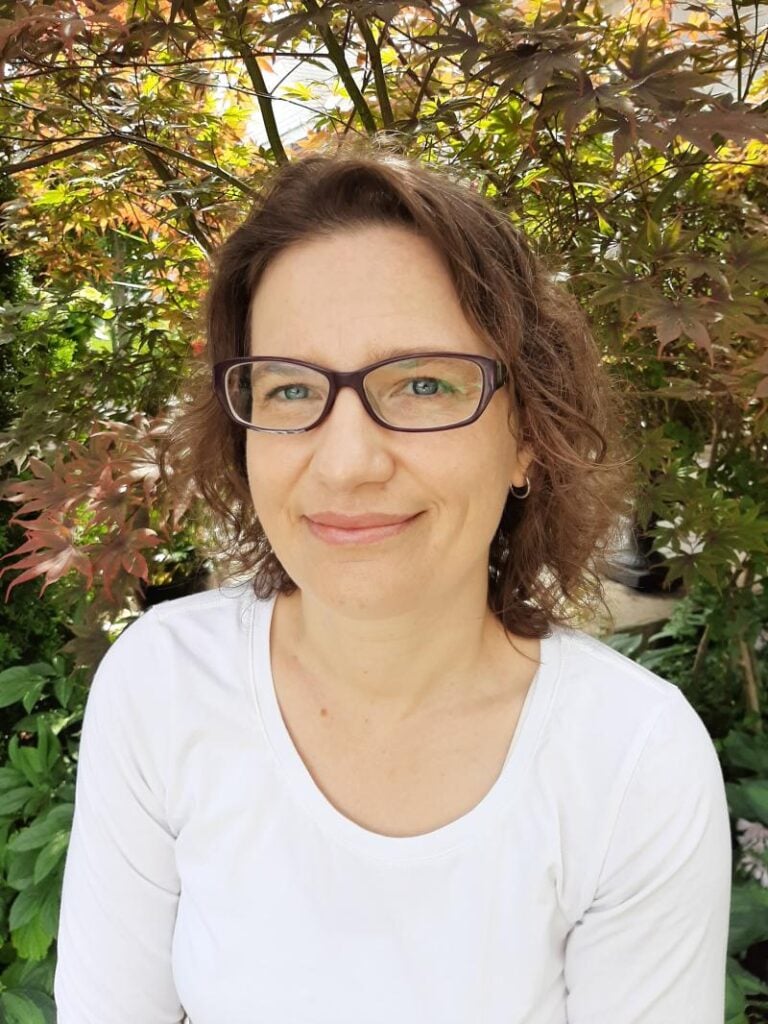
Buddhistdoor Global (BDG): From your perspective, what factors came together to elevate Emmanuel’s position as an ideal space for “Buddhist-informed spiritual care” and interdisciplinary and interfaith methods?
Jennifer Bright (JB): As Prof. Henry Shiu has already noted, the Centre emerged through a series of auspicious causes and conditions. In particular, the creation of the Wutai Shan Venerable Dayi Professorship in Buddhist Spiritual Care, the first and only position of its kind in Canada, together with the development of Emmanuel College’s Buddhist programs, especially the Master of Psychospiritual Studies (MPS) with a Buddhist focus, created an ideal environment for a research and education centre dedicated to Buddhist spiritual care and counselling.
Emmanuel College is also uniquely positioned to support the Centre’s interfaith mission. As a theological college of The United Church of Canada, Emmanuel inherits a long tradition of ecumenical and intercultural engagement. The United Church itself emerged from the union of Methodist, Congregationalist, and Presbyterian traditions and has, over time, become a place of multifaith learning and dialogue. Today, Buddhist, Christian, Muslim, and students from many other religious and spiritual traditions learn together within an interfaith community committed to decolonization, reconciliation, and relationships rooted in mutual respect, friendship, and right relations with both the human and more-than-human world.
The Centre’s interdisciplinary approach reflects the nature of contemporary theology and practical theology more broadly. These fields draw on the humanities, social sciences, health professions, and medical sciences to engage critically with the realities of human life and suffering. Emmanuel College exemplifies this approach through its commitments to social justice, decolonization, reconciliation, and interfaith learning. From this environment, research and education on topics such as Buddhist approaches to Truth and Reconciliation and the Calls to Action become possible.
BDG: Could you elaborate on the Psychospiritual Continuing Education (PCE) program and why it’s an important initiative of the Centre?
(JB): The Psychospiritual Continuing Education (PCE) program was seeded through the generous donation of Jessica Price, offered in gratitude for the continuing education experience she and her husband, Mark, received through the Buddhist College of Canada’s Compassionate Canopy Continuing Education Program at Wutai Shan Buddhist Garden, where Henry and I serve as professors.
The PCE program offers courses in Buddhist spiritual care, counselling, psychospiritual therapies, and self-care for helping and healing professionals. Most courses are offered online, while some longer workshops take place in person at Emmanuel College. Participants include graduates of our Master of Psychospiritual Studies program, spiritual care practitioners, counsellors, psychotherapists, social workers, educators, and other helping and healing professionals, as well as anyone interested in Buddhist spirituality and its application to everyday life.
Beyond specific skills, I hope participants leave with deeper relationships, stronger professional networks, and new friendships across Buddhist and non-Buddhist communities. One of our goals is to foster creative and productive partnerships among students, educators, practitioners, researchers, and community leaders committed to spiritual care, counselling, the alleviation of suffering, and the advancement of human and more-than-human well-being.
BDG: We spoke about community engagement with Prof. Shiu. What would you be your take on a successful approach?
(JB): I think success can be measured at several levels.
First, I hope to see a significant strengthening of scholarship in Buddhist spiritual care and psychospiritual therapies, including qualitative, quantitative, and mixed-methods research. The Centre can contribute to the expansion and deepening of the emerging field of Buddhist practical theology, supporting critical reflection on how Buddhist teachings, practices, ethics, and communities engage contemporary social and healthcare realities.
At a practical level, I hope we will see the growth of a well-educated and well-supported community of Buddhist spiritual care practitioners, psychotherapists, counsellors, and clinical supervisors who can serve Buddhist communities with competence and integrity. These practitioners should be equipped not only with sound educational resources and clinical skills, but also with the capacity for Buddhist theological reflection and ethical discernment within healthcare and mental health settings.
More broadly, I hope the Centre contributes to protecting freedom of religion in Canada by helping ensure that Buddhist patients, families, and communities have access to appropriate religious and spiritual care when they need it, while supporting the same commitment for people from other faith traditions.
Ultimately, the measure of our success will not simply be the number of courses we offer or events we host, but whether these efforts genuinely nourish participants, strengthen communities, and help us better understand and respond to the needs of both Buddhist communities and the wider human and more-than-human world.
BDG: Finally, what of the challenges facing Buddhist spiritual care and counselling, and how would you address them?
(JB): Buddhist theologies and religious practices have influenced Western psychotherapies for decades, and this has only accelerated with the widespread adoption of secularized forms of Buddhist mindfulness practices. Yet Buddhism, understood on its own terms and from within Buddhist theological traditions, offers far richer resources and often profoundly different perspectives on what it means to be human, to suffer, to heal, and to live in relationship with one another.
One of the greatest challenges, and opportunities, facing the field of Buddhist spiritual care and counselling is moving beyond a narrow focus on mindfulness to engage more deeply with the breadth of Buddhist traditions. Buddhist teachings offer distinctive understandings of the self, emotions, ethics, relationships, and spiritual development that can enrich contemporary approaches to spiritual care, counselling, and psychospiritual therapies. For example, the Buddhist understanding of what we might call “emotions” differs significantly from many normative Western assumptions, and these differences invite fruitful reflection for approaches such as Emotion-Focused Therapy and other therapeutic modalities used in spiritual care and clinical practice.
For me, an important part of a decolonial and de-secularizing approach to Buddhism is recovering those aspects of Buddhist life that have often been overlooked or devalued in contemporary Western understandings of Buddhism, including faith, devotion, ritual, prayer, and spiritual community. Buddhism is not simply a philosophy, a way of life, a rational science, or a collection of meditation techniques. It is a living religious tradition with rich theological, ethical, ritual, and contemplative dimensions that continue to sustain communities around the world.
Just as strengths and weaknesses are two sides of the same coin, so too are the opportunities and challenges before us. The challenge and the opportunity are to channel our gifts and energy in fellowship with others to build the fields of Buddhist spiritual care, Buddhist practical theology, and Buddhist psychospiritual therapies through education, research, and community partnerships. Through initiatives such as the International Journal of Buddhist Spiritual Care, the Psychospiritual Continuing Education program, and conferences, workshops, guest lectures, and other gatherings, the Centre is uniquely positioned to bring people together, support scholarship, and strengthen collaboration with Buddhist communities across Canada and around the world.
Related blog posts from BDG
Prof. Henry Shiu Discusses the New TLKY Centre at Emmanuel College, University of Toronto