
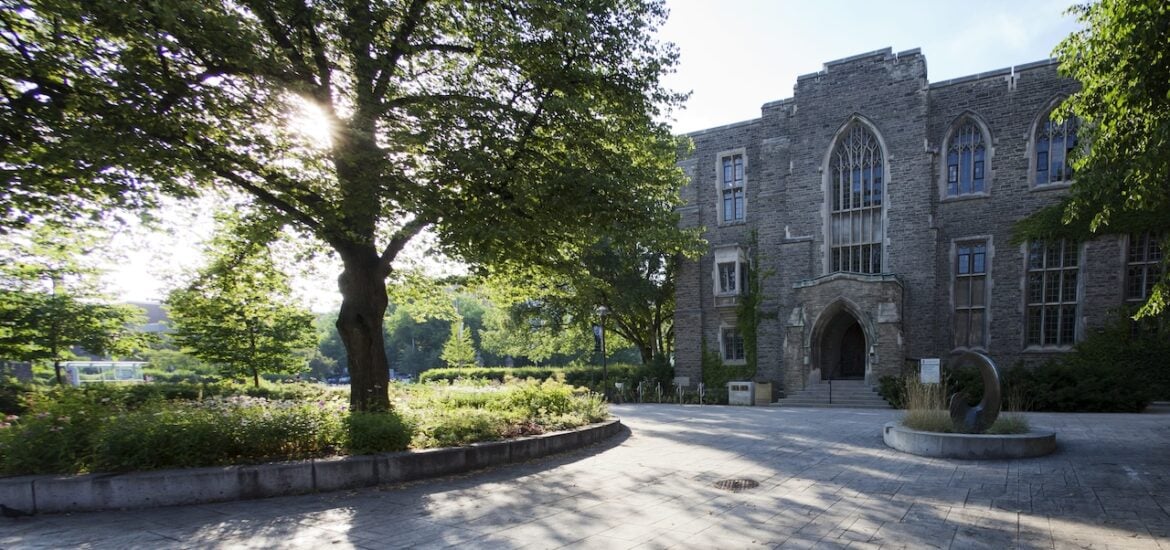
On 18 September, the Tung Lin Kok Yuen, Canada Society Research & Education Centre for Buddhist Spiritual Care and Counselling (TLKYCS Centre) opens at Emmanuel College, a federated theological school of Victoria University. Victoria University is the oldest college at the University of Toronto. TLKYCS Centre is dedicated to advancing Buddhist spiritual care, counselling, psychospiritual studies, and chaplaincy education through academic scholarship, professional formation, interfaith dialogue, and community engagement.
Prof. Lee Chack-fan, chairman of Tung Lin Kok Yuen (TLKY) in Hong Kong and director of TLKYCS, told BDG: “TLKYCS warmly congratulates Emmanuel College for the establishment of this new research center. We are honoured and privileged to be a partner and a supporter of Emmanuel College for this important new venture.
“University students (and in fact our younger generations) these days face increasing competition and pressures in developing their careers, requiring counselling occasionally in order to better manage such pressures and challenges. The University of Hong Kong, for instance, offers a Master degree program in Buddhist counselling in recent years, in order to bring such counselling services to the community. This program was quite well received. Perhaps some time in the future, we can compare notes with each other, in our collective efforts to enhance the spiritual well being of our students (and of our community at large).”
We spoke with Prof. Henry Shiu, Shi Wu De Associate Professor in Chinese Buddhism at Emmanuel College, for a deeper understanding of the Centre’s objectives and significance.
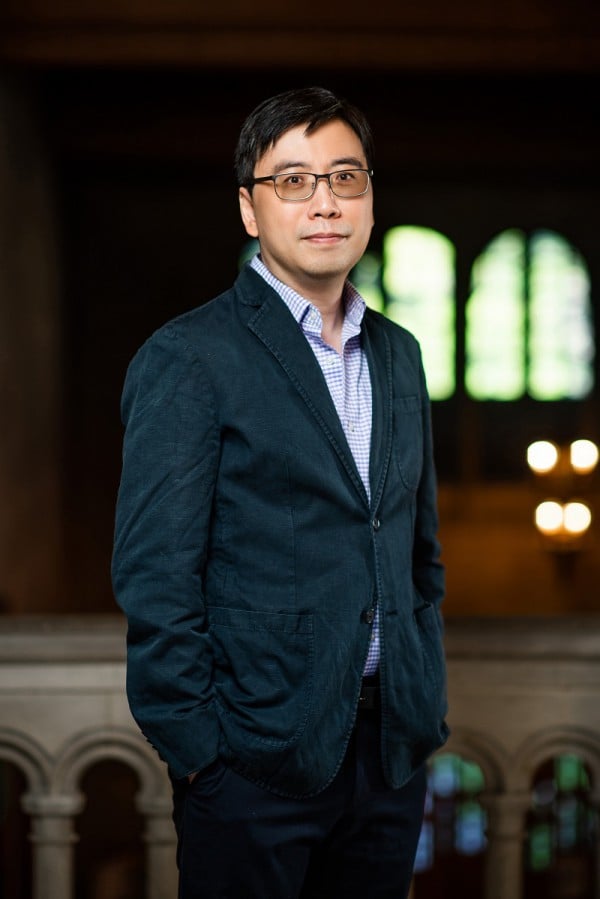
Buddhistdoor Global (BDG): How did this collaboration first germinate, and why is Emmanuel best positioned to host the TLKYCS Centre?
Henry Shiu (HS): The collaboration between TLKYCS and Emmanuel College began in 2022, when I received a grant from TLKYCS for a research project exploring Buddhist approaches to dementia care. The writing for that project will be completed this year. In retrospect, it seems quite serendipitous that our collaboration began with a shared interest in Buddhist spiritual care, which has since become an increasingly important area of our work together.
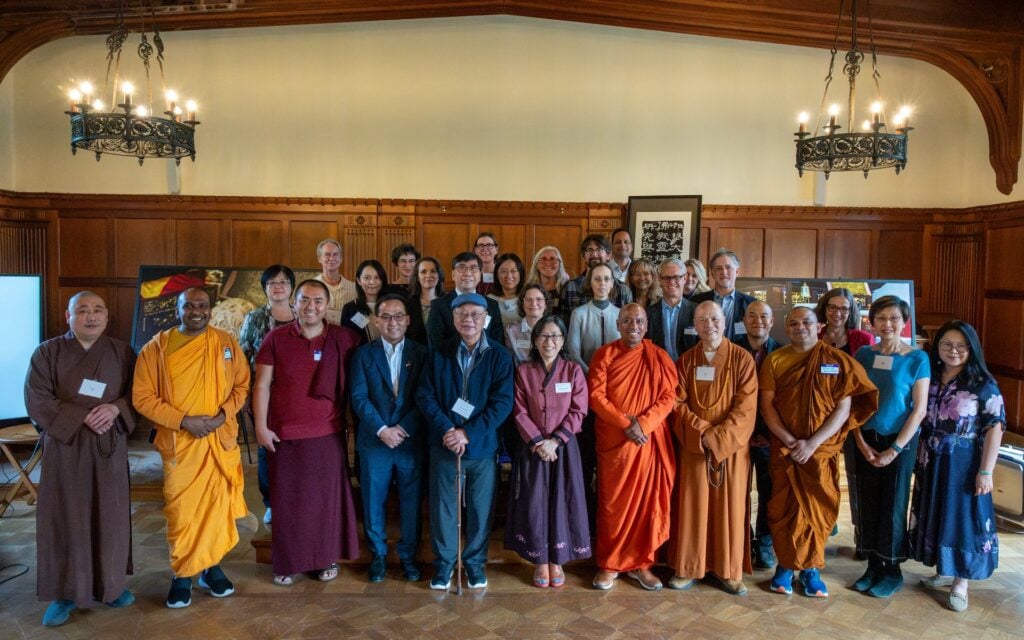
The relationship developed further in 2025, when we organized a conference on moral injury for the Buddhist Spiritual Care Educators in North America (BSCENA) group as part of the tenth-anniversary celebrations of our Buddhist focus of the Master of Psychospiritual Studies (MPS) program at Emmanuel.
Dr. Ernest Ng from TLKYCS was invited to present a paper, and the occasion gave us an opportunity to learn much more about TLKYCS and the remarkable work it has been doing in spiritual care in Vancouver. Dr. Ng brought an important perspective to our conversations. As a registered psychotherapist with Canadian Association for Spiritual Care (CASC) who has also served as a Buddhist chaplain at University of British Columbia (UBC) and Simon Fraser University (SFU), he has a deep understanding of the need for both research and education in Buddhist spiritual care.
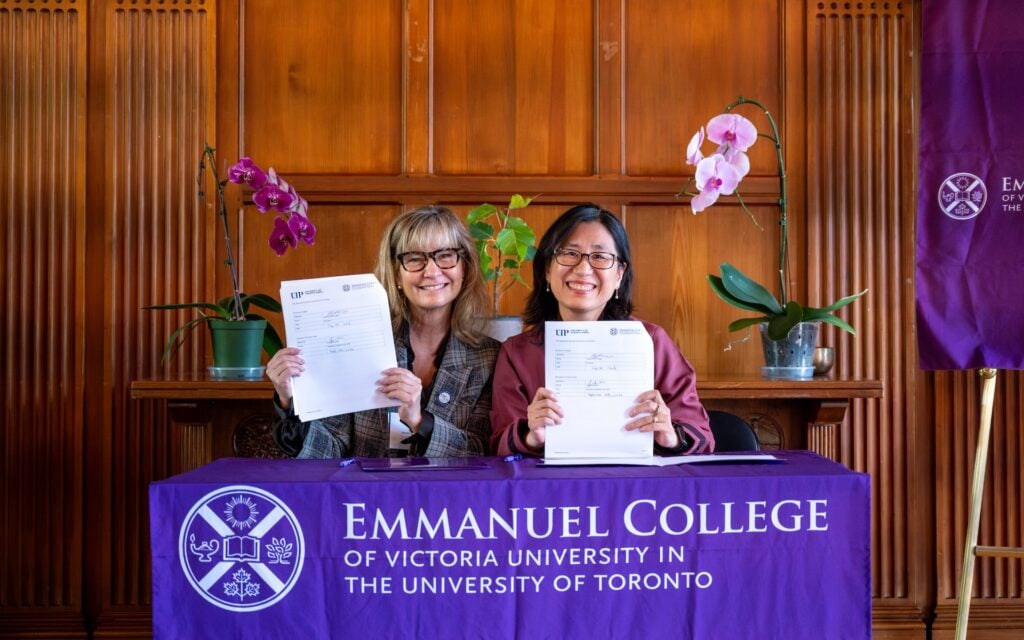
At around the same time, Emmanuel College had just appointed a new endowed professor in Buddhist spiritual care, Prof. Jennifer Bright (Wutai Shan Ven. Dayi Assistant Professor in Buddhist Spiritual Care). The timing therefore seemed especially auspicious: several developments converged in a way that made us realize that our college was uniquely positioned to make a meaningful contribution to this emerging field. Following a series of conversations, we developed a proposal to TLKYCS for the establishment of this new Centre.
We are very grateful that the proposal was so warmly received by the Board of TLKYCS, and we look forward to building on this partnership to advance research, education, and practice in Buddhist spiritual care.
BDG: What are some of the primary challenges and opportunities in fostering collaboration between researchers, clinicians, and spiritual care practitioners? How do you ensure the Centre remains rooted in Buddhist traditions while actively incorporating insights from other faiths and academic disciplines?
HS: We envisioned the Centre as both a practice-based and academic hub, which, in other words, is a forum where spiritual care providers, clinicians, and academic researchers can come together to deepen conversations about how spiritual care is understood, practiced, and lived, particularly when informed by Buddhist teachings and practices.
An important dimension of the Centre is its commitment to rigorous academic research into Buddhist texts and traditions. This helps ensure that its work remains firmly rooted in the richness and diversity of Buddhist traditions rather than treating Buddhist spiritual care simply as a set of techniques or practices detached from their broader religious and intellectual contexts. At the same time, the Centre is intentionally open to dialogue with other faith traditions, allowing it to incorporate insights from different religious perspectives as well as from relevant academic and clinical disciplines.
The Centre’s seminars and conferences provide spaces for these interdisciplinary and interfaith conversations to take place, bringing scholars and practitioners into sustained dialogue with one another. Its journal publication, International Journal of Buddhist Spiritual Care, further strengthens the research dimension of the Centre, providing a platform for scholarship that can contribute to the continuing development of Buddhist spiritual care as both a field of study and an area of practice.
BDG: Are there any general parameters of gauging the success and impact of the Centre’s work? What does meaningful engagement with the diverse Buddhist communities across Canada look like to you?
HS: The Centre also collaborates actively with the BSCENA, so that our understanding of spiritual care is not confined to the Canadian context. Through such collaborations, we can learn from our colleagues and other spiritual care providers in the United States, while also sharing with them the knowledge and experience emerging from our own work in Canada.
At the same time, we hope to extend this network further to Buddhist institutions and communities in Asia, whose experience can greatly enrich our understanding and practice of Buddhist spiritual care. Two examples are the Tzu Chi group in Taiwan, with which the Buddhist Ministry Initiative of Harvard Divinity School has already established contact, and the Centre of Buddhist Studies at the University of Hong Kong, where a distinctive approach to Buddhist counselling has been developed. These institutions operate in very different cultural, religious, and professional contexts, and we hope that by bringing these experiences into conversation, we can learn from one another and develop a richer understanding of what Buddhist spiritual care can mean in different parts of the world.
Within Canada itself, TLKYCS’s gift also creates an important opportunity to build stronger connections of Buddhists and spiritual care providers between the eastern and western parts of the country. We can learn from one another about the different pathways and forms of education available to those seeking to become Buddhist spiritual care providers, the challenges we face in our respective contexts, and possible ways of addressing them together. In my view, this is ultimately about more than the development of “spiritual care” as a professional field. It also represents an important step in the future development of Buddhism in Canada.
Buddhism should not be understood simply as an “Asian religion” or as “a religion of Asian immigrants,” but as a living spiritual tradition with the capacity to speak to contemporary human concerns and to enrich the lives of Canada’s diverse communities, Buddhists and non-Buddhists alike. The work of the Centre can, I hope, contribute to that broader development.
Related blog posts from Tea House