
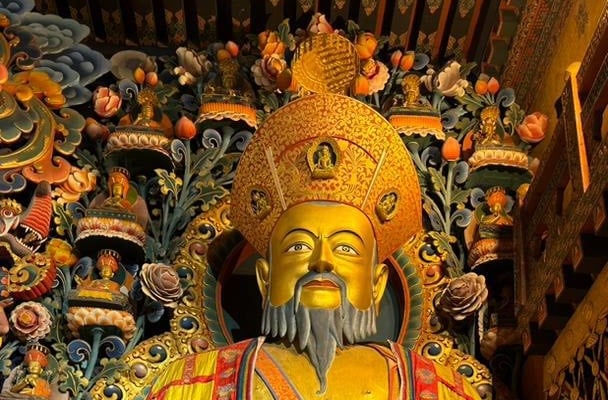
24 April 2026, marked the Tibetan calendar’s 10th day of the 3rd month. This date falls on the sacred offering ceremony commemorating the Mahaparinirvana of Zhabdrung Rinpoche (1594–1651). Zhabdrung Rinpoche is Ngawang Namgyal, the monk-ruler who unified Bhutan in the 17th century and gave it its unique system of dual government between the Je Khenpo and an earthly leader. This text from His Eminence Laytshog Lopen Sangay Dorji, translated from Dzongkar to English, describes the accomplishments of the father of the Bhutanese nation, and how he has come to be revered as not only a unifying national figure, but a very emanation of the Buddhist deities.
Zhabdrung Rinpoche’s Biography
The Deeds of Zhabdrung Rinpoche
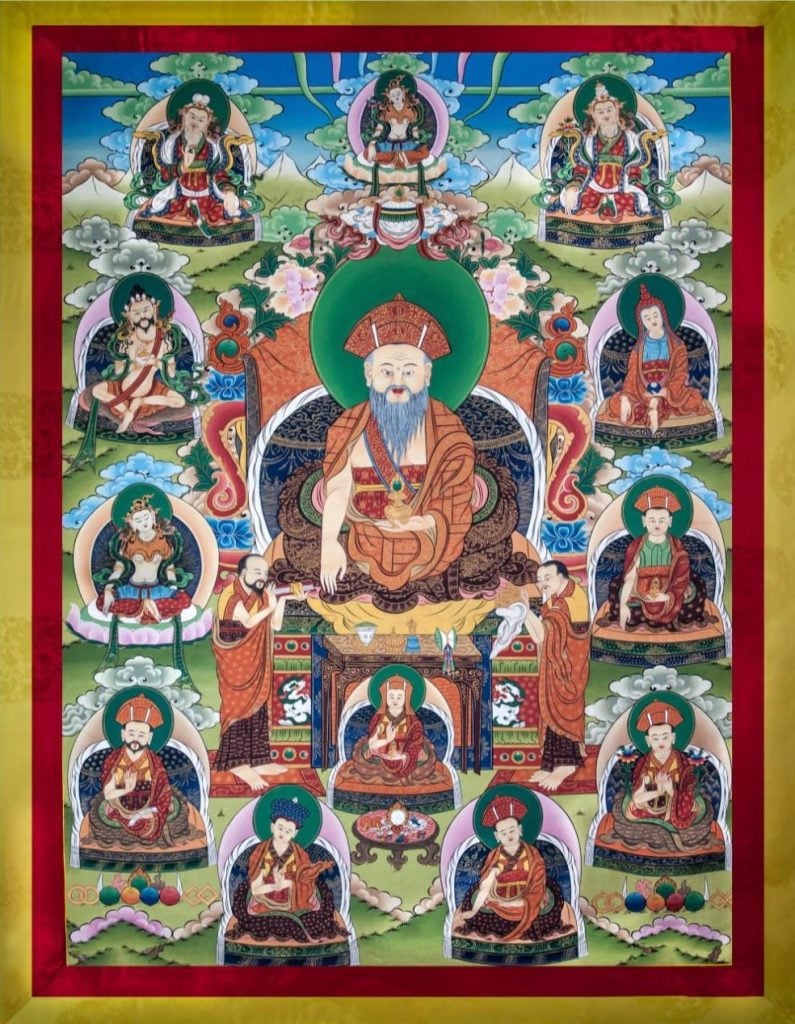
He is the Dharma King born from the collective merit of the people of Lho Mon Kha Zhi (the four quarters of the southern region). He is an emanation of Noble Avalokiteshvara (Chenrezig), also a manifestation of Vajradhara, and the great Dharma lord of the glorious Drukpa lineage, Ngawang Namgyel. As recorded in history, from the very beginning he had already realized the unshakable Dharmakaya. Yet, for the benefit of sentient beings, he displayed various nirmanakaya emanations suitable to the dispositions of beings.
Among the many manifestations recorded in his biographies:
The first emanation is Avalokiteshvara, the very essence of great compassion born from Amitabha Buddha.
The second is Rigdhen Padma Karpo, born in the land of the lion throne in Shambhala, who composed commentaries on the tantras.
The third is Songtsen Gampo, the Dharma King who ruled the snowy plateau of Tibet and later spread the Buddha’s teachings there.
The fourth is the venerable Shantarakshita, born in the east of Zahor, who subdued the enemies of wrong views and emerged victorious everywhere. When one named Dhayod Zhonnu, also known as Gampopa, was born in Tibet, Guru Padmasambhava gave this prophecy:
“I, the Uddiyana Guru, will be born in the land of Dhakla, at the place of Lhaje – this is the source of meditative development.”
Thus, Dakpo Lhaje became the sixth lineage holder, an emanation of Padmasambhava, and later appeared as Zhabdrung. In the Land of Snows, as an emanation of the thousand Buddhas, Tsangpa Gyare became the seventh.
The eighth emanation appeared in the eastern pure land of Abhirati as the bodhisattva Nangwa Düldrel. At Phula Hari, Gyalwa Kuenga Peljor became the ninth throne holder. In the famous southern land, the tenth lineage holder was Gongma Chokyi Drakpa.
The eleventh was the incomparable Kuenkhen Padma Karpo, born in the eastern Konpo Valley. After imbibing the nectar of the Dharma a hundred times, he manifested and then, in accordance with the dispositions of beings, greatly benefited the Dharma and sentient beings. Kuenkhen Rinpoche said: “Born in the lineage that is the basis of all past victors and the source of all future victors, and who is no different from the present protector – that is the Dharma lord Ngawang Namgyel.” Thus he prophesied.
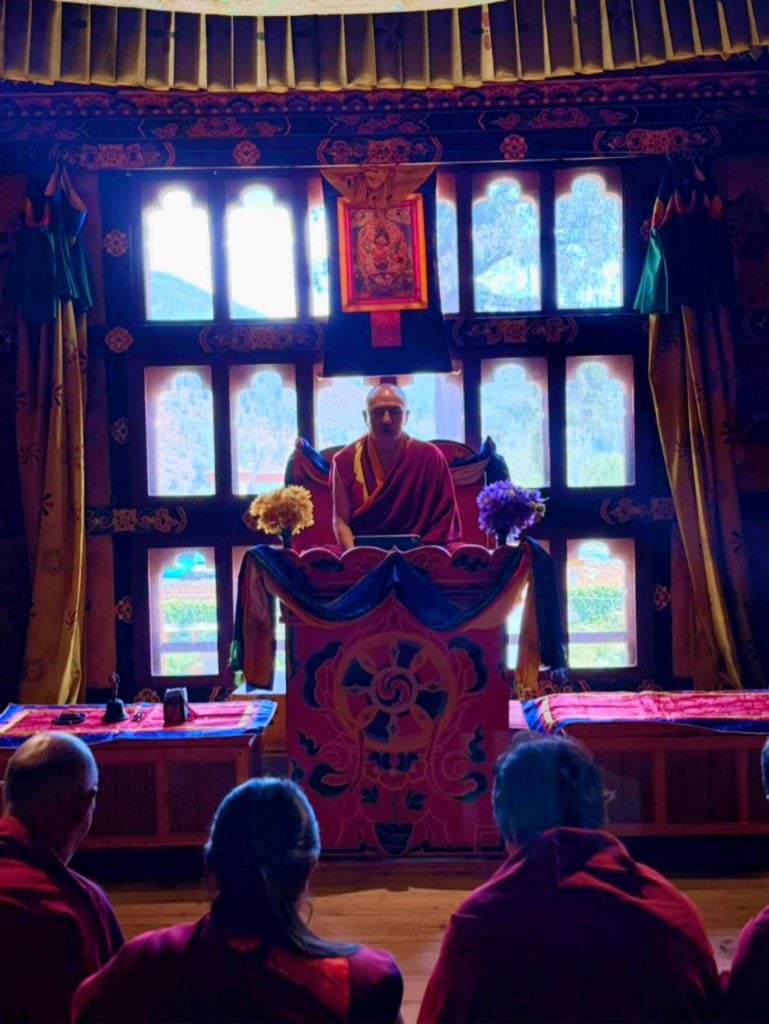
According to this prophecy, in 1594, the tenth year of the sixty-year cycle, the Wood Horse year, the twelfth lineage holder, Zhabdrung, was born amidst many auspicious signs, in the central land of Druk Jangchub Ling. His father was Tenpai Nyima and his mother was Senam Pelgyi Buthri, both descendants of the glorious Drukpa lineage. From an early age, Zhabdrung abandoned immature conduct and entered the stream of the noble ones’ way of life. He opened the door of excellent teaching, possessed the power to defeat others in debate, and had the wisdom to compile the Buddha’s words into sutras and tantras.
Gradually, he ascended the lion throne of Druk Ralung, the seat of the successive holders of the Drukpa lineage. Surrounded by great masters and disciples, his influence spread widely, and he accomplished vast benefit for the Buddhadharma and living beings. At that time, the Dharma protector Mahakala, appearing in a manifested form, prophesied that his destined land was in the south, the forested region of Namkoi Jong, and that the self-manifested Avalokiteshvara (Rangjen Kharsapani) would be regarded as the domain of the glorious Drukpa.
Uddiyana Padmasambhava prophesied: “In the south, the pure destiny—Namkhai Nyingpo—will possess the mark of ‘I’ (Nga).” Also, the Dharma lord Drowai Gongpo, in his final teachings, said: “In the future, I too will go to the south and spread the teachings of scripture and realization.”
In addition to the prophecies of the great masters, and due to the accumulation of prayers and requests, in 1616, at the age of twenty-three, in the tenth year of the sixty-year cycle—the Fire Dragon year—the great lama Zhabdrung set out for his destined southern land, formerly known as the land of fir trees. Upon reaching the northern border, he was ceremoniously received by Lama Goen Woptsho and his retinue.
When the great lama Ngawang Namgyel arrived in the south, Bhutan, the emanation of Phajo Drukgom, who was a descendant of Choeje Drukpa Kuenley’s son and an ancestor of Gyalsey Tenzin Rabgay, namely Tsewang Tenzing, offered the entire fortress and land of Tango to Zhabdrung.
Taking this as an auspicious beginning, Zhabdrung retreated into the Hayagriva meditation cave to practice Mahakala rituals and offerings. At that time, many special auspicious signs appeared in the sacred place, indicating that he would unify the entire country.
At that time, the Dharma king proclaimed: “I am the one who turns the wheel of the two systems—religion and politics—and the supreme one who bestows secure refuge upon all beings.” This is known as his proclamation of the “Sixteen ‘I’s” (Nga Chudrugma), which resounded in all directions. Zhabdrung was then twenty-seven years old.
In 1620, he established the first meditation center at Chagri Dorjidhen. To lay the foundation for the nation’s peace and tranquility, he established the first sangha order in Chagri, and created a monastic education system encompassing rituals, sacred dances, and chanting.
Subsequently, this center further developed the training systems of listening, reflecting, and meditating. Gradually, Zhabdrung personally visited the valleys of Shar (Wangdue), Wang (Thimphu), and Pa (Paro). Everywhere he went, he bestowed blessings and opened the door of liberation for the beings he met. In 1629, downstream in the Thimphu valley, he built Simtokha Sanga Zabdhen Phodrang. At that time, the Buddhadharma flourished, and his son Jampel Dorji was born. Then, Guru Padmasambhava’s prophecy was fulfilled: “On a mountain shaped like a lying elephant, one named ‘Namgyel’ will come; at the confluence of two rivers—the life-force of Druk—a fortress should be built there.”
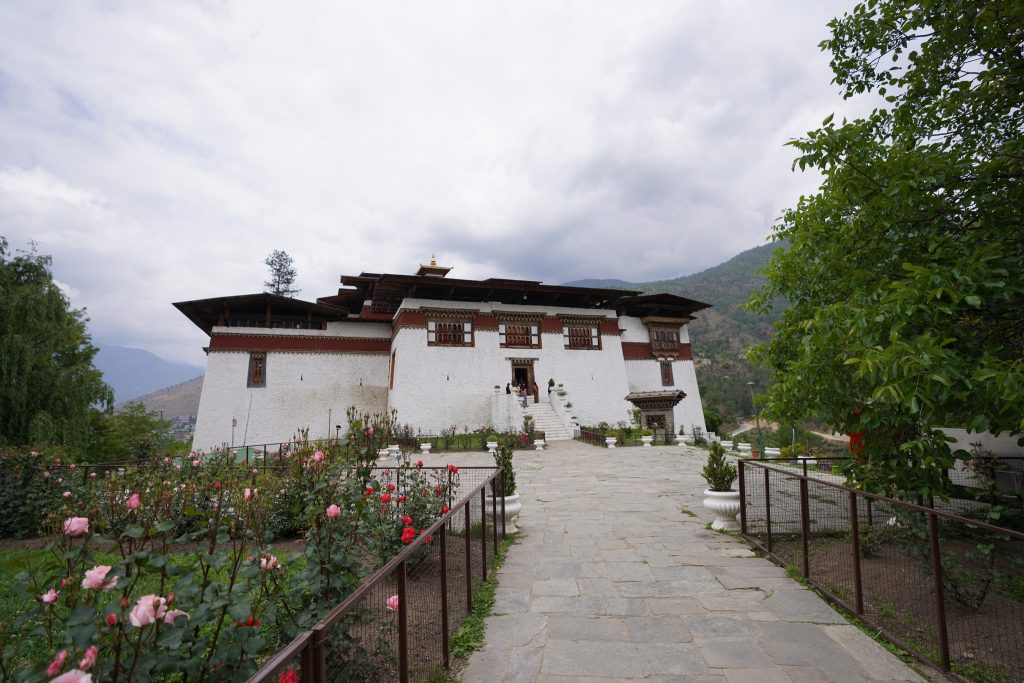
As all prophecies ripened and conditions gathered, in 1637, the eleventh year of the female Fire Ox year of the sixty-year cycle, he built Pungthang Dewa Chenpoi Phodrang, which became the seat for operating both religion and politics. He established it as the throne of the glorious Drukpa lineage, founded a large monastic order, and appointed the first Je Khenpo, Pekar Jungney, as the head of the sangha. With the assistance of the first Vinaya master, Damchoe Gyeltshen, a strict monastic discipline was established to unify the sangha.
The external affairs of the people (administrative matters) were managed and overseen by dedicated officials, with Desi Umze Tenzin Drukdra in charge, empowered to govern according to the Dharma. In summary, laws (the Sixteen Pure Rules) that had never existed before in the south were enacted, and practices (the Ten Virtuous Actions) that had never been done before were implemented. Thus, the sound of virtuous Dharma spread far and wide, and the light of the dual system of religion and politics has never deviated to this day, continuously shining among the people.
This country, formerly called Mon Yul—the Land of Darkness—is now called Druk Yul (the Land of the Thunder Dragon), and its people are called Drukpas. Its fame has spread throughout the world. At the age of forty-five, in 1638, the Earth Tiger year, acting in accordance with the auspicious signs of controlling the four directions, Zhabdrung Ngawang Namgyel built Druk Khamsum Wangue Choekyi Phodrang on the mountain ridge and subdued all internal and external enemies. From Nagri in the north to Bayul in the south, all were brought under his unified rule.
At the age of forty-eight, in 1641, the lama began constructing Thimphu Dongön Dzong. Upon completion, it was named Tashi Chökyi Phodrang and later became the summer residence of the sangha, while Punakha Dzong became the winter residence.
Later, with the establishment of Paro Rinpung Dzong, the western region came under his control, and Taktshang Drubdey Monastery was subsequently built. Thus, the entire western region was unified, and the people dwelt under the governance of his dual system of religion and politics.
Similarly, Zhabdrung sent Chogyel Minjur Tempa, Lama Namsey, and other senior attendants as his representatives to the eastern region. These representatives displayed valor, building Chotse Dzong in Trongsa, and in Bumthang, Jakar Dzong, Lhuentse Dzong, Tashigang Dzong, Zhongar Dzong in Mongar, Zhemgang Dzong, and other fortresses.
In addition to building dzongs, governors were appointed to administer the border regions, which were divided into border districts: Bumthang Dhe Zhi, Kurtoe Dho Zhi, Yangtse Tsho Nga, Trashigang Tsho Chu, Zhongar Tsho Dhun, Khengri Nam Sum. All these districts were integrated under the rule of the glorious Drukpa, and the dual system flourished and expanded in all directions. Thus, through the lama’s compassionate blessings, the central and eastern regions became lands of peace and happiness.
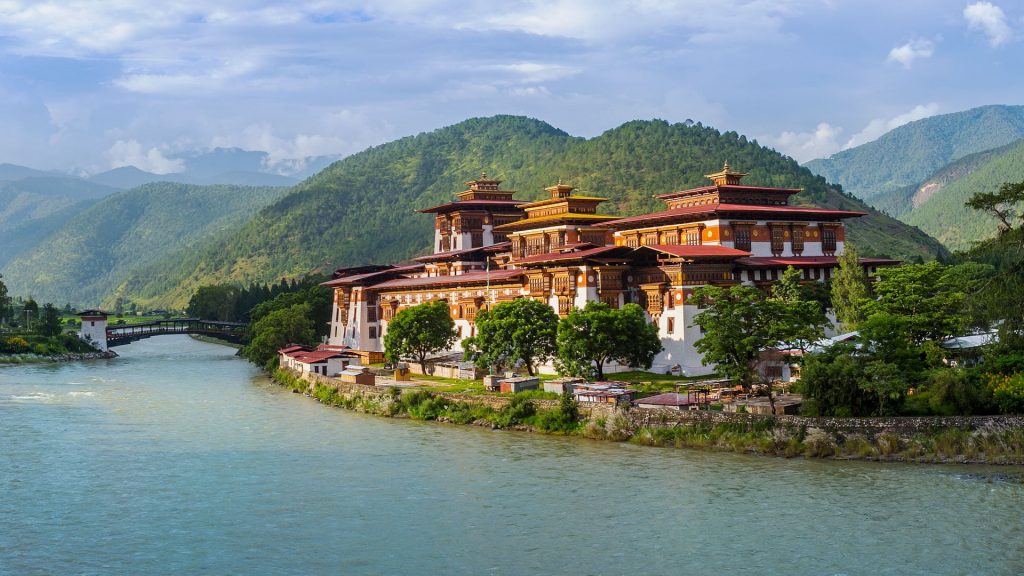
Moreover, his Dharma influence extended to the southwest and south, where Dakar Tashi Yangtse Dzong was built, transforming the former land of darkness into a land of the true Dharma. In the north, Gasa Tashi Thongmen Dzong, Lingzhi Yugyel Dzong, Drugyel Dzong, Nub Dali Dzong, Dowa Dzong in Chukha, and other fortresses were either newly built, renovated, or planned, gradually completed according to his orders. Some of these dzongs were approved and established, some were left for future review, and many were built by his command.
In short, Lama Ngawang Namgyel, over thirty-five years of rule, opened the doors of the one hundred thousand activities, received the ten powers of the Tathagata and the Dharma of a chakravartin king, and jointly governed the country. He made the land as peaceful and happy as Tushita heaven.
Nevertheless, he faced three wars with Tsang (Tibet) and three wars with Riwo Gadhen. Yet, due to his courage and the blessings of the Dharma protectors, he was never defeated. Thus, the word of the glorious Drukpa Dharma king proved true, and his rule extended to the southern Indian subcontinent, central Tibet, and the northern Hor region. The great lama once again affirmed that the glorious Drukpa lineage and country would remain free from any threats for a long time.
To this end, for those who lost their lives on the battlefield unifying the country, hundreds of stupas were built across the nation, and great Mahasadhana practices and grand pujas were performed at major monasteries to guide the deceased and benefit all beings.
Thereafter, at the age of fifty-eight, in 1651, the Iron Rabbit year, on the tenth day of the third month, following the prophecies of the Guru and protectors, the great lama entered deep meditative absorption at Pungthang Dewachenpoi Phodrang. Based on his accumulated realization and ascetic practice, the lama finally dissolved into the sky.
Subsequently, Zhabdrung’s Dharma lineage was continued by his successors—the supreme Dharma king, the supreme abbot, the Desi (regent), and various leaders—who jointly governed the country according to the dharma system and last testament left by the great lama. However, due to the lack of a unifying secular king, the regents and local chiefs vied to claim sovereignty, leading to a loss of popular trust and discord and unrest in the country.
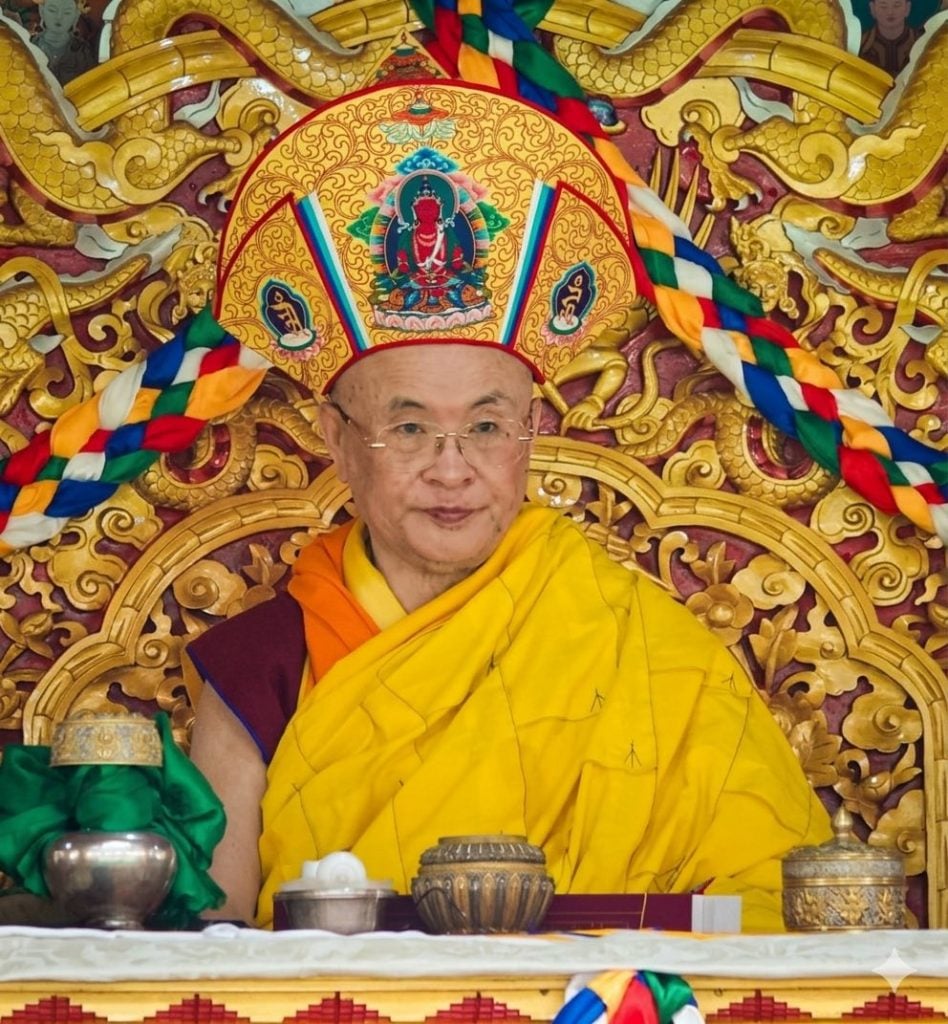
Thereafter, the central sangha, the people of the eastern and western regions, and the government united to enthrone the first hereditary king at Punakha. The prophecy left by the great lama Zhabdrung finally ripened, manifesting as the beginning of the Dharma king era. This is also related to the governance of successive Dharma kings, who ruled according to the Buddha’s teachings and spread the sacred name of the “glorious Drukpa lineage” abroad.
It is our moral duty to remember the great legacy of the holy predecessors, to pray for the long life and good health of His Majesty the King, and to always uphold the true Dharma in our hearts to achieve peace and prosperity for the nation.
Uddiyana Padmasambhava said: “For those who have my constant and unwavering compassion, whoever sees me will be reborn in a pure land.” As prophesied, all who see his form, pray to him, and uphold the lineage of the glorious Drukpa Zhabdrung Rinpoche will certainly be reborn in a pure land.
Today, on this occasion commemorating the anniversary of the great lama Zhabdrung’s passing, may everyone offer sincere prayers and generate supreme and noble aspirations.
— H.E. Laytshog Lopen Sangay Dorji (Rinpoche)