
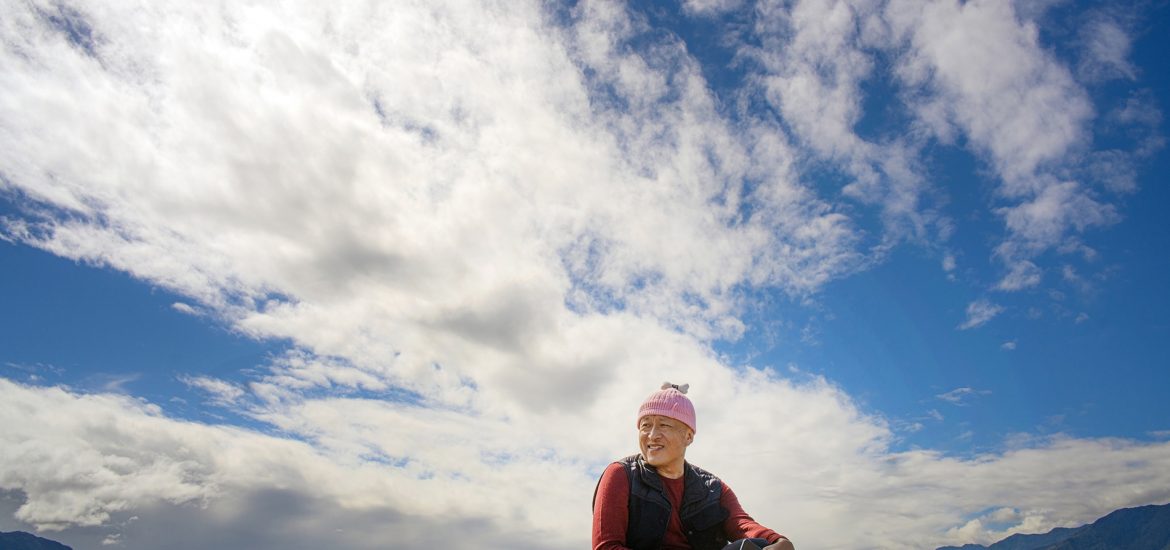
Dzongsar Khyentse Rinpoche’s teaching style won’t gel with everybody. I know many friends who count themselves as his students, deeply devoted and often actively involved in his sprawling conglomerate of non-profits. I’m not among these students. But when he indicated his openness to an interview about the macro trends of the Buddhist world, I believed that it was critical for our readers and his community, which is large and global, to hear his voice.
Agree or disagree with him, his is a voice that cuts in more ways than one, slicing through the stuffy conventions of Buddhist politeness that really mask a fear of confronting big macro topics and uncomfortable conclusions. To observe the state of the world is a good thing for a Buddhist leader to do.
His interview with me was extensive and addressed a Pew Research project’s finding about an apparent decline in numbers for Buddhists. Rinpoche identified methodological and presuppositional problems with the survey that seemed to concern him. From my reading of our exchange, correcting those suppositions, which were drawn from the monotheistic tradition and other Western systems of knowledge, themselves dominant because of colonialism, present a unique challenge for Buddhist thinkers who seek an alternative pathway that does not prioritize mere cultural domination (like in regions of the world where people are born Muslims or Buddhists or Christians), but also stewards and preserves the Dharma properly for those sincere in learning.
As mentioned above, the shadow of Western domination of our epistemic systems hangs heavily over Rinpoche’s answers. Interestingly, he has little comment on the technocratic “super-modernity” of China, arguably the world’s first electro-state complete with AI and robotic integration into many facets of everyday and industrial life. Perhaps this is because, in his words, Chinese elites think in Chinese, while Indian elites still think in English.
Modernization is not an inherent evil, but aspects of its intellectual inheritance have done a disservice to Buddhists. It is not too late, however unlikely, for Western Buddhists to engage both critically and honestly to add “quality, not quantity” to the Dharma, Rinpoche notes.
Politics is a big no-no for Rinpoche, since politicians see religious leaders, including monks, as useful cannon fodder for their own political, military, and economic gain. Again, to invoke the Pope’s recent fiery exhortation: “Woe to those who manipulate religion and the very name of God for their own military, economic, and political gain, dragging that which is sacred into darkness and filth.” The Dharma might dwell in the world through its sacred repository that is the sangha, but a true Buddhist leader would accept that the state of the world is not something that can be solved politically.
For Rinpoche, this is the great humbling of the modern “engaged Buddhist” who might be well-connected and even exert some influence. For all of Buddhism’s lack of hard geopolitical power, the Dharma simply has no need for people who seek such power. A simple and sincere aspiration for the awakening of all sentient beings, and therefore for the preservation and flourishing of the Buddhadharma, is enough.
Related features from BDG
Demographics, Destiny, and Dharma: An Interview with Dzongsar Khyentse Rinpoche