
The reunion of King Charles III and Pope Leo XIV was a spiritual event of historic significance. According to The Catholic Herald, it was the very first time since 1534 (when Henry VIII broke with the Holy See and established the Church of England) that a reigning British sovereign and a pope have prayed together in a church service (The Catholic Herald). More importantly, it signaled a sincere move toward ecumenical dialogue and “five centuries of progress towards Christian reconciliation.” (The Catholic Herald)
While the Buddhist world never experienced a rupture as traumatic as that of the split between Anglicanism and the Catholic Church (or, for that matter, the schism between Orthodoxy and Catholicism or the Reformation), key divergences appeared very early on between the early Buddhist schools, mainly based around Vinaya. Disputes around lifestyle and the critical questions that defined the life of the Buddha’s monastic heirs bled into philosophy, Buddhology, and regionality. The Mahayana and Vajrayana were historically conditioned movements that conceived of the Deathless differently to the early Buddhist schools, the only surviving expression of which is the Theravada of South and Southeast Asia.
As art and culture columnist Rebecca Wong has noted in one of her YouTube shorts, the Global Peace Prayer Festival (GPPF), to be held from 4–19 November, is a significant event as it brings together Vajrayana Buddhists from around the world (including Mingyur Rinpoche, Tai Situ Rinpoche, Matthieu Ricard, Dzongsar Khyentse Rinpoche, and many, many more) as well as Buddhists from Mahayana and Theravada schools. This ecumenism is its stated, outer goal, making the Festival a remarkable convergence of all the great schools of Vajrayana: Kagyu, Sakya, and Gelug (not to mention subsets within schools like the Kagyu, since Bhutan’s Central Monastic Body is officially the “southern” or Drukpa Kagyu only).
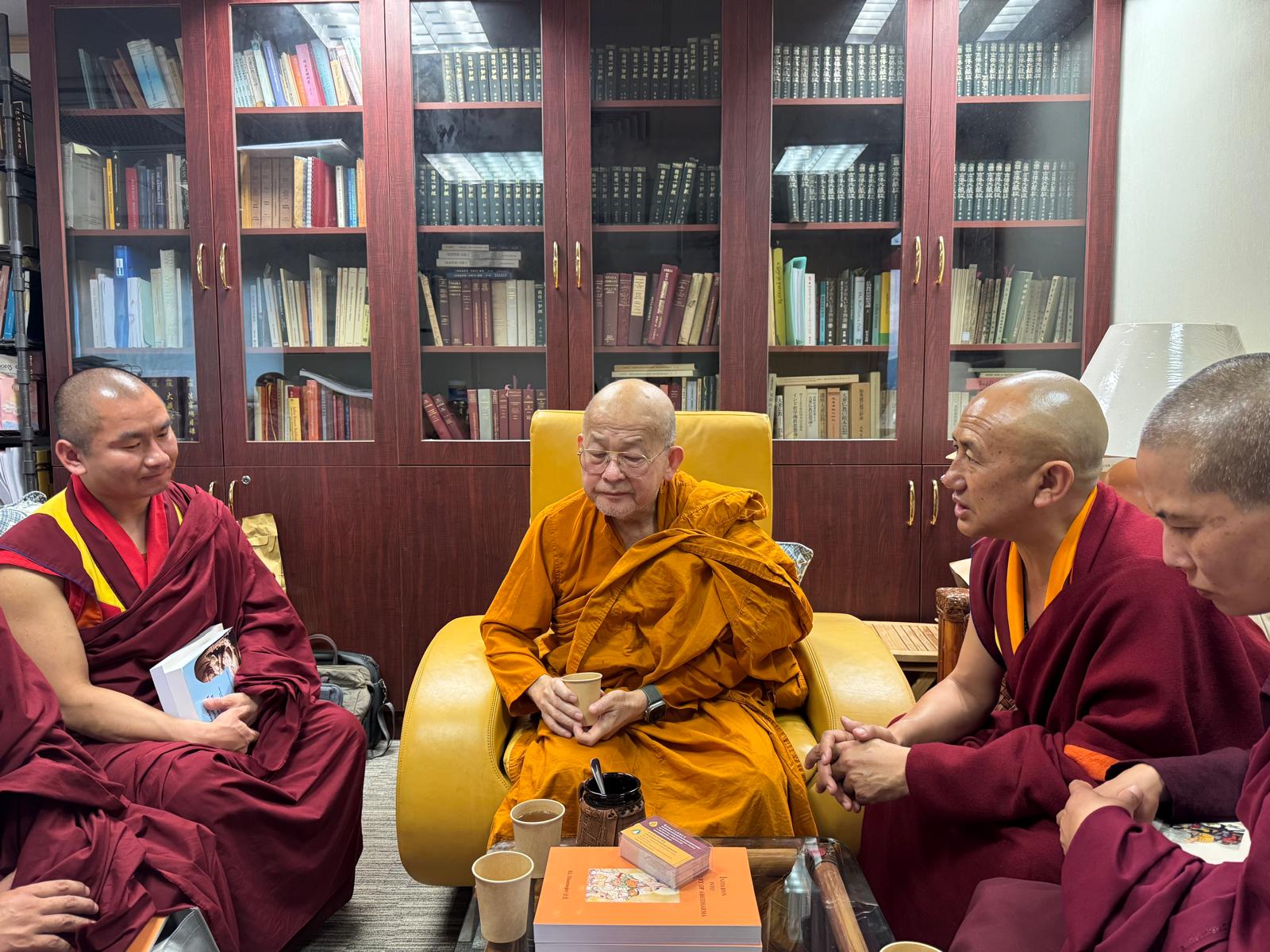
But the organizers, the Central Monastic Body, have noted to us that there are also “inner” and “secret” objectives. It does not take an ace sleuth to connect the formal introduction of the Kalachakra empowerment (to be held from 12–14), as the mass empowerment to be done by His Holiness the Je Khenpo, is directly connected to a broader project of shifting Bhutan into the central core of Buddhist regions with not only a living Dharma-worshipping monarchy—modern chakrvartins—but also a geopolitically balanced kingdom where all Vajrayana schools can converge without fear of sensitive political situations. The development of Gelephu Mindfulness City as the country’s unique Special Administrative Region for tourism and non-sectarian practice, along with the rapid advancement of Bhutan’s cryptocurrency capabilities and digital technology, indicates nothing less than a revival of the Kalachakra Tantra’s core socio-political ideal, constituted literally and spiritually: Shambhala.
This revolution in Buddhist values, reflected in the geopolitical narrative and deeper spiritual truths of Shambhala, could not be realized in any region of the world, except in Bhutan. The Bhutanese people have in their possession several core factors that make the realization of the “21st Century Shambhala” possible. There are many more layers to the GPPF. But the foundation must no doubt be firstly non-sectarianism. Everything else, uplifting and glorious, will follow.
The GPPF is, from a historical perspective, will be the most important Vajrayana convergence of this first half of the 21st century.
See more
King Charles and Pope Leo to pray together in historic first since 1534 (The Catholic Herald)
Related news from BDG
Bhutan’s Laytshog Lopen Sangay Dorji Promotes Events of Global Peace Prayer Festival in November
Related features from BDG
H.E. Sangay Dorji’s Vision for Global Buddhadharma: Bhutan Steers Buddhism Toward the Future
Preserving Bhutan’s Cultural Heritage: An Interview with Princess Ashi Kesang Choden T. Wangchuck/