
What is becoming quickly known throughout Hong Kong and the world as the “Tai Po Fire” will be known in infamy as a preventable accident that engulfed multiple towers at the public housing estate of Wang Fuk Court, Tai Po, on 26 November. As of my writing, 94 official fatalities have been recorded, but many grimly expect that number to shoot up given the dwindling chances of finding any more survivors among the hundreds still missing. Three individuals tied to the company that was engaged in the renovation of Wang Fut Court have been arrested on suspicion of manslaughter. A Hong Kong firefighter was among the dead, having lost his life while battling Wednesday’s Category Five fire (the highest of its kind).
The calamity has spurred Buddhist organizations across the city to mobilize resources to help in practical ways, while also holding ceremonies to guide the deceased and comfort the survivors, most of whom were estate residents and have therefore lost their homes. Tung Lin Kok Yuen and Tsz Shan Monastery are two major organizations that have immediately sprang into action. Tsz Shan Monastery is itself in Tai Po and therefore deeply rooted to the land and countryside. It is also home to the largest statue of Guan Yin, the prime celestial of compassion.
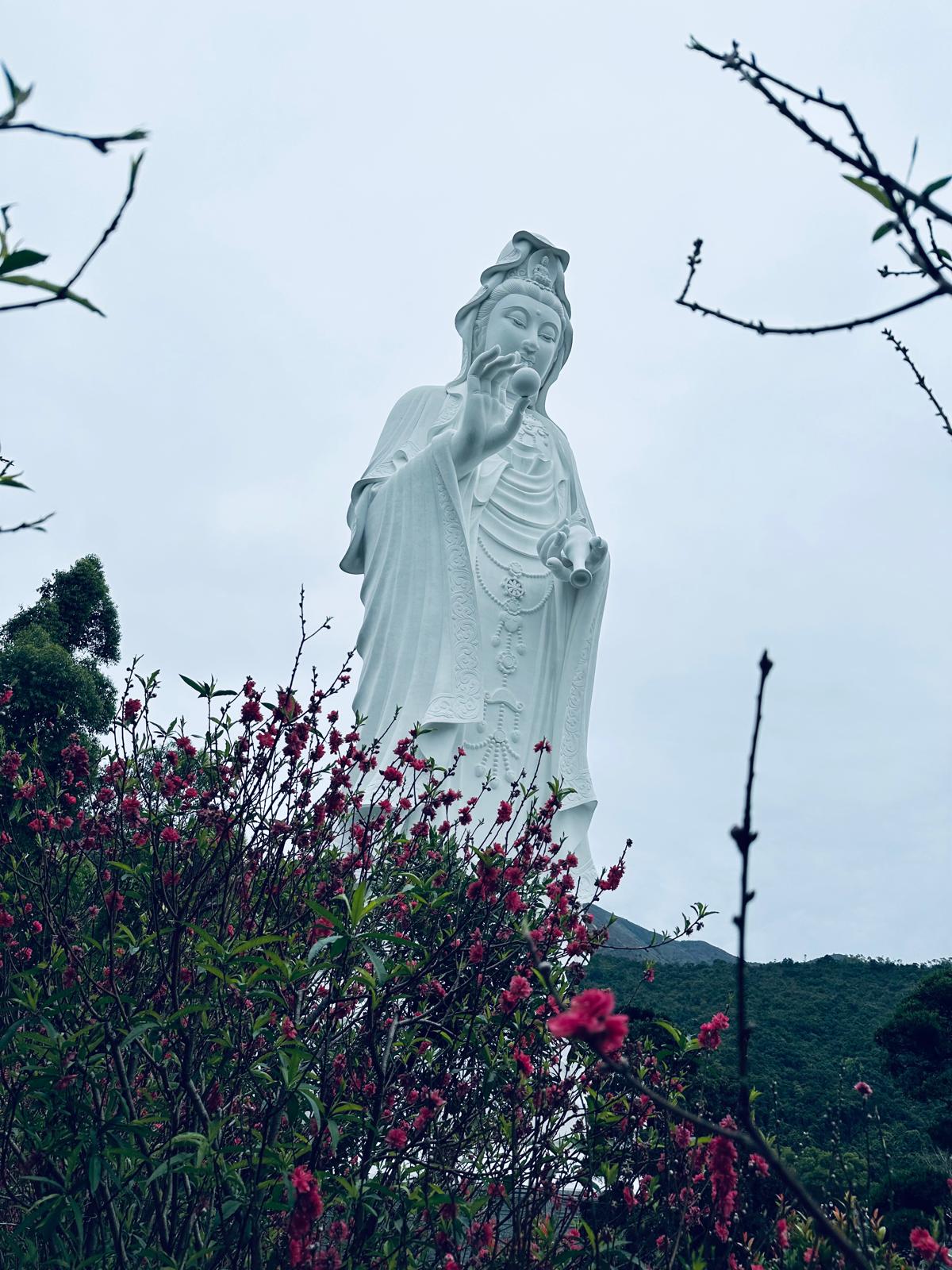
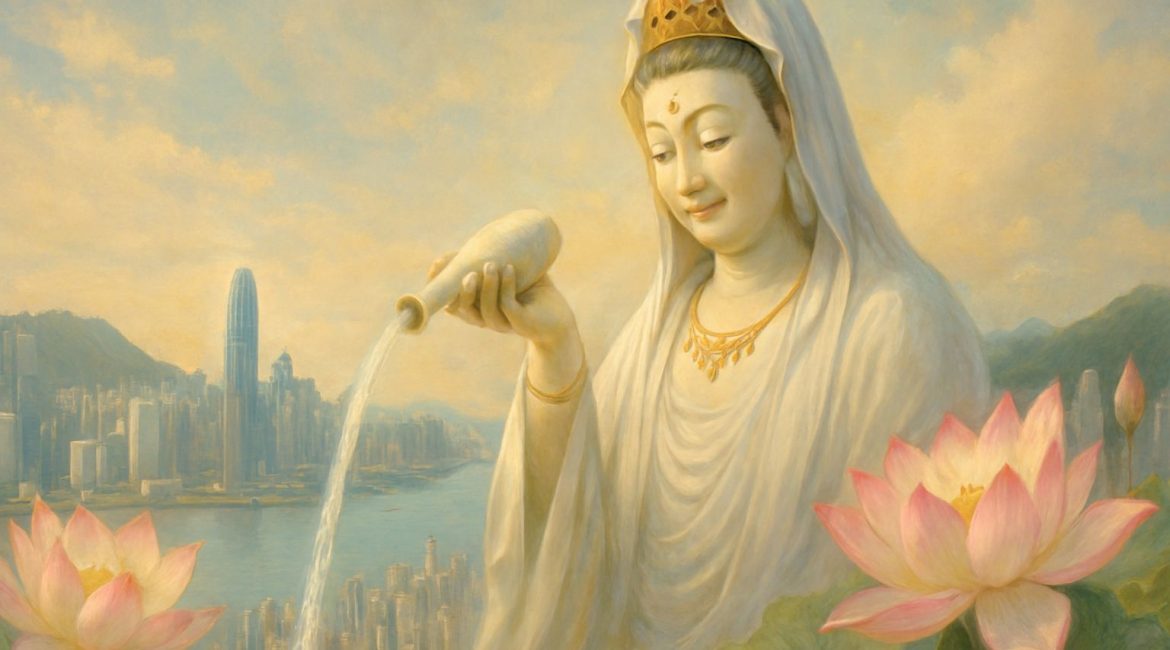
Although I am personally inclined towards Vajrayana practice, being immersed in the teachings of His Eminence Sangay Dorji, I first took refuge under Chinese Mahayana many years ago in 2008, at a Hong Kong temple called Kwan Yum Temple. This monastery on Lantau, founded in 1910, is also dedicated to the beloved bodhisattva. Her serene smile, has always had a pacifying, calming effect on devotees, and her iconography is replete with “extinguishing” the fire of suffering. For example, she commonly holds a vase in her left hand, which is often shown pouring a cooling elixir of life, or divine waters, which have restorative and cooling properties. It is also one of the eight auspicious symbols in the Mahayana tradition. In her right hand is a willow or pearl, on which the elixir is sprinkled. The willow famously bends without breaking, while also possessing esoteric powers.
When news of the fire reached a terrible crescendo yesterday, several friends and I visualized Guan Yin pouring her vase over the epicenter of the disaster, and over Hong Kong as a whole. Together, the vase and the willow symbolize the Hong Kong spirit: unbreakable, but also embodying the principles of water: adaptable, formless, forever changing. May we all embody the soothing, nourishing waters of Guan Yin’s vase as we strive to heal and unite the hurting city.