
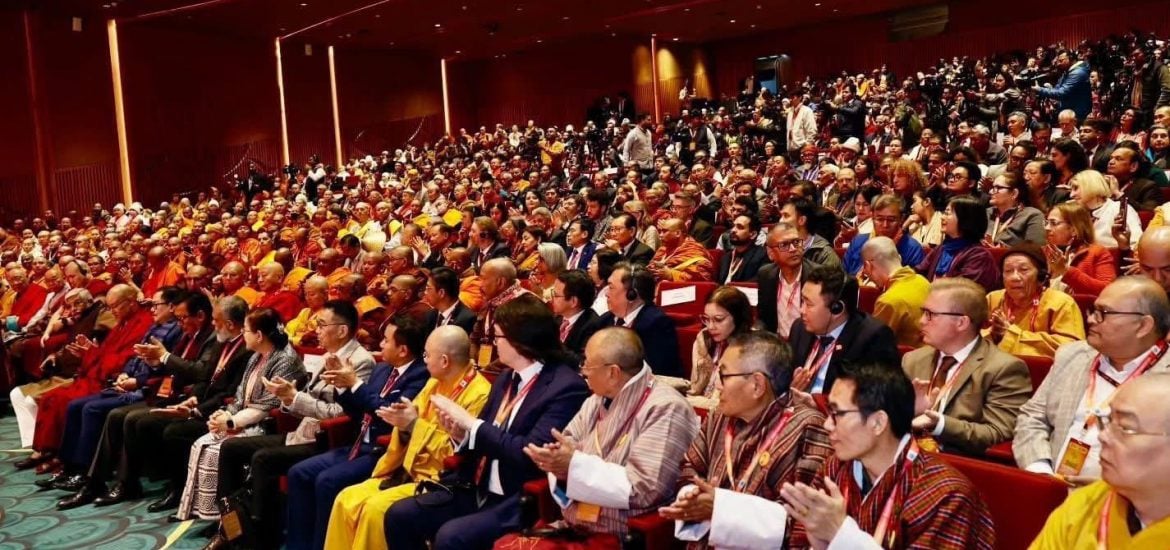
The great summits and conclaves hosted by the International Buddhist Confederation (IBC) have functioned as large-scale and heartening reunions for the Buddhist world. The 2nd Global Buddhist Summit, which ran from 24–25 January, brought together some of the most important names in international and Asian Buddha-dharma today, from eminent faces like Dzongsar Jamyang Khyentse Rinpoche and Gyetrul Jigme Rinpoche, to regional leaders like Mr. Dzgambinov Ochir Vladimirovich, Deputy Head of the Government of the Republic of Kalmykia, and an array of diplomats and politicians and retired functionaries from Southeast Asia.
This year, aside from the fireside chats addressing topical issues in the Buddhist world, the Summit is leading up to the all-important Republic Day, which is taking place today in the Indian capital on 26 January.
In a press conference convened by the senior leaders of IBC, Shri Abhijit Halder, Director-General of IBC, announced that the 180-plus monastics, of which more than 40 are national representatives of Buddhist communities and organizations, would be joining in the Republic Day festivities. They will be taken to a dedicated box to witness the parade, an important part of which will be the display of India’s military hardware and weapons.
Halder noted that the Republic Day’s military procession is one part of an overall display of national unity, art and culture, and civilization, aligned with democratic values aligned with the Buddha-dharma thanks to the presence of the monks from a host of different countries. “With the underlying theme of the Summit consisting of: United Voice, Common Wisdom, and Mutual Coexistence, it is these values that drive community,” noted Halder. The greater vision of IBC is one of a larger community of Buddhists, spearheaded by values displayed on Republic Day.
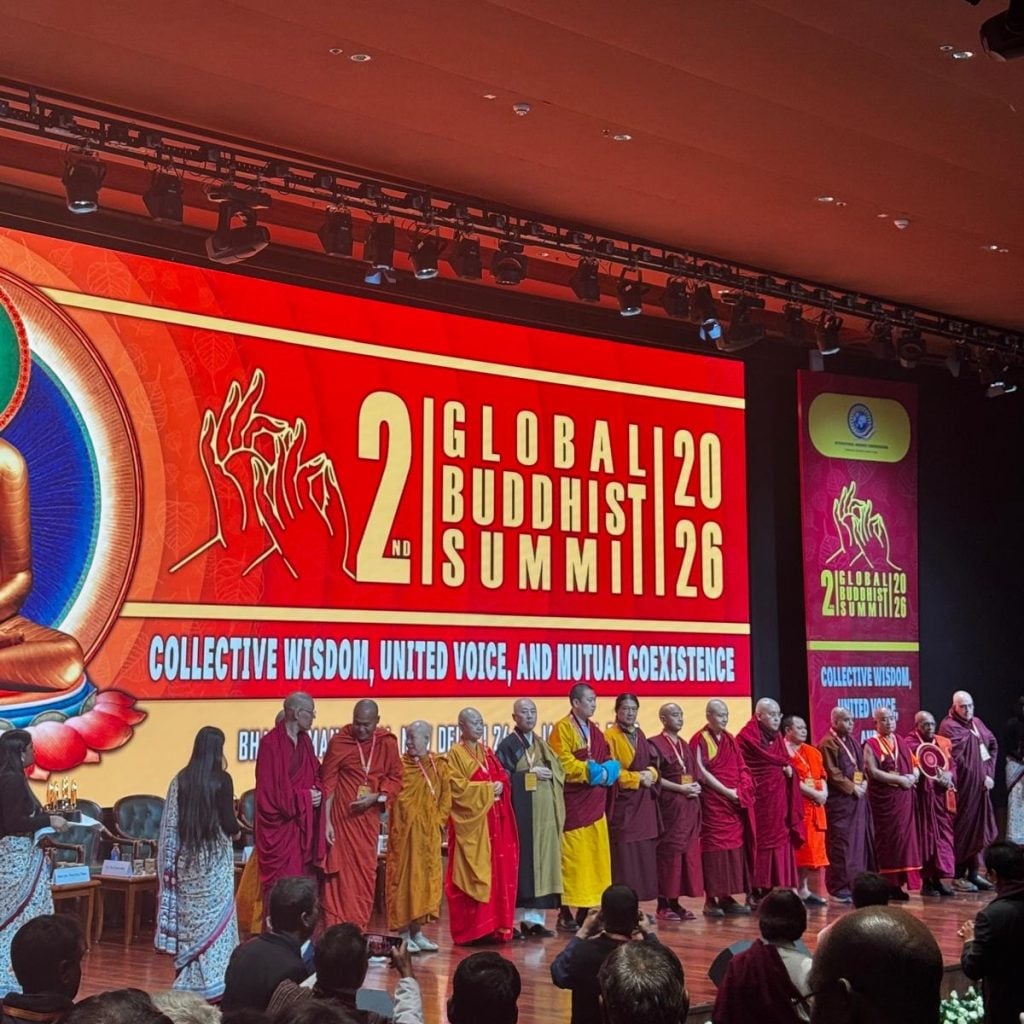
“India will display its military might and readiness for self-defence, but the presence of the monastics signals that our country’s ultimate power is spirituality, compassion, and love,” stated Shartse Khensur Rinpoche Jangchup Choeden, Secretary General of IBC. “Monks from many countries around the world will witness this display of power, which is itself powered by values like ‘Unity in Diversity’ and peace, tranquillity, kindness, and love.”
From a thematic perspective, the emphasis on Indian patriotism is clear from the motif of the “soldiers and monks,” a strong message to the world that the Buddhist sanghas from other countries can trust in India’s armed forces as retaining Dharma values, behaving almost like an informal “army of Dharma.” Halder maintained that this monastic-military encounter stresses that Buddhism is an indispensable part of India’s heritage, and should be united with the lifeblood of the Indian state, which is hard power and nationalism. In addition, Deputy Secretary General of IBC, Dr. Damenda Porage of Sri Lanka, noted that his home country saw India as a major power, but with the distinction of possessing spirituality.
Halder also announced that the monks were taken on the 25th to see the Piprahwa Gems, ancient Buddhist relics that that had been restored to Indian ownership in July 2025 after the Indian government successfully halted a Sotheby’s Hong Kong auction of the national treasures. These 349 sacred artifacts, including pearls, rubies, and gold, were discovered in 1898 and are believed to be linked to the Buddha-era. They were held in the private hands of the family of William Claxton Peppé (1852–1936) until being sold to the auction house. The repatriation involved pressure from India’s Ministry of Culture and a partnership with the Godrej Industries Group.
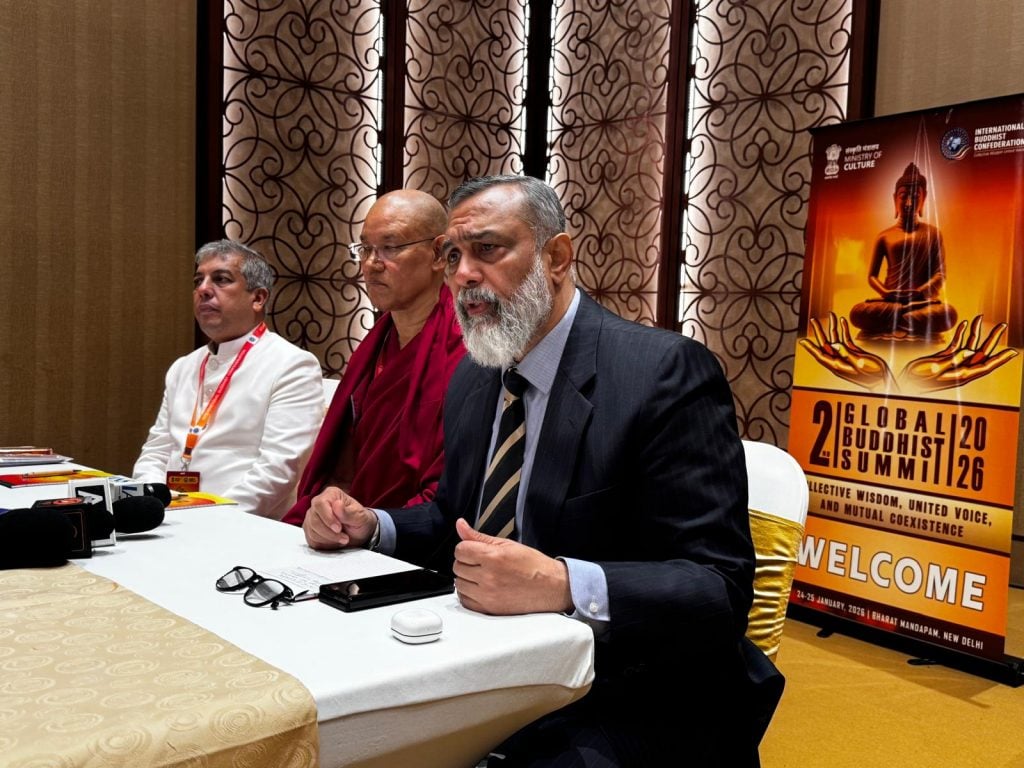
During the Q&A, journalists asked about the possibility of a “league of Buddhist nations,” led by India and relevant organizations in appropriate areas like IBC. This league would theoretically function as a peace-making and mediation body with a specific focus on countries and localities with Buddhist-majority populations or influential Buddhist communities. While Halder maintained that there are backchannels and private lobbying for Buddha-dharma to become a more prominent concept in the UN, there are hints of interest in existing bodies for Buddhist-informed conflict prevention and resolution, including how the Shanghai Cooperation Organization (SCO), of which India is a member, has hosted Buddhist-themed conferences in the past despite its Central Asian member nations not being Buddhist-majority (importantly, historically they have had major associations with Buddhism and the silk routes).
For my part, I asked Halder about the possible agenda of upcoming Summits. He suggested that fireside chats would be developed over the next two years, with priority given to unaddressed subjects like Buddhist architecture. “Think of crucial sites like Tabo Monastery, which hearken back to ancient times and India’s rich Buddhist history but need more resources for preservation and study.” The preservation of India’s historical monasteries, he maintained, should be a major focus for the future.
Related news from BDG
Second Global Buddhist Summit Set to Convene in New Delhi
Related blog posts from BDG
2nd Global Buddhist Summit 2026 to Bring Together Buddhist Leaders in New Delhi