
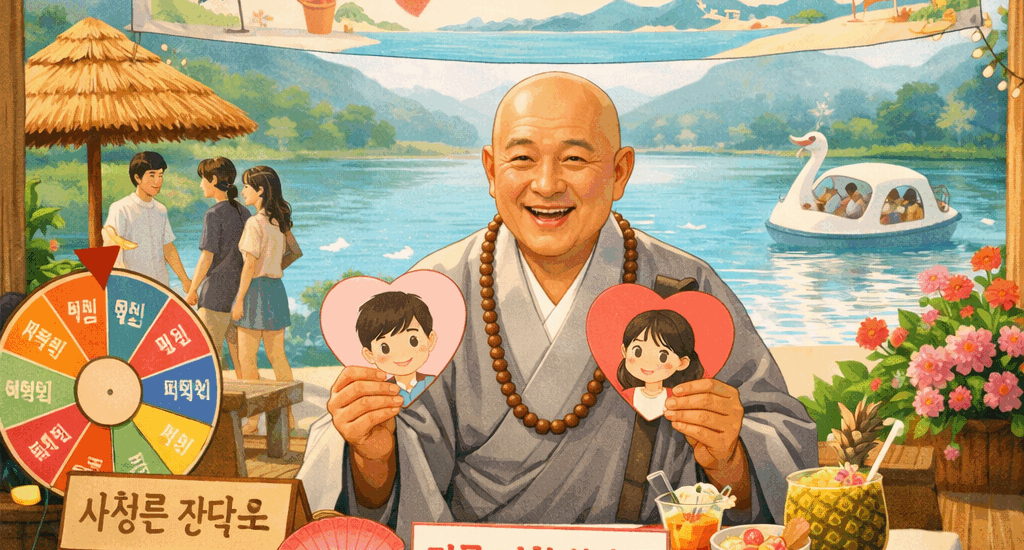
Korean Buddhist organizations have made the news recently; not only because Special Summer Templestay programs are being offered at more than 50 temples across South Korea during the summer vacation period (courtesy of the Cultural Corps of Korean Buddhism), but also how the Korean Buddhist Foundation for Social Welfare is bringing young singles together through a blind date program (which launched in 2023) to address the country’s low birthrate.
These initiatives come on the heel of the widespread concern that Buddhist numbers are on the decline in South Korea. About 16 to 17 per cent of the Korean population identifies as Buddhist, making it the second-largest organized religion behind Christianity. Like other religious traditions in East Asia, Buddhism faces an aging demographic. Studies show a significant generational gap, with higher adherence among older demographics and a smaller share among those in their twenties and thirties. Faced with decades-long competition from evangelical churches in particular, the Jogye Order in South Korea is effectively throwing as much as it can against the wall and seeing what will stick.
While these developments can only be positive (for example, the aforementioned singles program drew 4,225 applicants for just 20 spots), I can’t help but think that the peripheral benefits of following religious traditions only go so far: they are, at the end of the day, peripheral. While I can imagine many Christian groups will also use the opportunity of socializing, belonging, and even meeting potential soulmates as an additional incentive to remain in the church community, surely every confessional church will see the encounter with Jesus as the most compelling point of participation.
In my refuge certificate, there is a passage that I still refer to from time to time: “Taking refuge means formally seeking a safe and right direction in our lives guided by the Triratna, the Three Jewels.” This right direction is to be maintained “unwaveringly” until the attainment of enlightenment. While we don’t use words like “confessional” in everyday Buddhist discourse, the act of going for refuge and becoming a formal disciple under a particular teacher has been present since not simply ancient times, but in the Buddha-era itself, when the Blessed One accepted merchants Trapusha and Bhallika as his first lay Buddhists (of such antiquity was this refuge-taking that the two men probably took refuge only under “Two Jewels,” the Buddha and his Dharma).
Buddhism involves a radical change in mindset and worldview; in fact, the greatest changes it touts are all within the mind. To remove or dilute its core claim, which is that the invitation to try with an open and sincere heart the Buddhist path is a deeply precious one to be embraced, is to make “soggy” the value proposition of centers, monasteries, and sanghas. Skillful means, like summer vacation fun and romantic opportunities, are important. But how much more profound for happy holidaymakers and “meditation matches” to find meaning, purpose, and spiritual direction under the Dharma.
See more
South Korean singles look for their dream match at Buddhist temple retreat
Related news from BDG