
By Master Huijing (Translated by the Pure Land School Translation Team; edited by Householder Fojin)
There’s an old Japanese waka poem that captures something profound about our connection to all sentient beings:
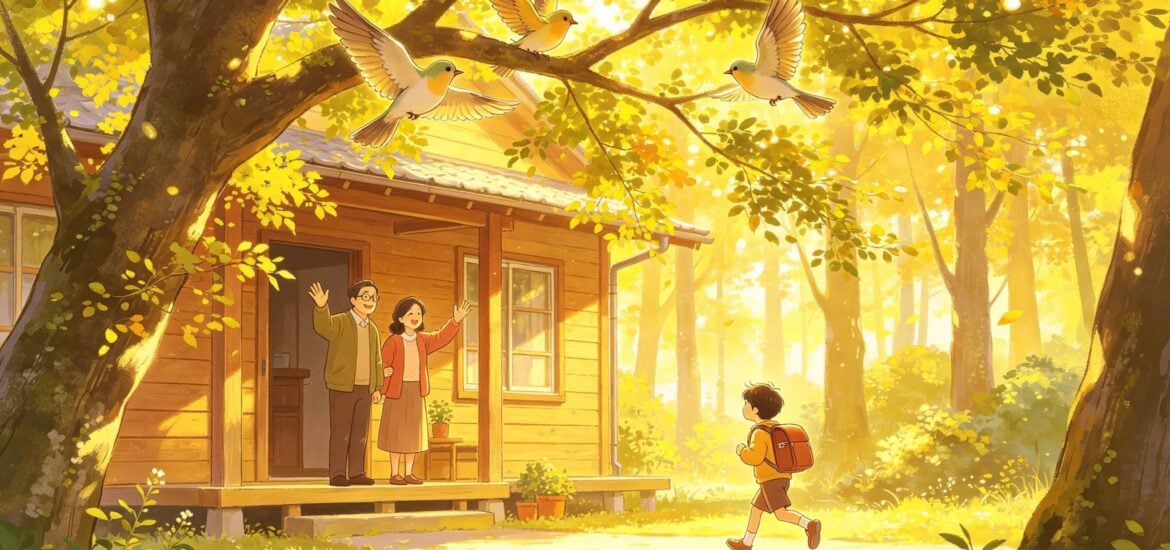
“Hearing the plaintive, lonely cry of the mountain bird, I wonder – could that be my father from a past life calling out to me, or my mother yearning for me?”
All beings drift through endless cycles of birth and death, who among them hasn’t once been our kin?
If ordinary people can feel a pang of filial love at the simple cry of a bird, how much deeper should that feeling run in those of us who walk the Buddhist path? This should be our doorway into the real meaning of the Dharma.
The Buddha taught that since time without beginning, we’ve been tumbling through the six realms of existence, and every sentient being has, at some point, been our parent, our sibling, our loved one. It’s just that karma has changed our faces and forms, so we no longer recognize one another.
That cat curled up on the couch. The stray dog on the street. The birds overhead, the wild animals in the forest. Even the stranger who brushed past you this morning. Any one of them may have once toiled and sacrificed, pouring out an entire lifetime of love for your sake. Sit with that thought for a moment, and your heart softens. How could you harm them? How could you look down on anyone?
A sutra puts it plainly:
“Every man is a loving father; every woman is a compassionate mother.” This isn’t poetic metaphor. It’s the literal truth of samsara. It is only that ordinary beings, ignorant and deluded, are unaware of it.
Yet here lies the question: if every being has been my parent, do I actually have the power to save them?
Look at where we stand. We are still bound by affliction and karma, alive in the morning and gone by nightfall, swept along by forces we can’t control, with no escape from samsara. If we cannot free ourselves, how can we free others? If we cannot break free from birth and death, how can we repay the kindness of all those who loved us in lives long forgotten?
For this reason, the Pure Land path opens the most direct way. Amitabha Buddha’s Eighteenth Vow – the Fundamental Vow – declares:
“If sentient beings who recite my name even just ten times should fail to be reborn in my land, may I not attain enlightenment.”
Amitabha has already become a Buddha. Those who recite his name will surely be reborn. Therefore, when explaining the 18th Vow, Shakyamuni Buddha said: “By the power of that Buddha’s Fundamental Vow, those who hear his name and wish to be reborn in his land will all reach there, and naturally attain non-retrogression.”
Master Shandao said it this way:
“All ordinary beings — no matter what their karma is, no matter how long or short their practice — if they single‑mindedly recite Amitabha’s name, they will certainly be reborn.”
Rebirth in the Land of Ultimate Bliss isn’t just self‑liberation. It means reaching non‑retrogression, so you can return and liberate countless beings. This is what true filial piety looks like. Not just taking care of your parents in this one lifetime, but leading every being who has ever been your mother or father, across lifetimes beyond counting, into ultimate peace and liberation. Reciting Amitabha’s name is not a Lesser Vehicle practice of self‑liberation; it is the Great Vehicle practice of repaying others’ kindness.
Next time you say “Namo Amitabha Buddha,” try holding this thought in your heart:
May I first be reborn in the Land of Bliss and then, by the power of Amitabha’s vow, return to deliver all the parents I’ve had across countless lives. Only by relying on the Buddha’s vow can I and all of them come home together. Then each recitation is no longer for ourselves alone — it’s for all beings.