
A special report from Bodh Gaya, India
Three Buddhist organizations have come together to launch a new initiative using artistic expressions to attract today’s restless youth to the Dhamma.
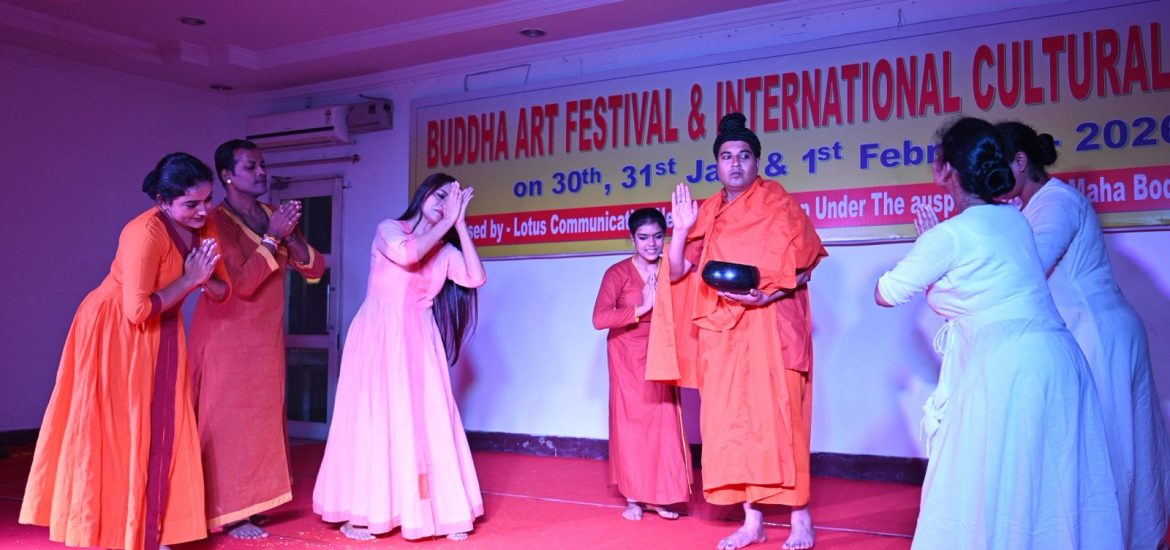
The Buddha Arts Festival held at the location of Sakyamuni Buddha’s enlightenment, Bodh Gaya, was conceived by Venerable P. Seewalee Thera, general secretary of the Mahabodhi Society of India (MBSI), and organized by the Australia-registered Lotus Communication Network (LCN) and Kolkata-based Buddhist dance theatre group Attodeep.
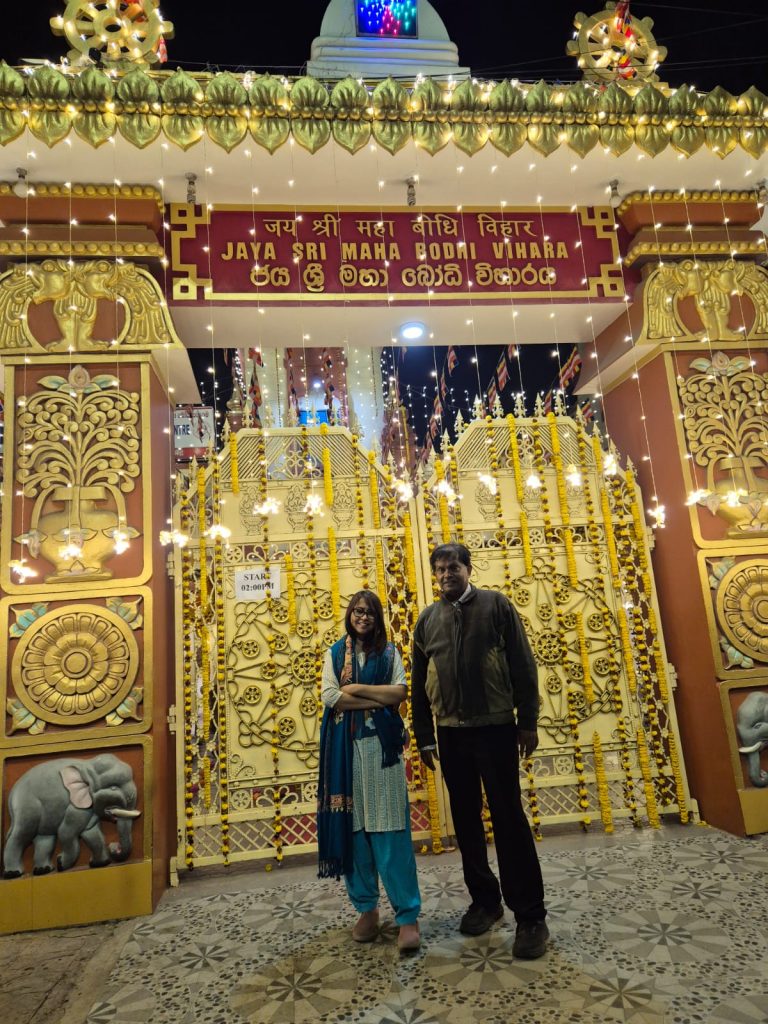
The three-day festival held from 30th January to 1st February at the MBSI Bodhgaya Center. It is located right next to the Mahabodhi Temple that houses the sacred Bodhi tree under which the Buddha attained enlightenment. The event featured artists from India, Sri Lanka, Nepal, Tibet, Bangladesh, Thailand, and Malaysia. Some of them were featured through video clips.
LCN’s founder, Dr. Kalinga Seneviratne, and Attodeep’s artistic director, Madhusree Chowdhury, have been working on launching a Buddhist Art Festival in India for some time. An earlier attempt to launch a Nalanda Art Festival in 2020 was stalled by the onslaught of Covid.
“When Seewalee bhante suggested a Buddha Art Festival in Bodhgaya, both of us felt this was the opportunity we were waiting for, and there is no better place to launch such an initiative than from Bodhgaya,” says Dr. Seneviratne.
Seewalee Thera sees the festival as opening up new avenues to spread the Buddha’s message of peaceful coexistence, kindness, and environmental awareness, particularly to young people. “A lot of international visitors, pilgrims come here from around the world. So, this is the best place to promote the message of the Buddha in different ways,” said Ven. Seewalee Thera, in a speech welcoming the guests to the festival. “Language of Sangeet (song) is a language many can understand, and I had several discussions with Dr. Kalinga and Ms. Madhusree on how to get this festival together.”
MBSI invited schools in Bodhgaya to join in the festival, both as the audience and performers. He thanked the students and the teachers for joining in the festival and linking with an international platform that “promotes humanity, human values and a human society.”
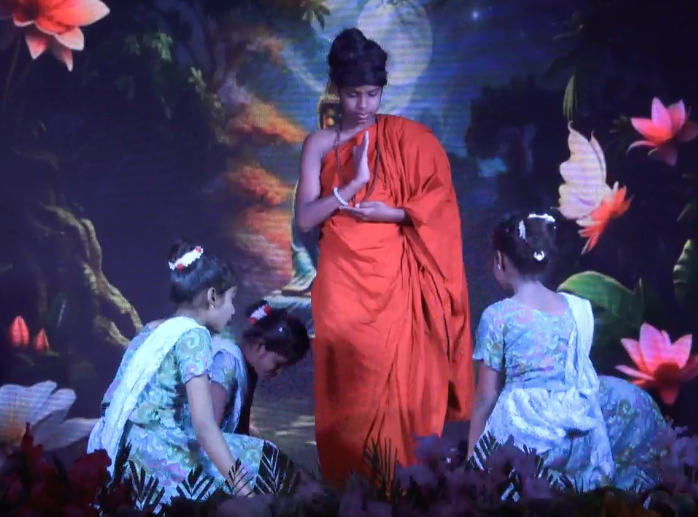
There are many small community schools around Bodhgaya run mainly by Buddhist monasteries. But their students are almost exclusively from Hindu families, as there is no native Buddhist community in Bodhgaya. Teachers of 15 local schools enthusiastically brought their students along to participate in the festival, leading to a packed auditorium for all the sessions, culminating with almost a two-hour program of their performances.
“What the festival aims to do is not to convert these children to Buddhism, but to create a local cultural community of young people who can absorb Buddhist ideas and express them through the arts, as most concepts of the Dhamma are basically secular, and often synergize well with Hindu beliefs,” argues Dr. Seneviratne. “Such a process could supplement the spiritual services (available from monasteries) to Buddhist pilgrims, by creating a local artistic culture that has a Buddhist flavor.”
During the festival, Chowdhury conducted a half-day workshop with about 25 children from two local schools. After that, they performed a “street theatre” of a Jataka story opposite the Japanese Big Buddha temple.
“People keep on saying that today’s youth are very disturbed, they are very distractible. But I always felt that whenever I am dealing with drama, with music, which is full of Buddhist philosophy and thoughts, I found them to be very inquisitive,” notes Chowdhury.
The festival featured a dance theatre performance by Attodeep called Buddhacarika, taking the audience on a Buddhist pilgrimage through India, and also a half-hour lively musical and poetry journey of Bengali Budddhist culture.
Live Sri Lankan temple drumming and traditional Kandyan dancing was performed by Sandani Rangana Troupe, led by Dr Chandini Kasturiarrachi from Shantiniketan in West Bengal. Her students also performed Indo-Sri Lanka fusion dance with Buddhist themes.
Two songs from Viveka Perera provided a taste of elegant Sinhala poetic singing. A senior air hostess on Sri Lankan Airlines, she came all the way from Colombo to support the initiative. Using the traditional kavi style, she sang about the meaning and the practice of panchasila (five precepts), and also a very moving song about poachers killing wild elephants in Sri Lanka. Adding a unique flavor to the festival, German nun Bhikkuni Sanghamitta sang two meditative songs in German and Hindi.
“Very rarely have I seen people approaching religious spirituality through the language of art. As Venerable Seevalee Thera said, this art and culture, it has no language; it has its own language. It goes straight into your heart. It creates a different atmosphere altogether,” argues Choudhury. “The language of art can create wonders. It’s an amazing tool, but it has been left behind. Very few organizations, very few people are using this, the language of art and culture, to propagate the universal truth of life, to propagate the message of Buddha or the message of humanity.”
To provide a taste of the diversity of the Buddhist musical culture, a webcasting-style program of 30 minutes was presented that used video clips of Buddhist songs from Nepal and Tibet, Malaysia, Thailand and Bangladesh. Also, a 25-minute documentary of Buddhist festivals from Sri Lanka, Thailand, Laos, Vietnam and Indonesia was screened.
“We organized the festival virtually with no funds,” explains Dr. Seneviratne. “Mahabodi was only able to offer free accommodation and food for artists, and cover transport costs in India. Thus, we could not fly in any artists from overseas.”
Encouraged by the success of the festival and positive feedback from the local community, LCN and Attodeep says that they are keen to work with MBSI to make this an annual event, that coincide with the exposition of the relics of the Buddha, and his disciples Sariputra and Maggalana by MBSI. The local media gave good coverage to the festival, with one television channel running a 4-minute report on its opening day.
Dr Seneviratne says that Ven. Seevalee has proposed to hold the festival in both Bodhgaya and Sarnath back-to-back next year, and also two leading Buddhist universities in India have expressed their interest in having their students involved in the festival next year.
The organizing partners are planning to launch a Buddhist Cultural Fund to help internationalize the festival by bringing in overseas Buddhist artists to perform. They hope to develop an informal Bodhgaya-based international young Buddhist cultural network. According to Dr. Seneviratne, this year, artists from Malaysia, Indonesia, Taiwan, Singapore, Nepal, Thailand, Bangladesh, and Europe have expressed interest in performing, but most needed to be funded for travel to India.
“Buddhist organizations are very good at holding huge talkfests and talk among themselves about how peaceful the Buddha’s message is, and after that they take a rest until the next talkfest,” notes Dr Seneviratne. “We need to take this message into communities using cultural tools to attract attention, and we have shown that this could be done with the correct motivation and enthusiasm. . . even with very little money.”