
By Dr. Ujjwal Kumar (Professor, Department of Buddhist Studies University of Calcutta, Kolkata)
In Indian culture, the full-moon days (Pūrṇimā) are not merely points in the calculation of the cosmic cycle of time (kāla-cakra); rather, they are special moments for self-reflection, spiritual practice, and the purification of the mind. In the sequence of the full moons of Māgha, Phālguna, and Caitra, when the full moon of Vaiśākha (Pāli: Vesākha) arrives—being the fourth full moon after the sun’s northward movement (uttarāyaṇa)—this day ceases to be just an astronomical event for the practitioner and becomes a symbol of inner awakening and spiritual elevation. It is on this sacred date that three significant events in the life of Gautama Buddha—his birth, enlightenment (bodhi), and final passing away (mahāparinirvāṇa)—are believed to have occurred. Because of these associations, Vaiśākha Pūrṇimā is celebrated throughout the world as Buddha Pūrṇimā.
In the Buddhist tradition, this day is regarded as a special Uposatha day (observance day), known as Vesākha Uposatha or Buddha Day. Like the fullness of the moon, this festival offers the practitioner an opportunity to resolve toward spiritual completeness—an aspiration that leads one along the eternal path of self-awakening. Buddha Pūrṇimā is thus a sacred occasion that not only commemorates a historical event but also renews the remembrance of that enlightenment in which lies the path for the welfare of all beings and the attainment of Nirvāṇa. According to the Buddhist calendar, Vaiśākha or Buddha Pūrṇimā is also regarded as the auspicious beginning of the Buddhist New Year.
Buddha and the Full Moon: Meaning and Symbolism
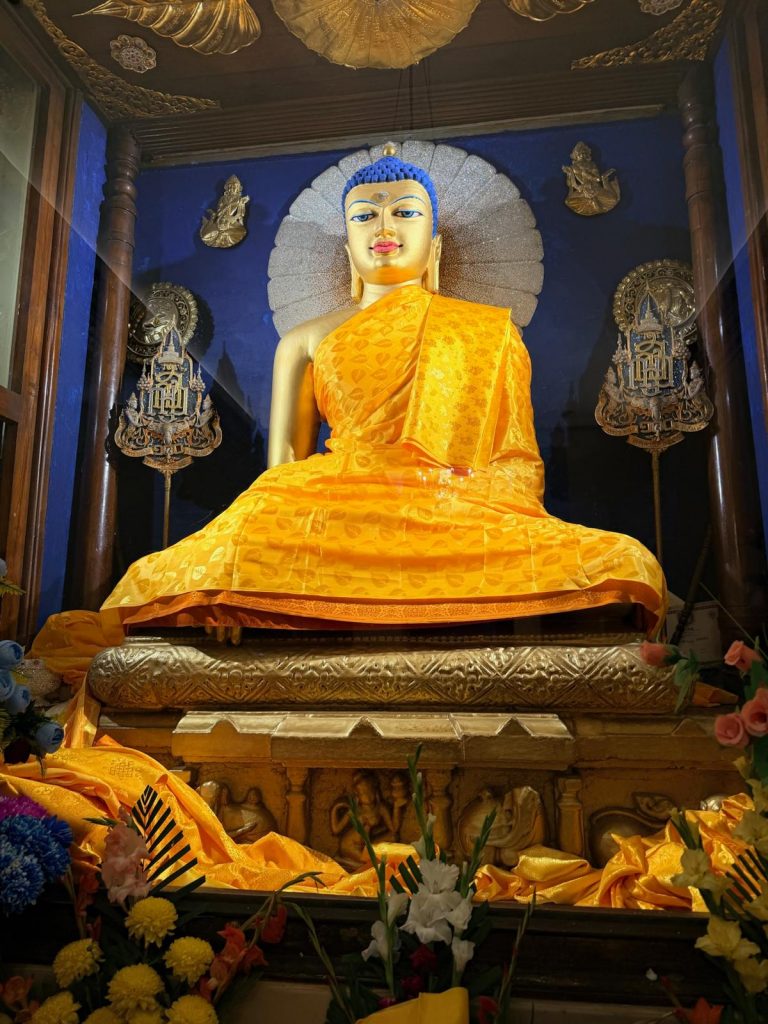
The word “Buddha” is derived from the Sanskrit/Pāli verbal root √budh (bodh), which means “to awaken,” or “to know.” Thus, the literal meaning of Buddha is “one who has awakened from the sleep of ignorance and has attained true knowledge of reality.” In the Buddhist tradition, a Buddha is one who, through personal effort and meditative practice, has realized samyak-saṃbodhi (perfect enlightenment) and, motivated by compassion for the welfare of the world, is capable of guiding others on the path to liberation.
On the other hand, when the moon attains its fullness, that day is called Puṇṇimā—meaning “the day of the full moon.” The term is feminine in gender and is commonly known as Pūrṇimā (Pāli: Puṇṇimā). In this sense, Buddha Pūrṇimā is not merely a sacred date but also a profound spiritual symbol. It represents a day when, outwardly, the moon reaches its fullness, and inwardly, the individual is illuminated by bodhi (enlightenment).
This day reminds us that Buddhahood is not merely a historical event but a state of consciousness in which the darkness of ignorance is dispelled, giving way to the light of wisdom, compassion, and equanimity. Just as the full moon illuminates the entire sky in its completeness, so too can we, through practice, resolve, and self-inquiry, move toward fullness, serenity, and insight in our own lives.
The Life of the Buddha: A Brief Introduction
Gautama Buddha was born in 563 BCE in Lumbini (present-day Nepal). His original name was Siddhartha Gautama. He was the son of King Shuddhodana of the Śākya clan and Queen Maya Devi. From childhood, Siddhartha exhibited a serious, contemplative, and detached disposition. One day, during a visit to the city, he encountered four significant sights: an old man, a sick person, a corpse, and a wandering ascetic. These experiences deeply affected him and awakened an awareness of the impermanence and suffering inherent in worldly life. As a result, at the age of 29, he renounced his household life in search of truth. This great renunciation is known in Pāli literature as mahābhinikkhamana (Sanskrit: Mahābhinishkramana).
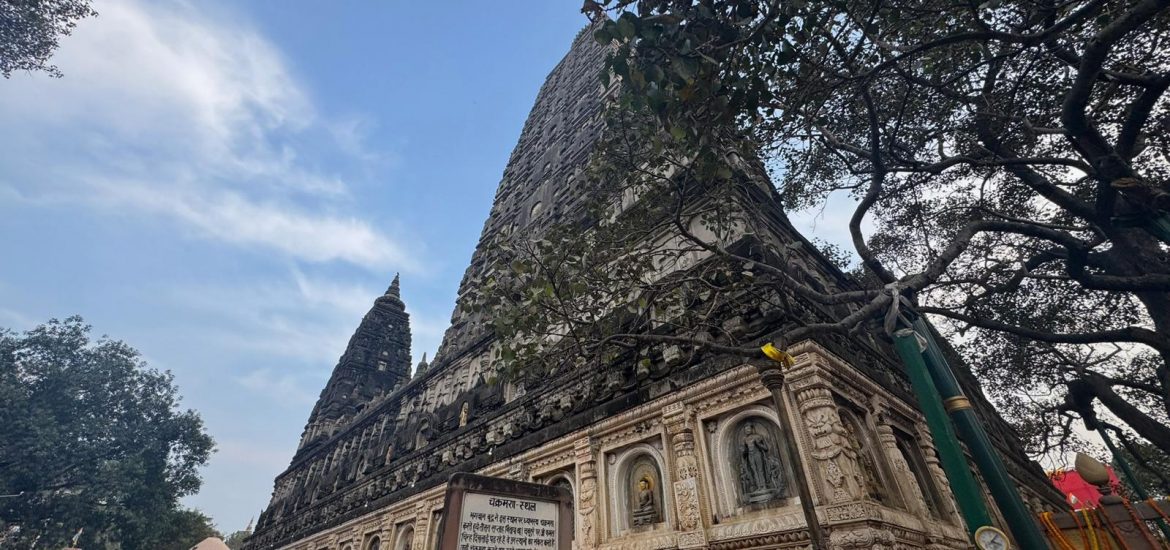
Thereafter, Siddhartha practiced severe austerities and meditation for six years. However, he realized that extreme asceticism was not the path to liberation. Ultimately, at Bodh Gaya, while meditating under a peepal tree, he attained samyak-bodhi (perfect enlightenment) at the age of 35 and became known as the “Buddha”—the Awakened One.
After attaining enlightenment, he delivered his first sermon at Sarnath to his former five companions, known as the Pañcavaggiyā bhikkhus. This discourse, called Dhammacakkappavattana (Sanskrit: Dharmacakrapravartana), laid out the Four Noble Truths and the Noble Eightfold Path, forming the foundation of his teachings, known as the Dhamma (Dharma).
For approximately 45 years, the Buddha traveled across various regions of India, spreading the Dhamma. At the age of 80, he delivered his final teachings at Kushinagar, where he attained Mahāparinirvāṇa (final passing away).
The Teachings of the Buddha: The Four Noble Truths and the Noble Eightfold Path
The knowledge attained by the Buddha was not confined to his own liberation; rather, it was intended for the welfare of all beings. Based on his direct realization and insight, he expounded teachings in which the Four Noble Truths and the Noble Eightfold Path hold central importance. The Four Noble Truths (Cattāri Ariyasaccāni) begin with the recognition that suffering (dukkha) exists. Birth, old age, illness, death, separation from what is dear, and association with what is unpleasant—all are forms of suffering.
The second truth identifies the cause of suffering as craving (taṇhā)—the continuous flow of desires and attachments.
The third truth declares that the cessation of this craving leads to the cessation of suffering, which is known as Nirvāṇa.
The fourth truth outlines the practical path leading to this cessation—namely, the Noble Eightfold Path. This path, also known as the Middle Path (Majjhimā Paṭipadā), consists of eight interrelated factors: Right View (sammādiṭṭhi), Right Intention (sammāsaṅkappo), Right Speech (sammāvācā), Right Action (sammākammanto), Right Livelihood (sammāājīvo), Right Effort (sammāvāyāmo), Right Mindfulness (sammāsati), and Right Concentration (sammāsamādhi).
This path is not merely philosophical but deeply practical. It guides the individual toward the cessation of suffering and the purification of the mind. It is neither a path of sensual gratification nor of self-mortification, but a disciplined way of life that cultivates moderation, mindfulness, and loving-kindness, ultimately leading to inner peace and liberation.
The Spiritual and Cultural Significance of Buddha Pūrṇimā
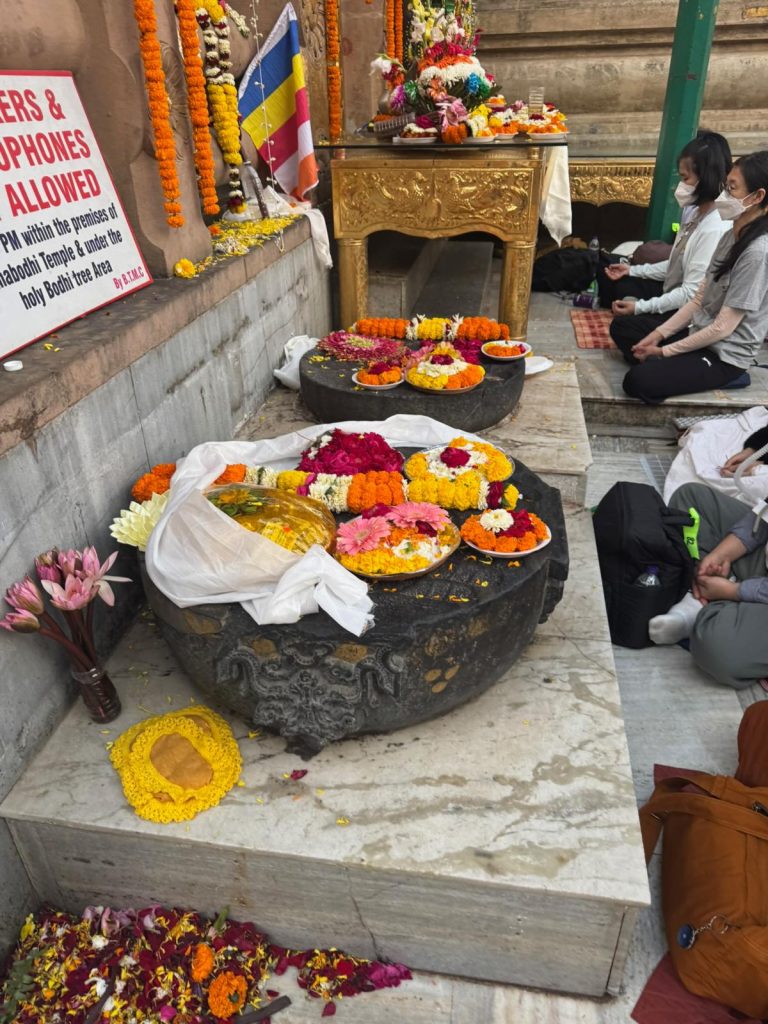
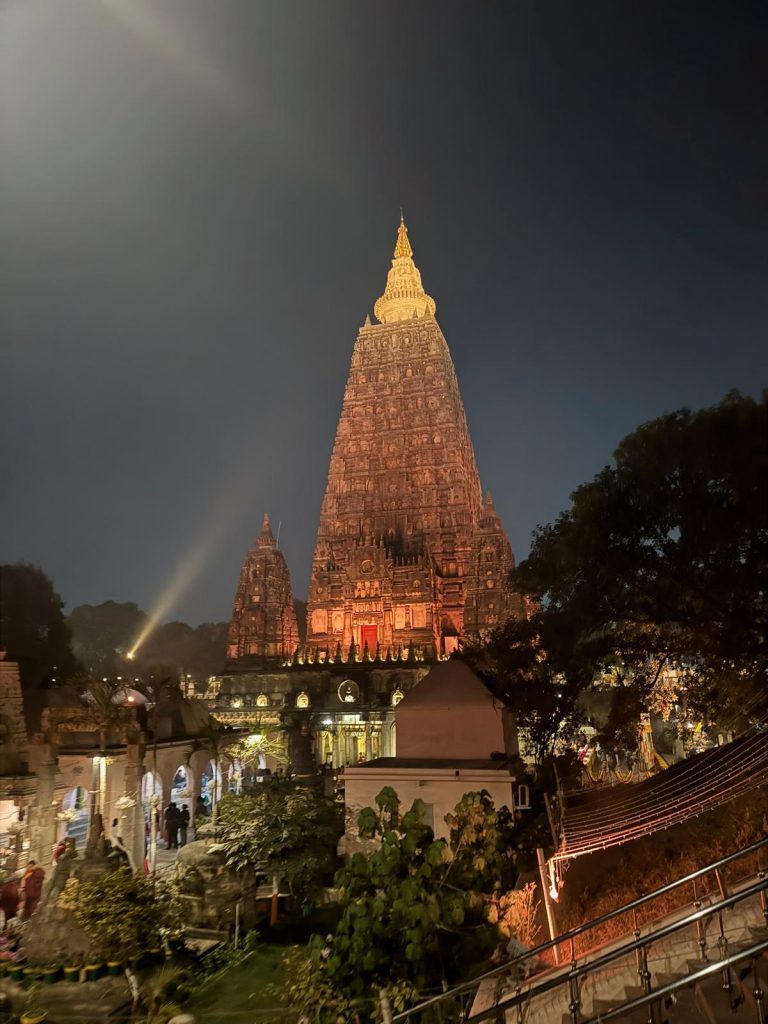
The festival of Buddha Pūrṇimā is not merely a religious observance or a historical remembrance; rather, it is a sublime celebration of human consciousness, compassion, and self-realization. According to the Theravāda Buddhist tradition, the three major events in the life of all Buddhas—birth, enlightenment (bodhi), and Mahāparinirvāṇa—are believed to have occurred on the full moon day of Vaiśākha. Thus, this date symbolizes not only a threefold sacred memory but also a renewed commitment to the Dhamma, self-purification, and the resumption of spiritual practice.
From a spiritual perspective, Buddha Pūrṇimā commemorates the divine moment when Siddhartha’s journey culminated in Buddhahood. It marks the transition from ignorance to enlightenment—the dispelling of darkness and the arising of inner illumination. In Buddhist understanding, the Buddha’s enlightenment was not limited to personal liberation; it provided a universal path for the cessation of suffering for all beings. His teachings emphasize sīla (moral discipline), samādhi (meditative concentration), and paññā (wisdom), along with the Four Brahmavihāras—loving-kindness (mettā), compassion (karuṇā), empathetic joy (muditā), and equanimity (upekkhā)—as the foundational principles of life. On this day, practitioners engage in self-reflection, meditation, fasting, and meritorious deeds, remembering and embodying these virtues.
Buddha Pūrṇimā also reminds us that just as the full moon illuminates the night sky, so too can human beings illuminate their lives through discipline, resolve, and spiritual practice. It is a call to inner awakening—to emerge from the darkness within, to overcome craving and delusion, and to move toward peace and balance. Through meditation, prayer, silence, and acts of service, practitioners orient themselves toward the purification of the mind.
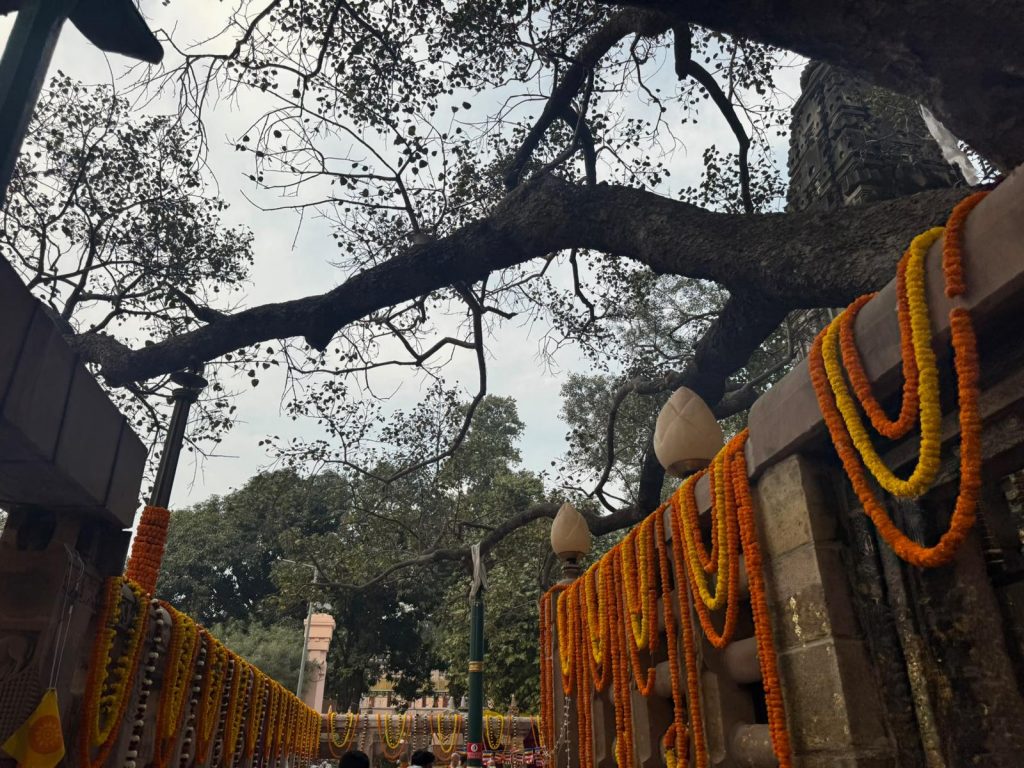
From a cultural perspective, Buddha Pūrṇimā is celebrated with devotion, reverence, and grandeur across India and many parts of the world. The United Nations formally recognized this day as the “International Vesak Day” on 13 December 1999 during its 54th General Assembly session. This recognition stands as a powerful affirmation of the enduring relevance of the Buddha’s teachings for global peace, human values, and spiritual awareness.
In a world increasingly troubled by violence, hatred, materialism, and mental unrest, the words of the Buddha—preserved in the Dhammapada (verse 5)—continue to guide humanity:
“na hi verena verāni, sammantīdha kudācanaṃ; averena ca sammanti, esa dhammo sanantano.”
“Hatred is never appeased by hatred in this world; by non-hatred alone is hatred appeased. This is an eternal law.”
Like a beacon of light, this timeless message inspires all beings to walk the path of truth, compassion, and restraint.
Conclusion
In India, festivals and celebrations hold a special place, not only as expressions of religious sentiment but also as carriers of social awareness, moral values, and spiritual consciousness. In this context, Buddha Pūrṇimā should not be seen merely as a historical remembrance of the past, but as a divine message for the renewal of morality, compassion, and awareness in contemporary life.
Gautama Buddha himself never claimed that he was the only Buddha. He clearly stated that many Buddhas had arisen before him and that many would arise in the future. Thus, the term “Buddha” does not refer to a single individual, but is a universal designation for all those great beings who attain enlightenment. It is a timeless possibility—open to all, in every age. The Dhamma taught by the Buddha is neither confined to any caste, class, or period, nor is it limited to a single lifetime. Rather, it is eternal—“esa dhammo sanantano” (“This Dhamma is timeless”). Buddha Pūrṇimā reaffirms this eternal truth: a Dhamma grounded in compassion, truth, non-violence, and self-realization.
This sacred occasion reminds us that the potential for Buddhahood exists within every individual. Through loving-kindness, discipline, and the practice of the morality, this potential can be realized and brought to fruition.
“Buddhaṃ saraṇaṃ gacchāmi.
Dhammaṃ saraṇaṃ gacchāmi.
Saṅghaṃ saraṇaṃ gacchāmi.”
“I go to the Buddha for refuge.
I go to the Dhamma for refuge.
I go to the Saṅgha for refuge.”
Related features from BDG
When the Buddha Became Time: The Third Turning of the Wheel
Remarkable Buddha Pūrṇimā: An Inspiration for Celebrating Community Harmony with Buddhists and Beyond
Buddhistdoor View: Celebrating the Many Lifetimes of the Bodhisattva in the Jatakas