
By Hendrick Tanuwidjaja
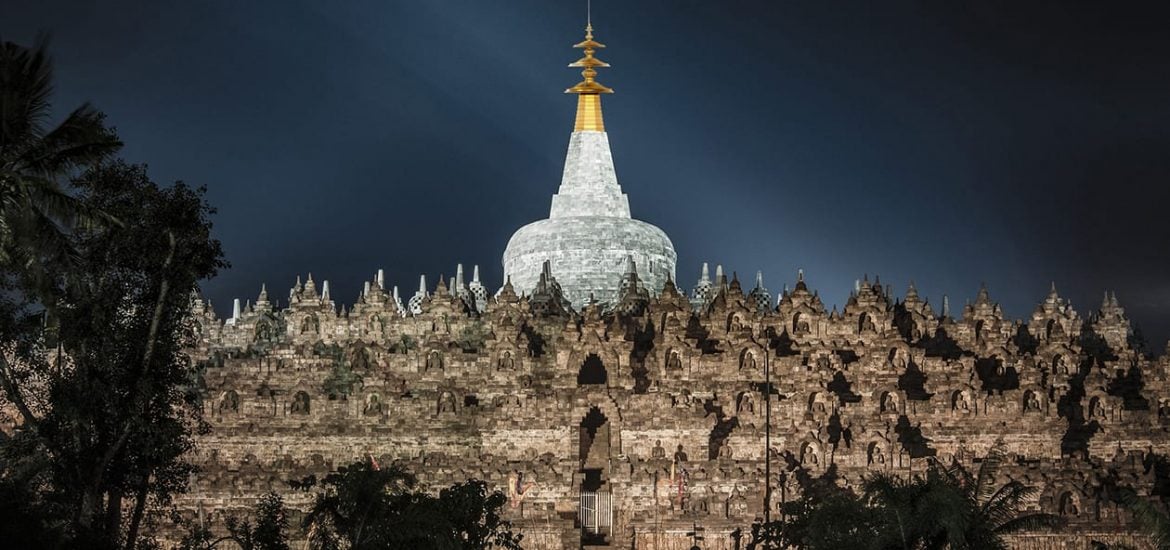
In January 2026, a significant step was taken toward restoring the spiritual completeness of Borobudur, the world’s largest Buddhist monument and a UNESCO-listed sacred site.
The Directorate General of Buddhist Community Guidance (Ditjen Bimas Buddha) convened a high-level consultative meeting in Jakarta, bringing together leaders of national Buddhist religious organizations and Buddhist civic associations. The gathering marked the first formal follow-up stage in an adaptive, carefully phased plan to install a chattra—the parasol crowning a stupa—on the summit of Borobudur’s Mahāstūpa.
Held at the H.M. Rasjidi Auditorium of Indonesia’s Ministry of Religious Affairs, the meeting reflected a broader governmental commitment to nurture religious life while safeguarding cultural heritage, as mandated under Ministerial Regulation No. 33 of 2024. More than a technical briefing, the forum was framed as an internal dialogue within the Buddhist community itself, emphasizing spiritual meaning, symbolic coherence, and philosophical grounding.
An Adaptive Path Rooted in Dialogue
Prior to this meeting, Indonesia’s Ministry of Culture—through its Directorate General for the Protection of Culture and Tradition—had organized cross-ministerial consultations with heritage experts, including representatives from Ditjen Bimas Buddha. Those discussions produced initial conceptual and technical inputs regarding the proposed chattra. The January forum was designed to translate these inputs into a shared Buddhist understanding.
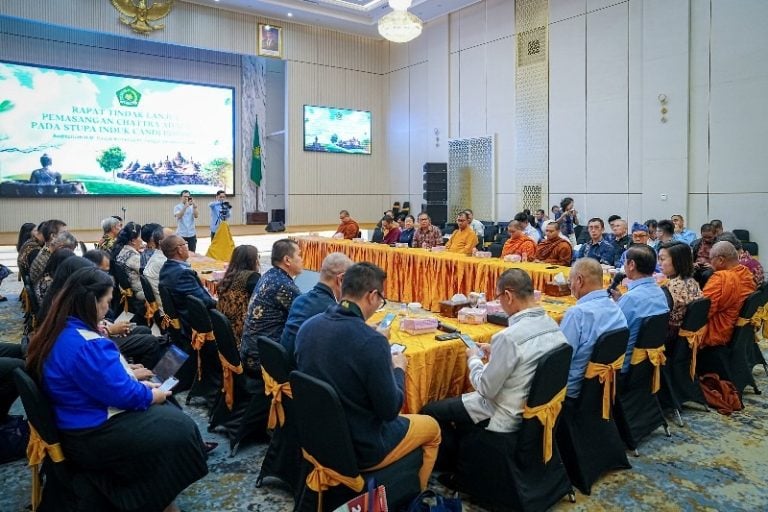
“Borobudur is a trust placed in our care, not a possession we own,” said Vice Minister for the Creative Economy, Irene Umar, had said. “Our shared task is to ensure that it brings tangible social and economic benefits to surrounding communities. By setting aside individual egos and speaking with one voice, any decision we reach can stand as a symbol of Indonesia’s unity in a changing world.”
Director General Supriyadi underscored that the process would be gradual and non-instantaneous. The adaptive approach, he explained, reflects both reverence for Buddhist spirituality and strict adherence to conservation ethics. “Because the chattra directly concerns the spiritual life of Buddhists, consensus must arise from the Buddhist community itself,” he noted, emphasizing that spiritual legitimacy cannot be imposed externally.
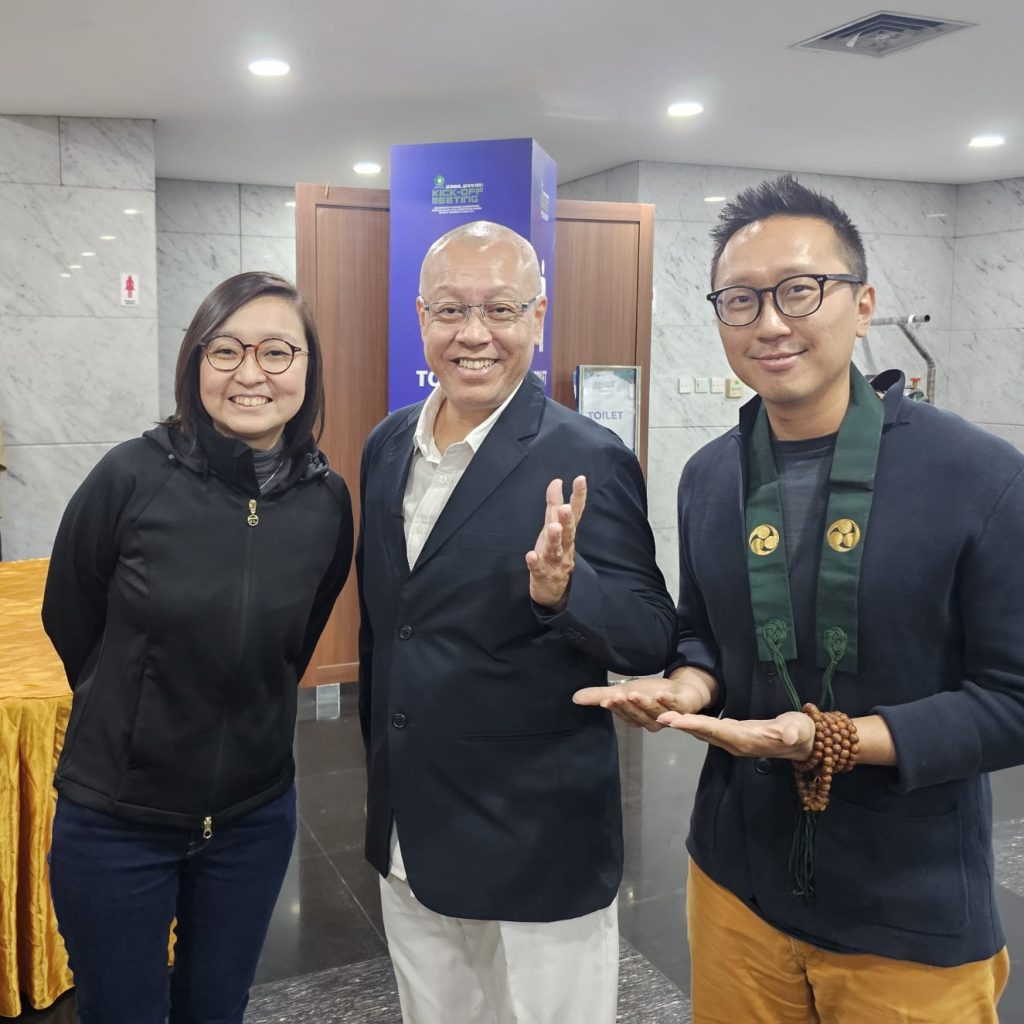
Three speakers (Hudaya Kandahjaya, Hendrick Tanuwidjaja, Handaka Vijjananda) framed the discussion from distinct yet converging angles—doctrinal meaning, spiritual offering, and heritage responsibility—highlighting the multidimensional significance of reinstalling the chattra at Borobudur.
Borobudur as a Living Tathāgata Stupa
Academic perspectives presented during the meeting situated the proposal within long-standing Buddhist doctrine and iconography. Scholar Hudaya Kandahjaya argued that adapting a chatrāvalī at Borobudur is not merely an aesthetic or historical gesture, but a reaffirmation of Borobudur as a Tathāgata stūpa—a living monument embodying the Buddha’s awakened presence.
Offering, Merit, and Virtue in Tripitaka
Hendrick Tanuwidjaja highlighted another dimension: chattra offering as a form of important puṇya (merit) in the Borobudur texts. In Buddhist textual traditions, the parasol is among the most exalted offerings, symbolizing shelter, compassion, and the aspiration to liberate all beings.
From this perspective of Tripitaka, the summit stupa is not an empty architectural relic, but a symbol of the dharmakāya, the Buddha’s body of truth. The absence of a chattra—traditionally the apex marker of awakening, sovereignty, and protection—has long been likened in Buddhist cultures to “a king without a crown.”
Conservation, UNESCO, and Global Responsibility
Concerns regarding heritage protection were addressed directly. Handaka Vijjananda affirmed that any adaptive intervention would strictly observe national regulations, UNESCO guidelines, and international best practices, including the completion of a Heritage Impact Assessment (HIA). This commitment aligns Indonesia’s spiritual aspirations with its responsibilities as custodian of a world heritage site under UNESCO.
The Chattra Triratna Daśabhūmi: Form and Meaning
The proposed chattra design by Handaka Vijjananda, provisionally named Chattra Triratna Daśabhūmi, is designed to be 6.2 meters in height, constructed from bronze and steel, and gilded with gold. Its structure carries layered symbolism intelligible across Buddhist traditions:
- Ten octagonal rings represent the daśa-bhūmi, the ten stages of the bodhisattva path toward full awakening.
- Three crowning discs symbolize the Three Refuges—Buddha, Dharma, and Saṅgha.
- Together, these elements resonate with the Vajrayāna iconography of thirteen stages of awakening (trayodaśa-bhūmi), integrating Mahāyāna and Esoteric traditions without privileging one lineage over another.

As both a spiritual emblem and an architectural form, the parasol is intended to function as a sign of universal compassion and wisdom—an offering not only to the Buddhist faithful, but to humanity at large.
Toward a Shared Future
The outcomes of the January meeting were formally recorded in a signed memorandum, expressing an initial shared understanding among Buddhist organizations. This document will serve as the foundation for the first of seven adaptive stages leading toward the planned installation in the future.
Rather than a rupture with the past, Indonesia’s approach frames the chattra as a thoughtful adaptation – an act of continuity that honors ancient Buddhist cosmology, modern conservation science, and the lived spirituality of today’s Buddhist community. For international observers, Borobudur’s evolving story offers a rare example of how a sacred monument can remain both historically protected and spiritually alive.