

In the Pure Land tradition, there is a phrase: “easy to practice, hard to accept.” In the context of Pure Land teaching, this denotes the extraordinary reality of Amitabha Buddha’s offer that all beings can be reborn in his paradisical Pure Land and be enlightened with just a six-syllable mantra (Namo Amitabha). It is miraculous, and simply too difficult for many of us, to accept intellectually and emotionally.
In a similar spirit, Jesus Christ’s transformative message, “love your neighbor as yourself” (Matthew 22:39; Mark 12:31) and “pray for those who persecute you” (Matthew 5:44; Luke 6:27), is extraordinarily simple in practice. There is no complex theology behind this radical commandment. Yet, as fallen human history has demonstrated repeatedly, this very simplicity to love one’s neighbor as oneself is what is hard to actually accept, in the head and heart. To accept it would be to concede that God demands a radical reorientation, or even overturning, of all our priorities and assumptions. We are called by our higher power, however it may appear to us, to radically transform our minds and attitudes.
The story of equality, dignity, and covenantal love flows liberally and generously within the Christian tradition, even if it has not yet been fully affirmed by the Anglican hierarchy (cf. Genesis 1:27; Leviticus 19:18; Galatians 3:28; John 13:34–35). These texts remind us that love, justice, and human dignity are woven into the very fabric of Christian teaching, often preceding formal doctrinal recognition.

The Buddha made no mention of sexual orientation in his core sermons, recorded in the Pali Tipitaka, and certainly never characterized sexual orientation as contributing to the manifestation of wholesome or unwholesome thoughts and acts. It would follow that the committing of said wholesome or unwholesome thoughts and acts seems to flow from our ethics alone, rather than whether one is attracted to women or men or both.
Similarly, Jesus Christ in his early ministry spoke on everything from poverty and politics to divorce and power (Matthew 5–7; Mark 10:2–12), yet never once addressed same-sex relationships. Sexuality was peripheral at best, a non-issue at worst. The only recorded encounter with individuals whom modern scholars suggest may have formed a same-sex couple, the Centurion’s servant (Matthew 8:5–13; Luke 7:1–10), is a story of presence, affirmation, and healing, showing the care Jesus extended to those close to someone in bodily or social suffering.
Until early February this year, the Church of England appeared to stand on the vanguard of ecclesial engagement with questions of sexuality and equality. Through the Living in Love and Faith working group, it sought to explore human sexuality and the dignity of LGBTQIA+ Christians in the UK. But this £1.6 million initiative has reached an impasse when General Synod, the Church’s governing body, declined to authorize stand-alone services of blessing for same-sex couples (cf. Romans 13:1–7 on authority; Galatians 5:14 on love).
In response, the organization Together for the Church of England observed that “among people in the pews, and among LGBTQIA+ Christians across the country, the need for reform is clear.” These words resonate prophetically within a Church wrestling with whether it will repent of patterns of exclusion or remain bound to them (Micah 6:8; James 2:1–9). Opponents of these blessings for same-sex couples present them as a desperate attempt by church authorities to chase the cultural zeitgeist, particularly following the legalisation of same-sex marriage in 2014 under the Conservative government.
However, this framing mischaracterizes the reality that all governments around the world, no matter their political orientation, seek to appear responsive to their people’s zeitgeist. In 2024, the king of Thailand signed into law a landmark marriage-equality bill, making the Buddhist-majority country the first in Southeast Asia to officially recognize same-sex unions. The law took effect on 22 January 2025. This significant move forward in traditional Theravada Thailand reflects transgender activist Hua Boonyapisomparn’s thoughts, which were shared in an interview with BDG:
How can you engage in spiritual practice if you don’t feel safe? First you need a practice space where you feel safe, where you can practice according to your faith—whether you’re a Buddhist, a Christian, or a Muslim. A lot of LGBT people don’t always feel safe in a traditional temple because a lot of the teachings are still being misinterpreted—for example, karma: that I was born as a transgender woman because of something terrible I did in a past life. When you teach people like this, you’re not liberating them, you only oppress them! You’re taking away their value.
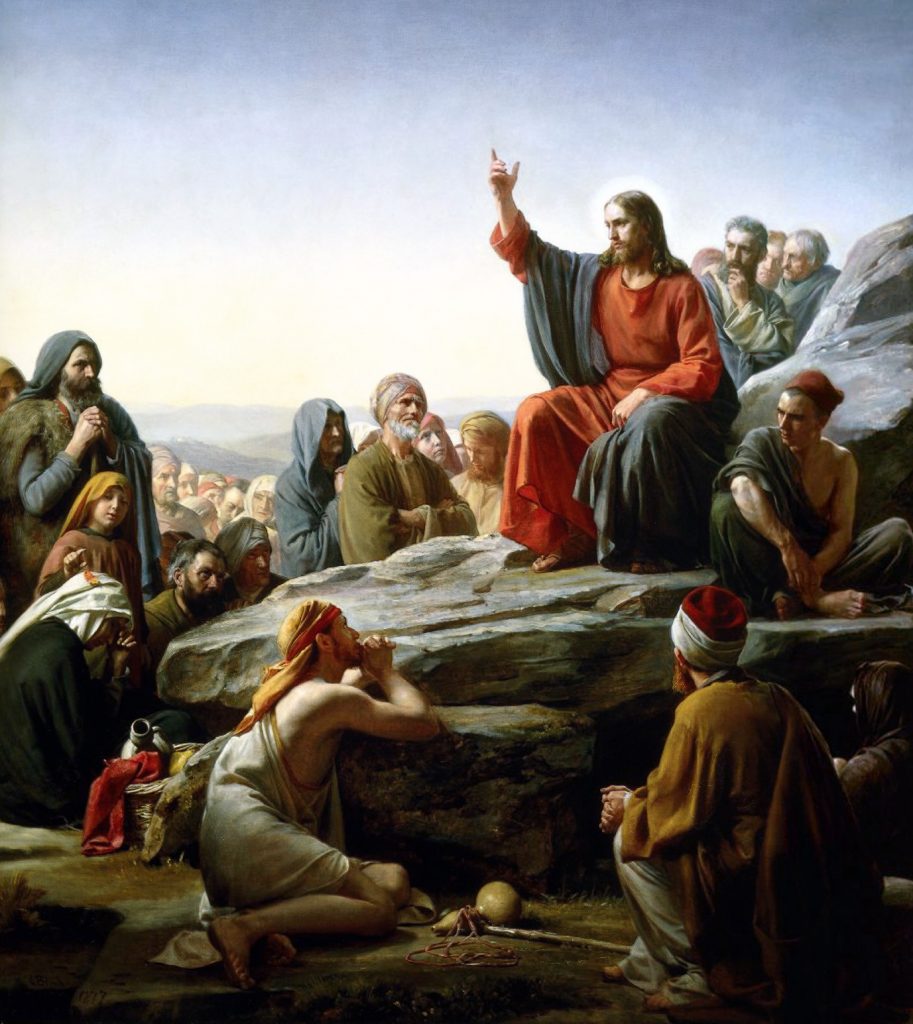
This perspective from Boonyapisomparn seems to align with that of writers like Alex O’Connor, who argues that LGBTQIA+ issues are not primarily a philosophical puzzle to be solved, but a matter of lived reality demanding moral courage, compassion, and concrete care. This resonates with the witness of Jesus, whose care and affirmation in the lives of others take precedence over abstract moral codes or doctrinal theorizing. Grounding our ethics in real human experience rather than solely in rules or abstract debate is precisely what the Church must recover if it is to bless, affirm, and walk faithfully with its LGBTQIA+ siblings.
When it comes to looking for a scriptural basis, opponents of same-sex unions resort to the Mosaic purity codes found in the book of Deuteronomy in the Old Testament. These contain the much-touted injunction, “a man shall not lie with a man” (Deuteronomy 22:5; Leviticus 18:22). Opponents forget that in the book of Acts in the New Testament, Gentile Christians were released from these obligations, along with rules against wearing clothes of mixed fibers, consuming pork, and the otherwise “delicious” shellfish dishes now guilt-free for all Christian diners (Acts 15:19–20, 28–29).
Moses may have been the lawgiver, but the Jesus of history was the liberator. Jesus sought to transform and empower his people by the Holy Spirit, not shackle them to a highly moralistic purity code of 613 rules, many of which he himself flaunted. He loved to eat and drink on the Sabbath (Mark 2:23–28; Luke 6:1–11) and healed the sick on the Sabbath (Mark 3:1–6; Luke 13:10–17). It was precisely these acts of radical care and freedom that provoked the religious authorities of the day to turn against him and plot his death.
Although Buddhism emerged in the different cultural ecosystem of Vedic India, as a trans-cultural religion, it historically assimilated cultural mores wherever it went, rather than imposing its own mores on the regions it diffused in. Its third precept, to abstain from sexual misconduct, is an ethical instruction that otherwise makes no comment in regard to personal attraction. From the Himalayas to East Asia; from Central Eurasian heartland of Russia and Mongolia to the melting pots of Southeast Asia, the Buddhist tradition trusts societies to arrive at its own conclusions on what constitutes “sexual misconduct.” Buddhism understands that social constructs or conventions, especially ones that are harmful or unhelpful to social flourishing and harmony, can be discarded without any attachment.
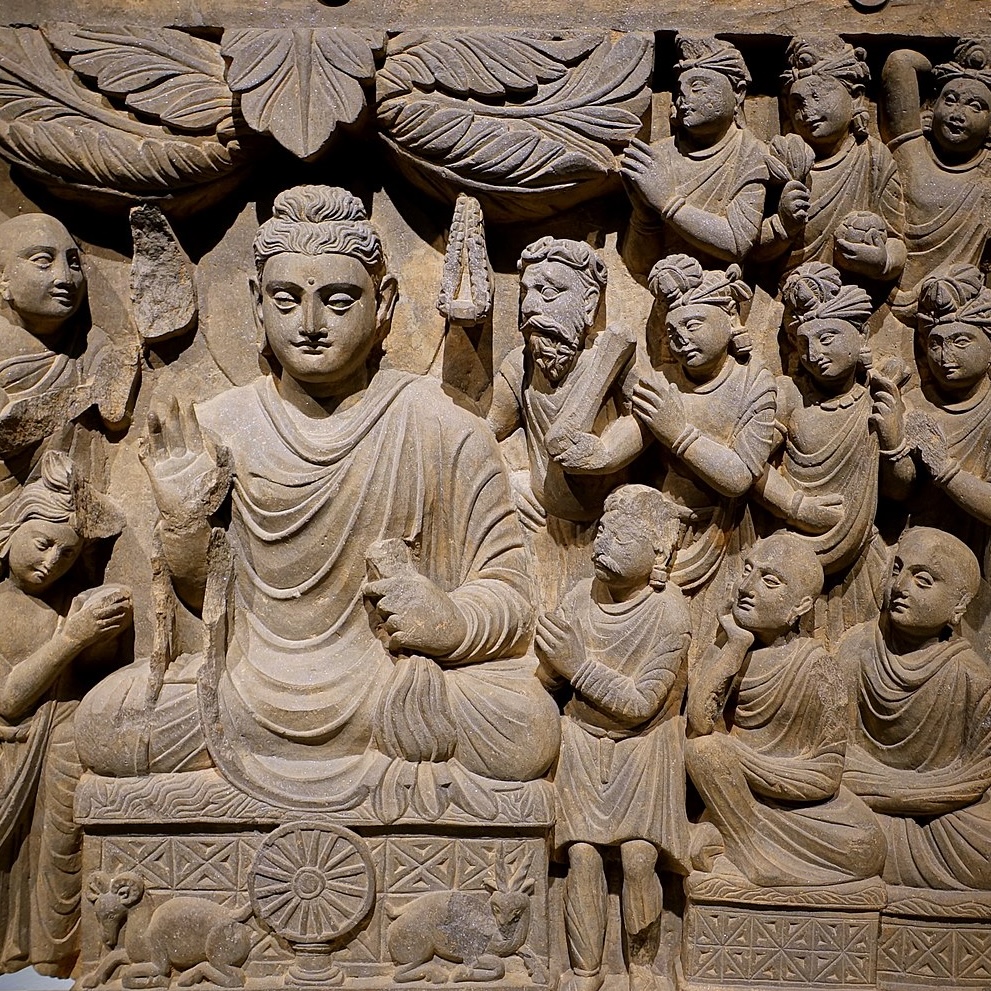
In the Christian world, the question must be posed afresh: “Why are the religious authorities of the day elevating a highly faux moralistic law code as a tool of oppression against LGBTQIA+ people?” Recall the example of slavery in European colonial empires and the Americas. The Church, prior to abolition, relied on a few passages of Scripture, poorly cobbled together, to justify the sin of slavery, for which it is now rightly engaging in institutional repentance (cf. Galatians 3:28; Micah 6:8). Likewise, future generations will, I believe, look back on the Church of England and the Roman Catholic Church and see a similar moral failure regarding LGBTQIA+ Christians: a failure that demands repentance for the sin of homophobia and the persecution of their queer siblings in Christ (James 2:1–9; 1 John 4:7–12).
The Living in Love and Faith working group listens with attentive reverence to the lived experience of LGBTQIA+ disciples who have suffered the poison of exclusion and shame in the very communities that should be treating them as “fearfully and wonderfully made” (Psalm 139:14), reflecting the Imago Dei, the image of God inscribed on their hearts.
Yet church prelates in parts of the developing world turn a blind eye when their gay sisters and brothers face brutal persecution in places such as Uganda, where anti-LGBTQ+ laws impose life imprisonment or even the death penalty, and in countries across parts of the Middle East and Africa where consensual same-sex relations are still criminalised and can attract imprisonment or worse (Afghanistan, Iran, Saudi Arabia, Somalia, Nigeria, Yemen, Pakistan, Brunei, Qatar, United Arab Emirates, and others). Then, at Synod, they argue against human rights. Is this not the behavior of modern-day Pharisees?
The doctrine of tathagathagarbha—the doctrine that within every sentient being, without exception, is the seed or womb of Buddhahood. It is absurd to suggest that the tathagathagarbha is somehow diminished within LGBTQIA+ people. Though our minds are temporarily contaminated by defilement (agantukaklesa), which notably can lead to the Three Poisons as well as mind poisons like prejudice, binary thinking, and reification leading to bigotry and narrow-mindedness (against homosexual and other marginalized communities, perhaps), the doctrine of tathagathagarbha assures us that all sentient beings are capable of enlightenment. As early as the ancient Accharāsaṅghātavagga in the Pali Anguttara-nikaya (1:5), the idea of an inherently pure mind (pabhassar cittaṁ) in all beings can be found:
Pabhassaramidaṁ, bhikkhave, cittaṁ. Tañca kho āgantukehi upakkilesehi upakkiliṭṭhan ti.
Pabhassaramidaṁ, bhikkhave, cittaṁ. Tañca kho āgantukehi upakkilesehi vippamuttan ti.This mind, mendicants, is radiant. But it’s corrupted by passing corruptions.
This mind, mendicants, is radiant. And it is freed from passing corruptions.
This radiant mind universally applies to all beings. The question follows: what do we do with this teaching, at a societal level? The prophet Micah posed such an unflinching question: “What does the Lord require of you but to do justice, love mercy, and walk humbly with your God?” (Micah 6:8). His words speak with prophetic force today, challenging the authorities of the Church to do better. It is only right and just for Synod to offer our LGBTQIA+ siblings the opportunity to form stable, faithful, and covenantal relationships with our love and every blessing. The same applies to our fellow human beings across the world, in all countries, regardless of faith tradition.
From Christian thought to Buddhist perspectives, questions of relational ethics, care, and compassion remain central. Across faiths, the call is the same: to honour dignity, reduce suffering, and cultivate inclusive belonging. Will we have the courage to accept that which is, in reality, exceedingly easy to practice?
See more
The Significance of ‘Tathagatagarbha’: A Positive Expression of ‘Sunyata’
Related features from BDG
Engaged Buddhism: The Bodhisattva Path to Gender Equality in Thailand