
Takht-i-Bahi, the throne of light, in Pakistan. Sanchi Stupa, the third century BC-old great masterpiece of Ashoka the Great. While these sites aren’t technically the oldest Buddhist dwellings and sanctuaries ever built, they certainly are among the most important surviving remnants of early Buddhist architecture in South and Central Asia, where the dispensation first flourished and its devotees began constructing temples and monasteries. These are the “great old ones” that hold a unique place in the constellation of surviving Buddhist structures from periods past.
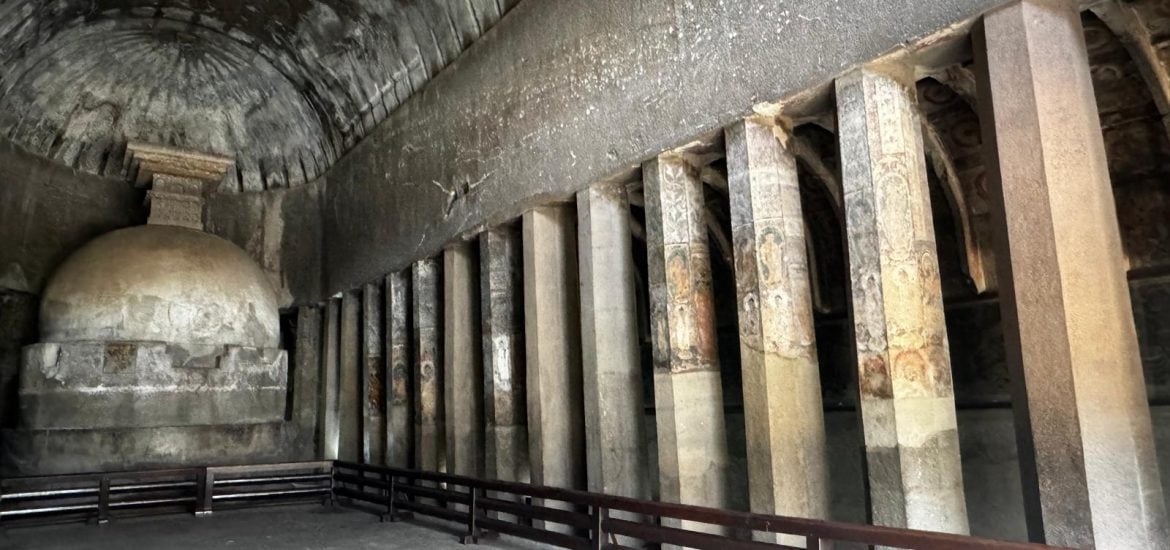
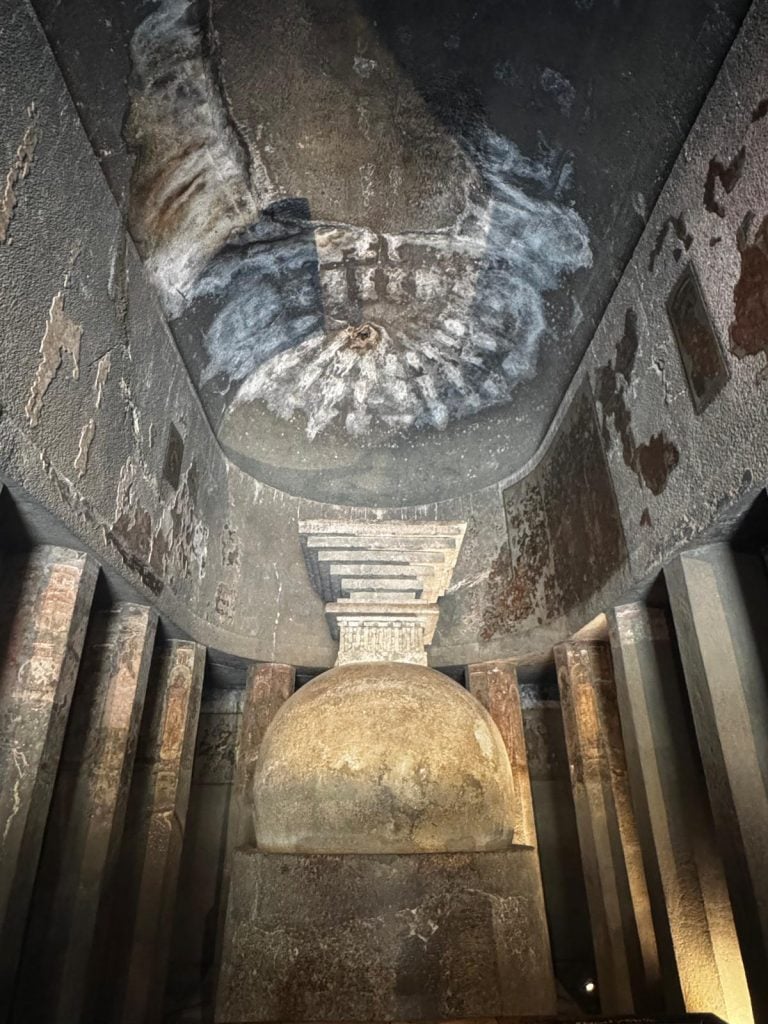
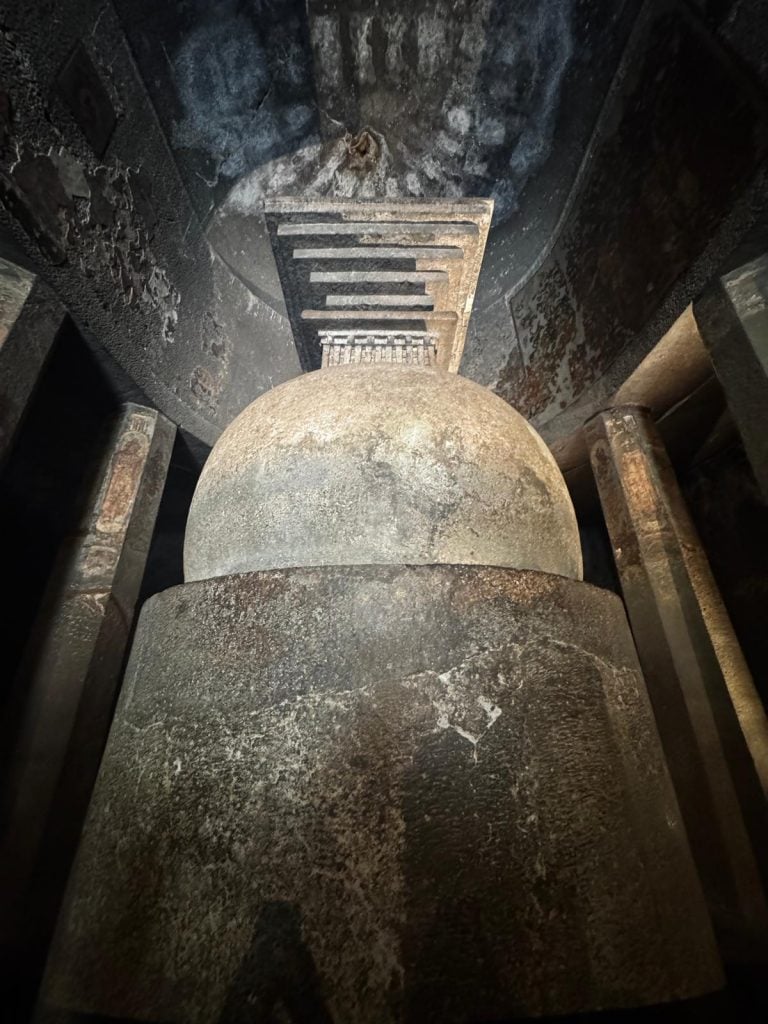
I was reminded of this at Cave 10, the oldest sanctum at the Ajanta complex, which was constructed under the patronage of the Deccanese Satavahana dynasty (2nd century BC–early 3rd century AD). The earliest stratum of Cave 10 dates back to the first century BC, with its final additions and renovations being made in the fifth century AD. The stupa at the far end of the chaitya hall, an icon of aniconic representations of the Buddha, is a reminder of the most ancient tradition of depicting the Traceless One in non-anthropomorphic form.
The recent news of an excavation of a huge and ancient monastery in the Gaya district, Bihar, only highlights how much there is left to discover, protect, and preserve. . . even with all that we have lost to the ravages of time, neglect and destruction. This newly discovered monastery at Dubba village (about 30 kilometers southwest of Bodh Gaya and 140 kilometers from Patna) was unearthed by a team from the Department of Ancient Indian and Asian Studies at Magadh University. It had begun digging on 9 May. The astonishing settlement is believed to date back 1,200 years, which would make it among the “great old ones,” almost as olden as Cave 10 at Ajanta.
Like Ajanta’s caves, the site has many archeological layers. Shanker Sharma, a member of the excavation team and assistant professor at Magadh University, said that the Northern Black Polished Ware (NBPW)-associated pottery, including Black Slipped Ware is from the third and second centuries BC, while the middle layers are from the post-Gupta period, and the final top two layers are from the Pala era, between the eighth and twelfth centuries AD. The monastery itself might date from the eighth century, during which the tantric movement was in full swing in India.
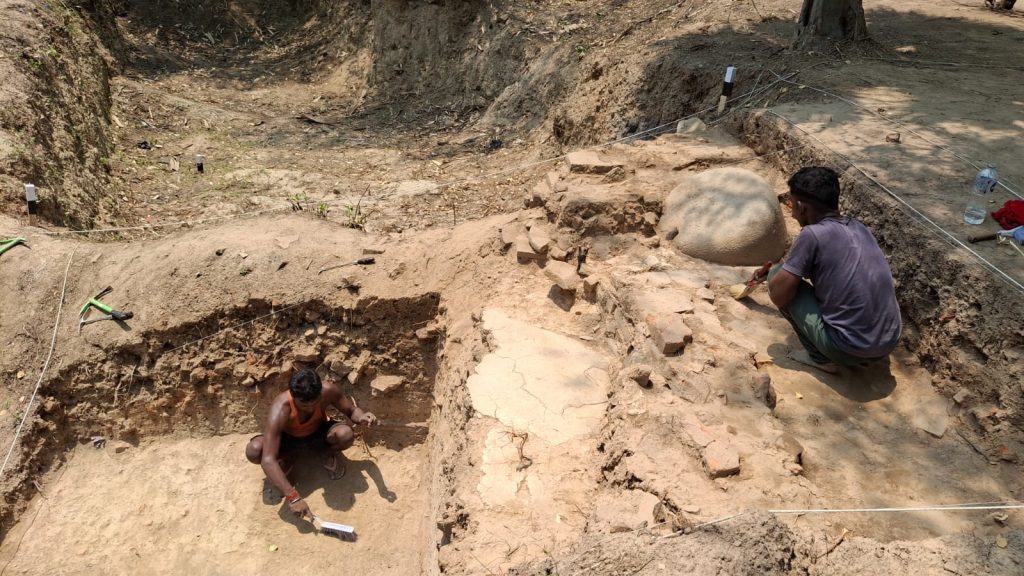
According to the website ETV Bharat, findings at the two story-monastery include brick structures, small cells with niches in the walls, votive stupas, and stone statues. (ETV Bharat) In one of the cell niches, three statues were discovered, with two identified as the Buddha in his unique earth-touching mudra, and even the tantric goddess Tara. There were also items of notable aesthetic taste, including a beautiful terracotta lid resembling a lotus bud, which might have been used to seal bottles of incense or oil imported from westward trading locations. Many more terracotta beads have also been discovered at the site. A 35-foot-high mound also promises to yield more archeological wonders.
Neglect over decades and centuries can do as much damage as devastating waves of invasion and pillage. We must treasure whatever monuments that remain with us from the ancient Buddhist eras. The Indian government deserves credit for staking political capital and national pride on preservation of Buddhist artifacts (and remember how swiftly it moved to halt the sale of the Piprahwa Relics by Sotheby’s Hong Kong in 2025). The government should consider upgrading the museological experience at museums across the board, in all states, so that the treasures in these museums can shine as brightly and receive as many visitors as counterparts in the British Museum or the Guimet.
See more
1200-Year-Old Buddhist Monastery Remains Unearthed In Bihar’s Gaya; Archaeologists Discover Rare Artefacts (ETV Bharat)
Related news from BDG
International Conference Adopts Delhi Declaration to Safeguard India’s Rural Buddhist Heritage
Related features from BDG
Buddhistdoor View: Aging Is Impermanence’s Greatest Lesson
A Journey Through the Art of Compassion with Benoy K. Behl: The Ajanta Caves
Related posts from Tea House
Postcard from Raymond: Preservation at its Finest (Cave 26, Ajanta)