
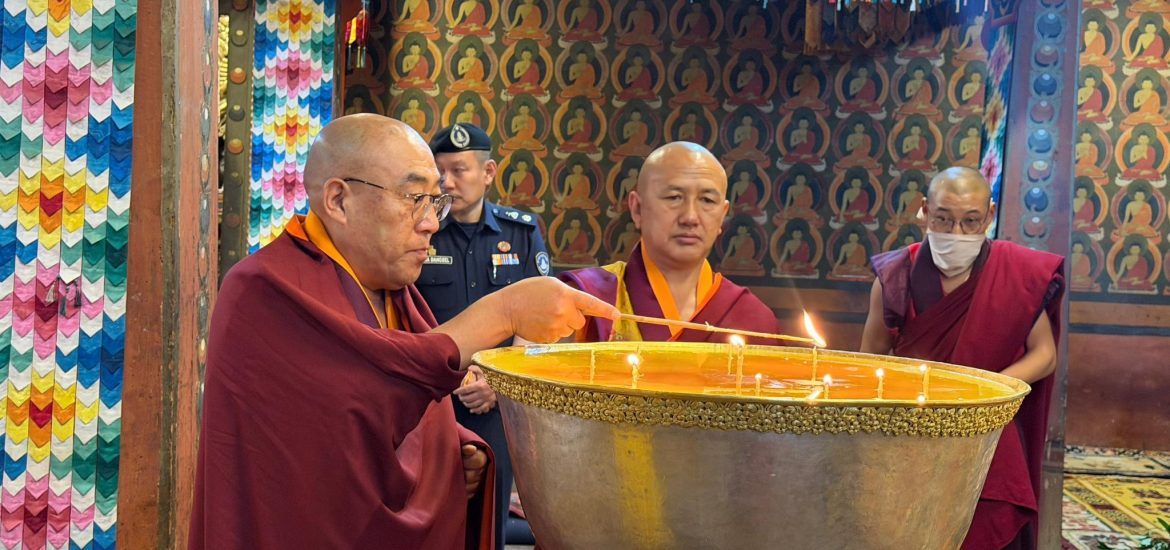
It was May 17. The air along the highway from Simtokha to Tashichho Dzong was thick with incense and joy as the Central Monastic Body of Bhutan (CMB) completed its annual summer migration, arriving at the capital’s great fortress in Thimphu to begin six months of sacred rites.
Led by His Eminence the Dorji Lopen Rinpoche and Their Eminences the Lopen Lhengay, the Mahāsangha—together with the Sacred Relics—departed Punakha Dzong on 16 May and spent a night at Sangzab Phodrang before entering Thimphu. At Tashichho Dzong, the Honorable Prime Minister Tsering Tobgay, cabinet ministers, and senior government officials offered a warm reception.
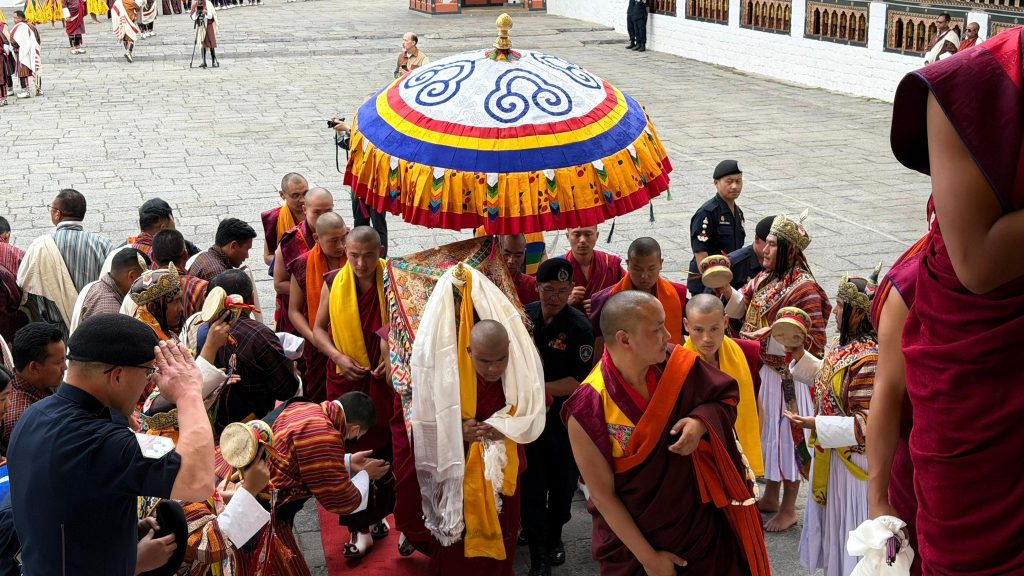
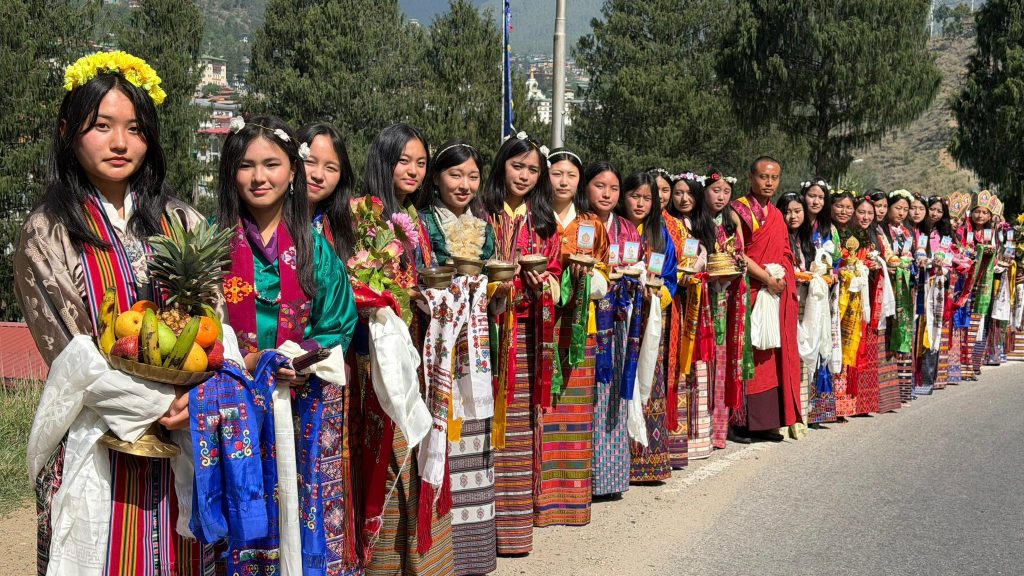
But it was the common people who painted the most memorable picture. Families, elderly devotees and young children lined both sides of the road from Simtokha to the capital, straining for a glimpse of the great teachers and lopens as their procession passed. Village girls, dressed in their finest kira, had decorated their hair with spring wildflowers, and every face wore a smile in this Kingdom of Happiness. Many knelt with butter lamps and offered white scarves, believing a single look at the sacred relics brings merit for a lifetime.
A tradition born of wisdom
The twice‑yearly migration is no modern invention. It was established in the 17th century by the great unifier Zhabdrung Ngawang Namgyel, who formalised the Central Monastic Body in 1621. Recognising that Punakha’s subtropical valley becomes oppressively hot in summer while Thimphu’s high altitude turns bitterly cold in winter, the Zhabdrung ordained a practical rhythm: the Sangha would spend the cool summer months in Thimphu and the warm winter months in Punakha. That 400‑year‑old wisdom continues unchanged.
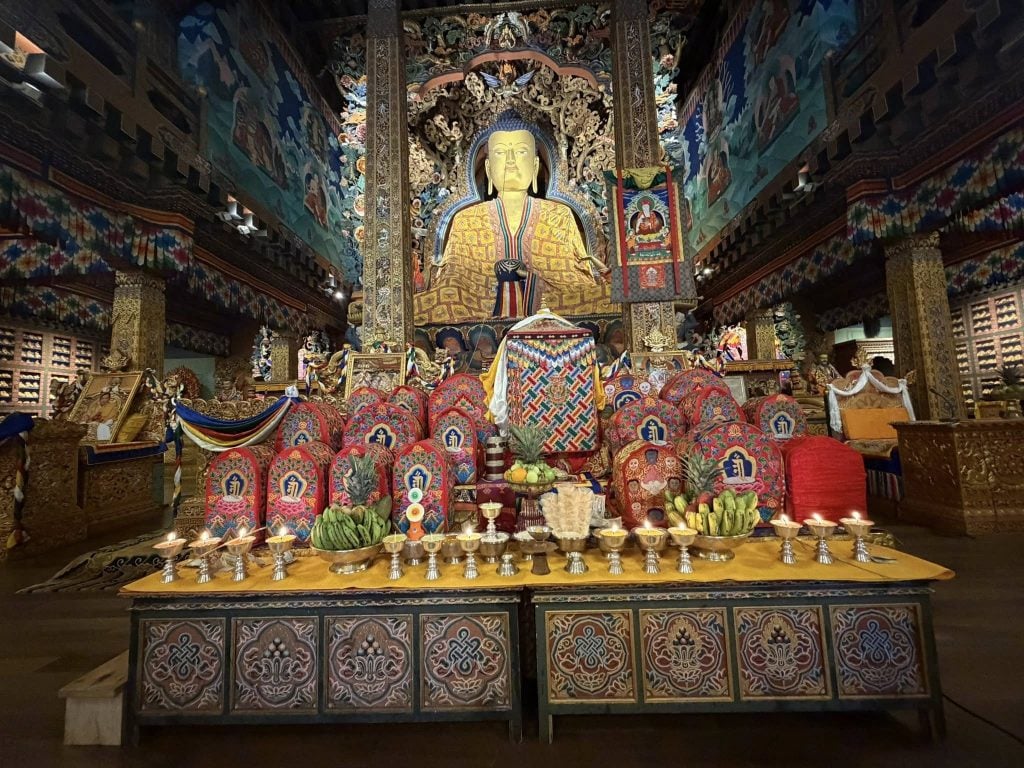
On the first day of the fourth lunar month (late May/early June), the monks move to Thimphu for summer. On the first day of the tenth lunar month (November/December), they return to Punakha Dzong—Pungthang Dewa Chenpoi Phodrang, the “Palace of Great Happiness”—for winter.
Sacred rites in Punakha
During their just‑concluded winter stay at Punakha Dzong, the Mahāsangha performed numerous religious ceremonies for world peace and especially for Bhutan. Among them was the Moenlam Chenmo (Great Prayer Festival), a multi‑day recitation of the King of Aspiration Prayer. They also conducted the Vajrakilaya Phurpai Drubchen, a wrathful accomplishment ritual to clear obstacles, and daily offerings to the protectors.
It is worth noting that the monks had moved from Thimphu to Punakha late last year, immediately after the conclusion of the Bhutan Peace Prayer Festival, a grand inter‑Buddhist gathering that drew masters from multiple traditions to the capital.
As the crimson tide now settles into Tashichho Dzong for the summer, Bhutan once again witnesses the quiet majesty of a tradition that has pulsed through its valleys for four centuries. . . a moving monastery, a living faith, and a people who never miss the chance to stand by the roadside and smile.