
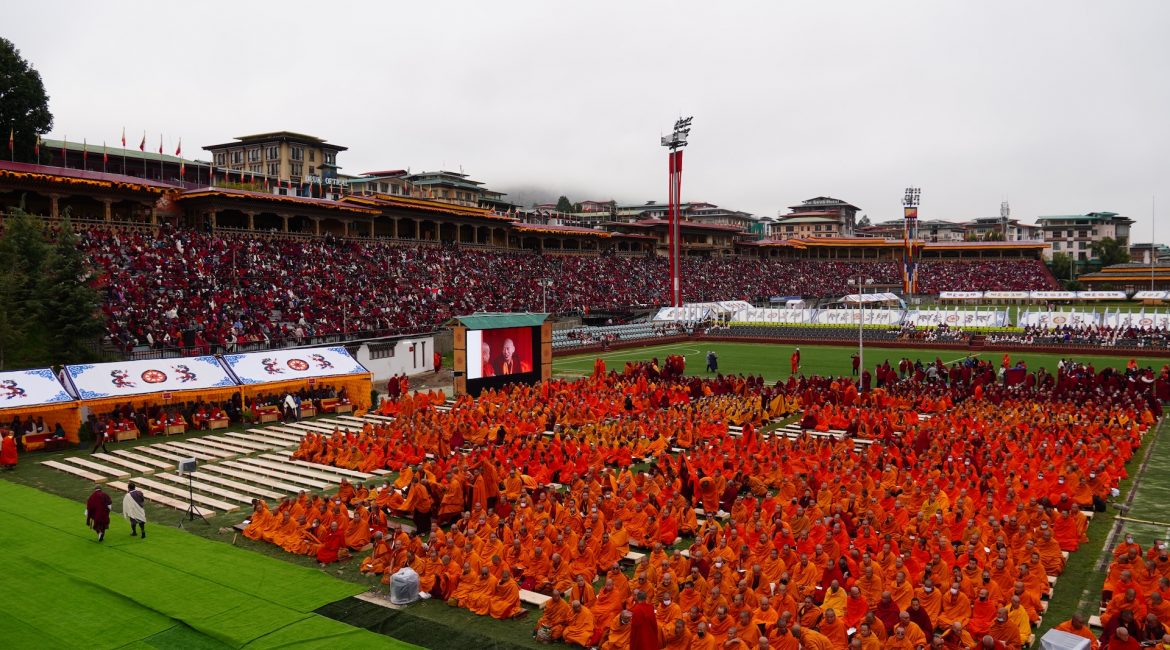
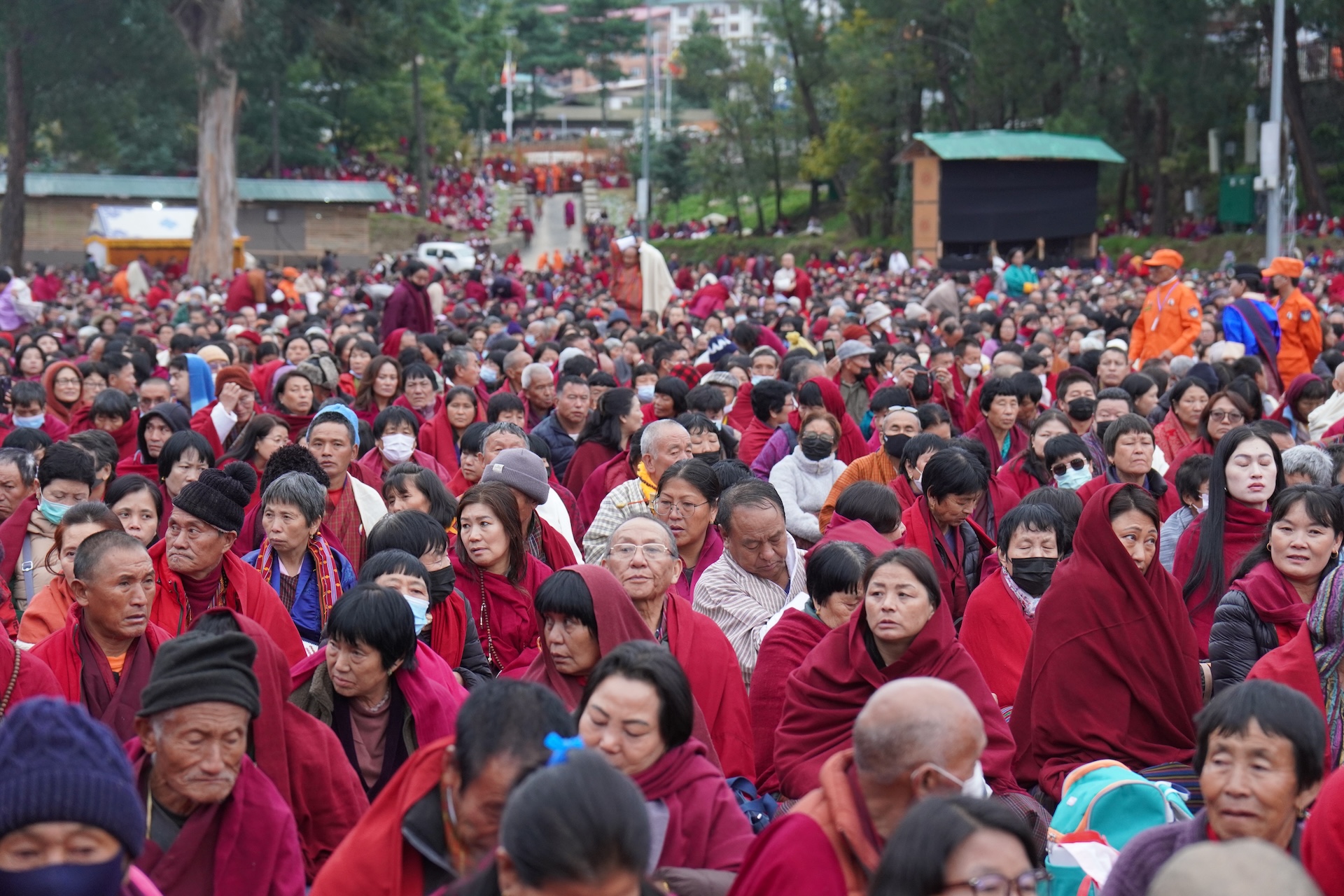
In the space of three short days (and ongoing), BDG’s entourage in Thimphu, consisting of columnist Rebecca Wong and yours truly, assisted by two wonderful and professional monastics from the Central Monastic Body, set about a rigorous coverage agenda that sought to highlight how the Global Peace Prayer Festival, running from 4–19 November 2025, is more than only a one-off, major gathering.
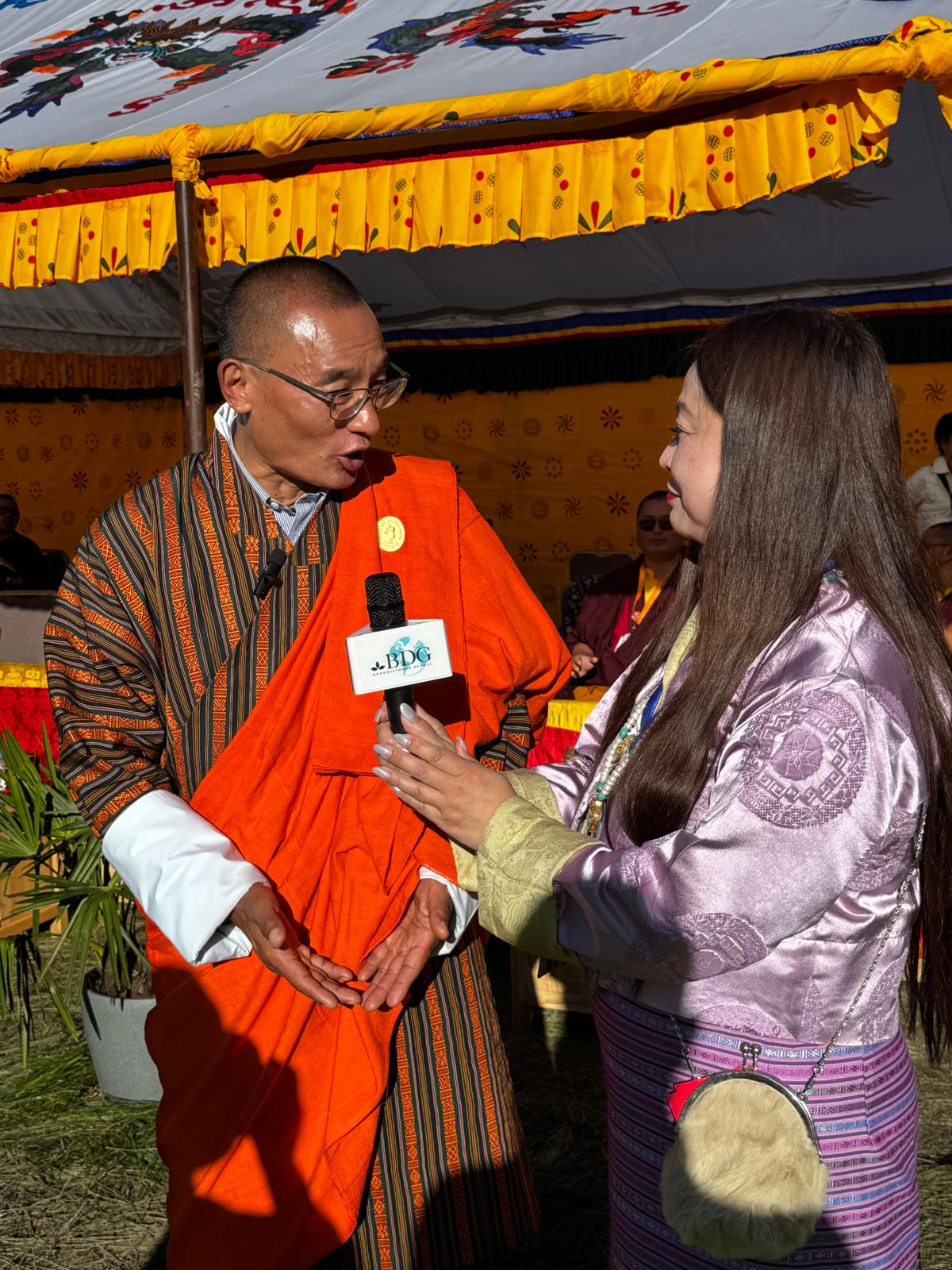
It is certainly true that this Festival is the grandest gathering of august Vajrayana names in Bhutan to date. Ven. Choten Dorji, Secretary at the Council for Sangha Administration and Development Affairs, and the Prime Minister of Bhutan himself, Mr. Tshering Tobgay, were of one mind when they both highlighted to Rebecca Wong how this unprecedented event was a vision of non-sectarianism, directly steered by His Majesty the King and His Holiness the Je Khenpo. However, in one YouTube short, Choje Lama Kelzang Tshultrim noted that the PM himself had shared with the Karma Kagyu delegation (led by HH the 12th Kenting Tai Situpa) his hope that the Festival would become an annual event in Bhutan.
This would indicate what I interpret as a bodhi aspiration, or at least an ambitious wish, to anchor Bhutan’s long-term role as a modern-day Shambhala in events that would attract pilgrims, foster devotion, and inspire Dharma work. This wish was conveyed to us through several video interviews.
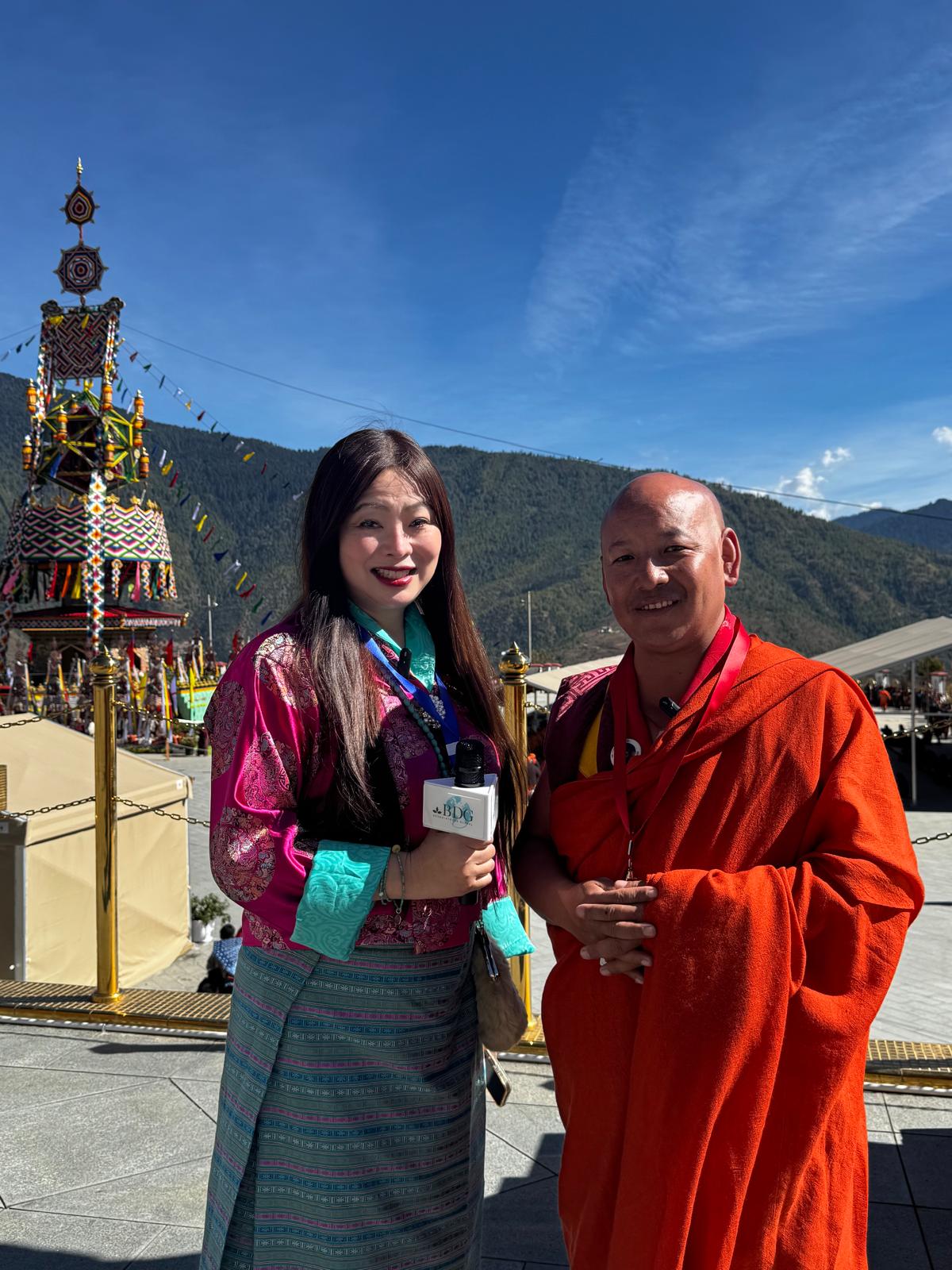
Khenchen Karma, President of the Tago Institute for Advanced Vajrayana Studies, told Rebecca Wong that the world today is witnessing increasing natural disasters, illnesses, and conflicts that disturb cosmic harmony. Only by bringing all sentient beings together in collective aspiration to sincerely serve the three treasures can humanity pacify such challenges and create planetary peace. And Khenpo Kuenzang Yeshi, the Secretary of the Monastic Education Council under the Central Monastic Body, shared with me that the ultimate goal of the Global Peace Prayer Festival and subsequent developments was to usher in Shambhala through the Bhutanese portal.
Furthermore, at Kuenselphodrang, where the Jabzhi was conducted, Khenpo Sonam Rinchen, vice principal of the College of Astrology, stressed that the ushering in of a better world begins with the purging of negative energy with the help of the stars above.
Our interviewees are senior tutelary and administrative figures within the Central Monastic Body. It was not only the kind, generous host that invited BDG to visit Bhutan and cover the Festival. It is also the core organization that responded to His Majesty the King’s request to conduct a religious event the likes of which the Himalayan kingdom has never seen before.
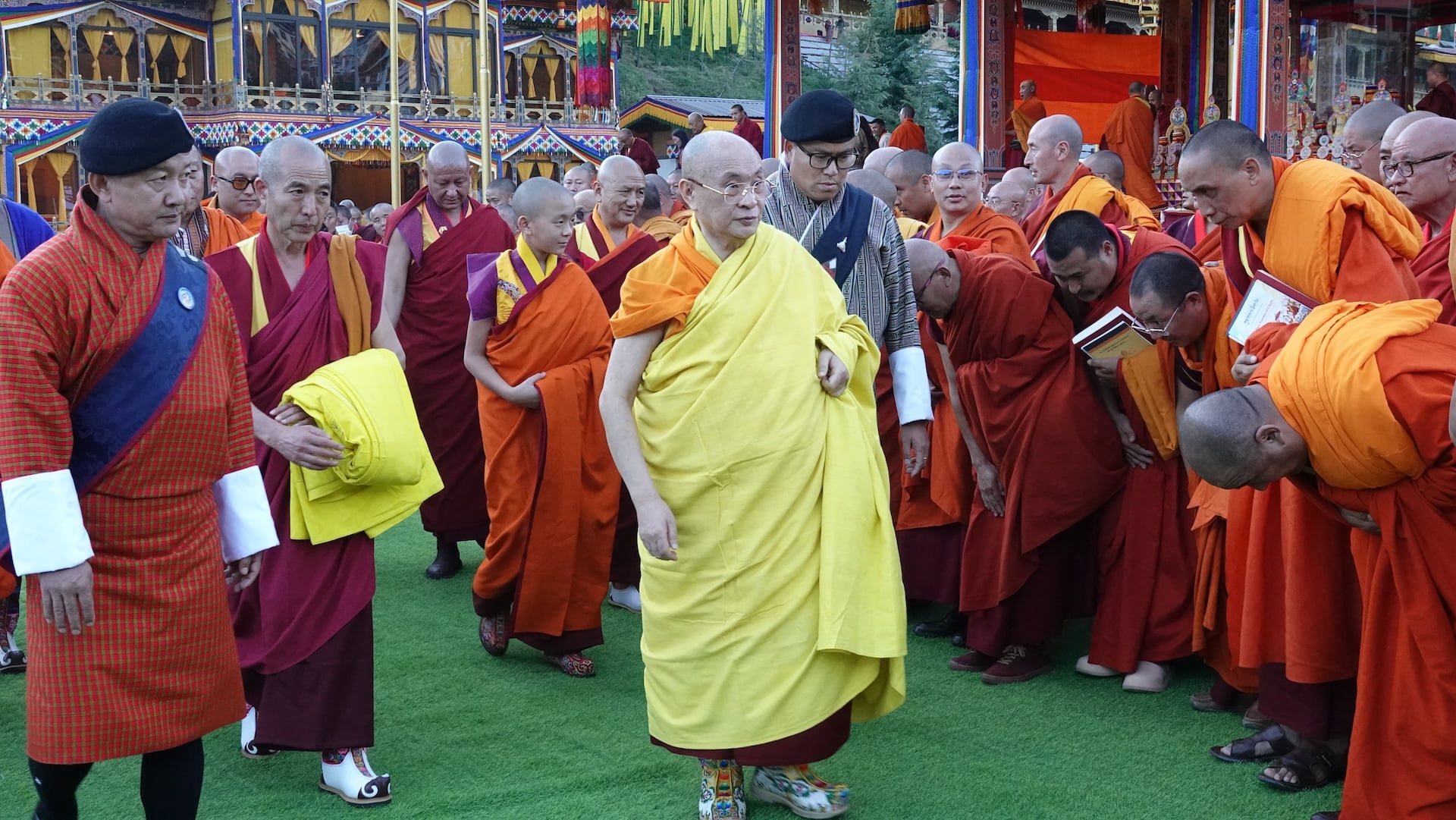
Based on the strategy of the Central Monastic Body, under His Holiness the Je Khenpo and the Five Lopen Lhengyes* (senior officials within the Central Monastic Body that assist the Je Khenpo in governing religious affairs), “Shambhala on Earth,” far from an esoteric fantasy, is unequivocally the true objective of the Festival—and everything that follows. The construction of Gelephu Mindfulness City, the ascension of the young Vairocana Rinpoche, and many other factors are coming together to position Bhutan as the beating heart of the future Vajrayana landscape.
As princess Ashi Kesang Choden T. Wangchuck told us in an forthcoming interview to be published on BDG on the 10th, the monarchy and the Central Monastic Body “form the two enduring pillars of Bhutan’s identity and sovereignty.” Their purpose is as one. So watch this space. The “hive strategy” of His Majesty is gradually manifesting.
* Each Lopen oversees a specific duty: the Dorji Lopen is the chief Lopen and likely successor, the Yonten Lopen handles Vajrayana rituals and practice, the Tsugla Lopen is in charge of scriptural studies, the Tshogki Lopen oversees religious ceremonies, and the Laytshog Lopen manages monastic administration and development.