
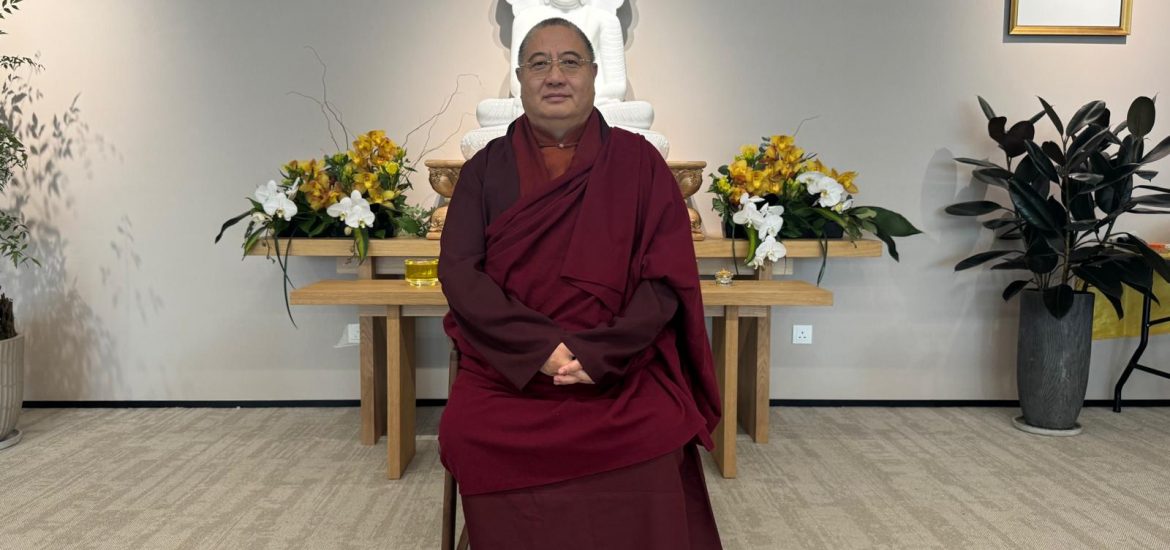
The grand opening and consecration of the new Shechen Center Hong Kong, located in the convenient and upscale neighborhood of Wong Chuk Hang, is a well-appointed, generously resourced and supplied practice center that does justice to the Khyentse lineage of Nyingma practice and its many Hong Kong-based adherents. It even has a life-size, Madame Tussauds-esque wax figure of Dilgo Khyentse Rinpoche seated on a throne in a dedicated room.
Shechen Rabjam Rinpoche, lineage holder of the Khyentse tradition and grandson of Dilgo Khyentse Rinpoche, came to Hong Kong for a series of retreats and classes marking the opening of Shechen Center, and he very kindly shared a few words of wisdom with me in between breaks during the hectic opening. They are presented in their entirety below.
“I think Hong Kong has been witness to many great masters, many of whom established practice centers for practitioners in this city. My grandfather Dilgo Khyentse Rinpoche visited in 1985 and 87. The seed for Vajrayana Buddhism was already planted long ago. We are very happy to have this space, and now I feel more responsible since this huge dedicated space to spread the Dharma has been established. My hope is that this place will be useful for masters to come and give teachings, seminars, and other activities. I want this place to be fully utilized to benefit Hong Kong, Southeast Asia, and South Asia.”
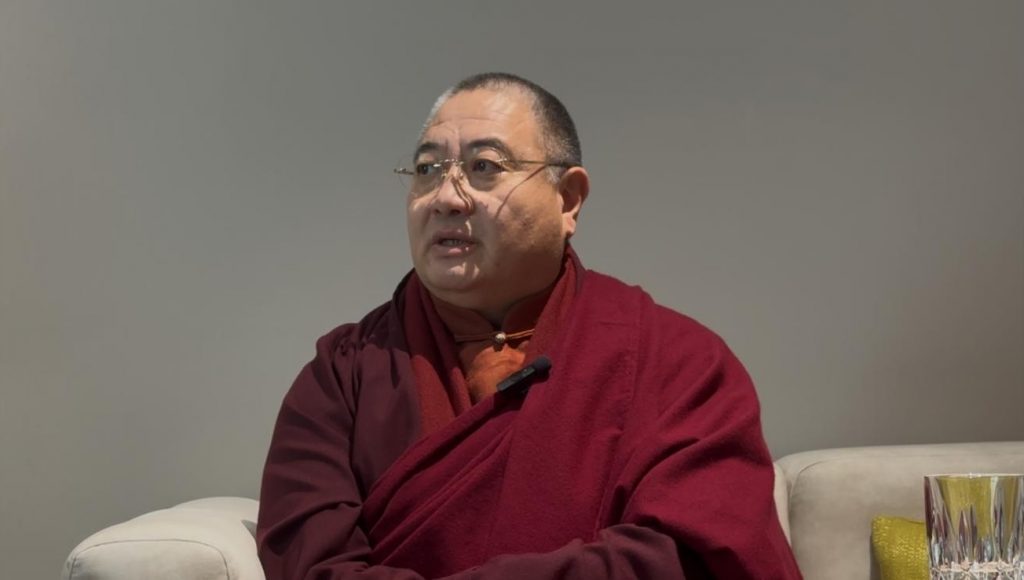
I noted that Dilgo Khyentse Rinpoche was not only a seminal figure worldwide but greatly beloved in Hong Kong, inviting Shechen Rabjam Rinpoche to share a taste of the Shechen tradition.
“Shechen Monastery is one of the six major monasteries in Tibet with a history of over three centuries. It has produced many great masters in the past like Khenpo Gangshar Wangpo, Changling Rinpoche, and so on. And Dilgo Khyentse Rinpoche, after arriving in India, continuously gave teachings to promulgate and preserve Shechen. If you look around now, during one of the Bhutanese monlams, almost no master does not carry a lineage passed down from Dilgo Khyentse Rinpoche. I am a small, very small part of that. I consider myself very lucky to have been born near him. The way to repay his kindness, I feel, is to help a little bit in furthering his vast legacy. These days I try my best to pass down I have received.”
The Nyingma lineage, I observed, seems very relevant to modern life and troubles, attracting many students. I invited Rinpoche to reflect on why.
“The Buddha’s teaching is always relevant. I like to say that it has no expiry date. As long as we human beings have problems due to negative emotions, the Buddha-dharma will always be core. Padmasambhava manifested in order to help all beings in the Age of Decadence. We are going through that eon right now. So his blessings really benefit modern people, and many feel they can relate and connect with Guru Rinpoche. Recently I visited Reunion Island, a far-flung island in Africa. And there is a temple to Guru, with seventy or eighty devotees! So his blessing manifests in many different ways in this Age of Degeneration.”
Guru Rinpoche’s image forms one of the main statues at Shechen Hong Kong. I asked Shechen Rabjam Rinpoche what advice he could give people who are seeking to draw closer to Padmasambhava.
“First of all, people who see the image of Guru Rinpoche and feel connected are already enjoying a big step towards following him. We should cherish the fact that people can feel connected to such a grand figure; that is karmic connection. Then, of course, we should follow his teachings and practice.”
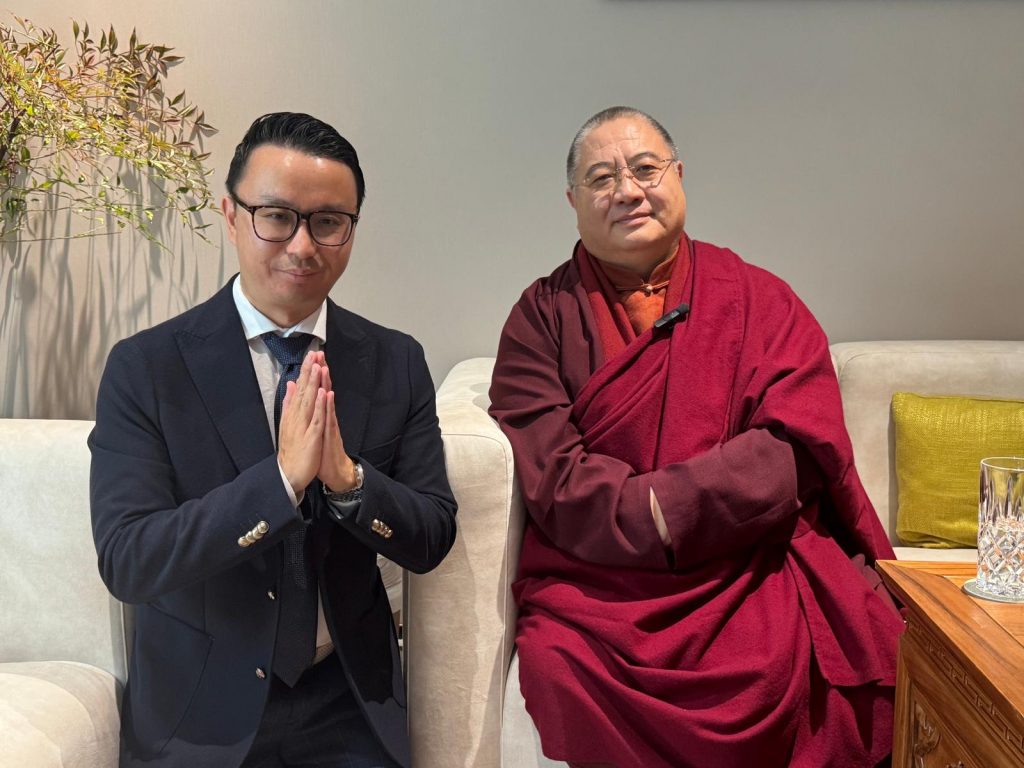
I had met Rinpoche on a plane back from Paro Airport in Bhutan, after the Global Peace Prayer Festival last November. I asked him about the non-sectarian nature of the Festival and how Vajrayana is moving in this direction of ecumenism.
“Our masters have always respected each other. Dilgo Khyentse Rinpoche also taught non-sectarianism. It doesn’t mean you mix up everything. But for different beings there are different methods, and we human beings alone have so many inclinations and states of mind. From that angle, there is no reason to be sectarian. I feel what Bhutan has accomplished is exactly how things should be done.
“There are many ways to reach out to people, and not only through teaching: we can use art, music, and other methods. So whichever way that people that people feel comfortable with, I think should be considered. But our goal is not simply to get numbers up, but to present something of value for anyone interested. So therefore, I hope this center can make our ancient wisdom valuable to the modern world, which really needs Buddha-dharma.”