
By Kalinga Seneviratne
Since July 2025, India has begun to issue tourist visas to Chinese nationals, after a five-year freeze, and China is also now issuing tourist visas to Indians. This would provide a good opportunity for both Chinese and Indian people to learn more about the common cultural heritage of both great Asian civilizations.
During a recent visit to Tenzhe Temple in Beijing, I noted this cultural synergy in the wall paintings in their main shrine room where Chinese Buddhists come to worship Sakyamuni Buddha. They resemble the wall paintings depicting the life of the Buddha that one would find in Buddhist temples in Bodhgaya and Sarnath in India (as well as in Sri Lanka and Thailand), but interestingly, other than the image of the Buddha, the rest of the people in the paintings reflect clear Chinese characters and dress. One cannot find a better synergy between the Indian and Chinese cultures than here in these paintings.
Two years ago, when I visited Luoyang in Henan Province, I noted the way the Buddhist caves are located resembles that of Ajanta in India. Whereas, in Ajantha most caves have Buddhist wall paintings, these Chinese caves have mainly sculptures of the Buddha and his Indian disciples. Meanwhile, recent excavations in Emperor Ashoka’s ancient kingdom of Kalinga are being identified through the writings of Chinese scholar monks. It is now well known that Indians would never have known of Nalanda University, and many other Buddhist archeological sites across northern India, if not for the writings of Chinese scholar monks, some of whom have spent years in India.
In 2015, when the Indian Prime Minister Narendra Modi and Chinese President Xi Jinping met in the historic Buddhist city of Xian in Shaanxi Province, Modi suggested that the new Silk Routes revived by China should include not only trade links, also cultural exchanges like the old ones. It is time to give this a new momentum by developing an India-China Buddhist tourism circuit to encourage Indians and Chinese to cross each other’s borders to be enlightened about the close cultural exchanges that took place between the two great Asian civilizations.
It is unlikely that this initiative would come from the two governments, but Buddhist organizations and tourism sector in the two countries should take the lead. In the long-term, it may also lead to the resolution of the Tibetan question.
Sakyamuni Buddha’s teachings have profoundly influenced Chinese civilization and culture for over 1,800 years, since Chinese scholar monk Xuanzang, after spending thirteen years at Nalanda, brought Buddhist scriptures from Nalanda University to Xian in 645 CE, and translated them into Chinese.
Most of the sites associated with the Buddha is in northern India, easily reachable to Chinese, preferably via Kolkata by air, or through many land crossings across the Himalayan borders. With international standard airports opened up near many of the Buddhist sites, it is now easier to reach them via India’s large air network. But to experience the real India (which for many Chinese could be a bit daunting at the beginning), it is India’s extensive rail network that one should use. With the expansion of India’s version of high-speed trains, Vanda Bharat, it is now cleaner and faster to travel between many cities in northern India. Similarly, Indians can travel across China via its world-class high-speed train network, but, getting used to the Chinese cuisine could be a challenge for Indians.
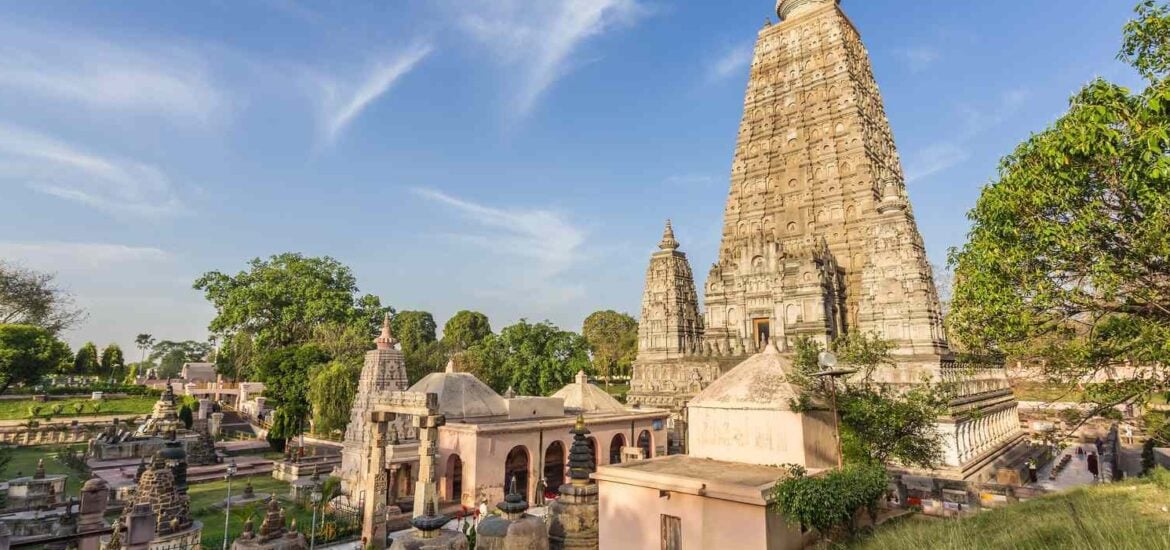
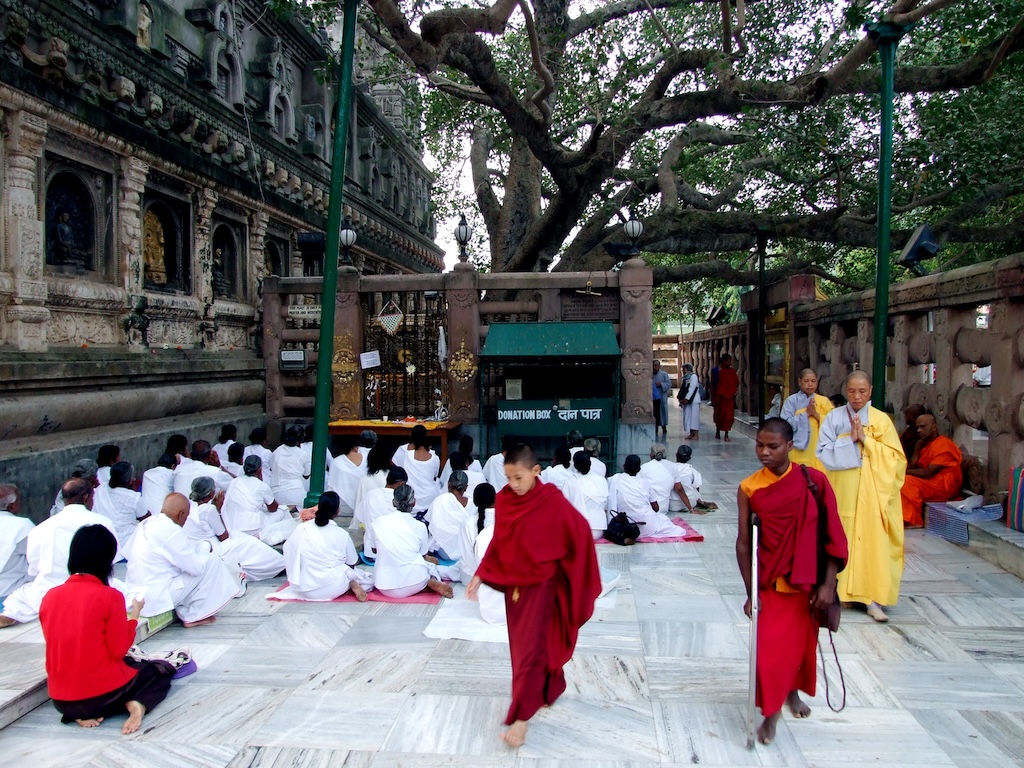
Let me focus on the Indian Buddhist tourism circuit which is well developed to cater to Buddhist pilgrim travelers from across Asia. From Kolkata, a six-hour Vanda Bharat ride in air-conditioned comfort will take you to Gaya. It takes another half-hour taxi ride to reach Bodhgaya, where the Buddha was enlightened under the historic Bodhi Tree. The Maha Bodhi temple here was declared an UNESCO World Heritage Site in 2002. This temple was originally built during the time of Emperor Ashoka in 3rd century BCE, and it has influenced brick temple architecture across India for centuries.
Though India is the birthplace of Buddhism, according to 2011 Census of India, there are only 8.4 million Buddhists in India, making up just 0.7 per cent of the population. Whereas, the Buddhist Association of China has estimated over 185 million Buddhists live in China today, while there are also unofficial estimates that it could be up to 400 million.
Though there are not many Indian Buddhists in Bodhgaya, one will see a very colorful and vibrant international Buddhist community reflecting the multicultural and globalized face of Buddhism. Surrounding the main Maha Bodhi Temple, in a radius of up to two to three kilometers, are over a hundred Buddhist temples and meditation centers, as this is the most sacred site for Buddhists from around the world and millions of pilgrims visit the site every year. The temples here represent every Buddhist culture across the world, depicting their traditional architecture, it is a unique international Buddhist community. Bodhgaya has a strong Tibetan cultural Influence because of the presence of thousands of Tibetans who descent from the Himalayas during winter months.
Maha Bodhi temple is also visited by thousands of Hindus because they believe that the Buddha is a reincarnation of God Vishnu. Thus, one sees a fascinating mixture of cultures and worship here.
If you are Buddhist or not, Bodhgaya is a unique tourism experience, vibrant and multicultural, and a lack of a local Buddhist community here is compensated by an international presence of Buddhists.
From Bodhgaya, a good day trip will be to Rajgir and Nalanda. One need to leave early morning, either by tour bus or taxi, because the drive will take 2 hours.
Rajgir, then known as Rajagaha, is an immensely important place in the life of the Buddha, where he spent many years meditating and teaching. It is also the site where the first Buddhist Council was held after his death to process his teachings. The Japanese have built one of their many peace stupas across India here at the peak of a hill connected by cable car.
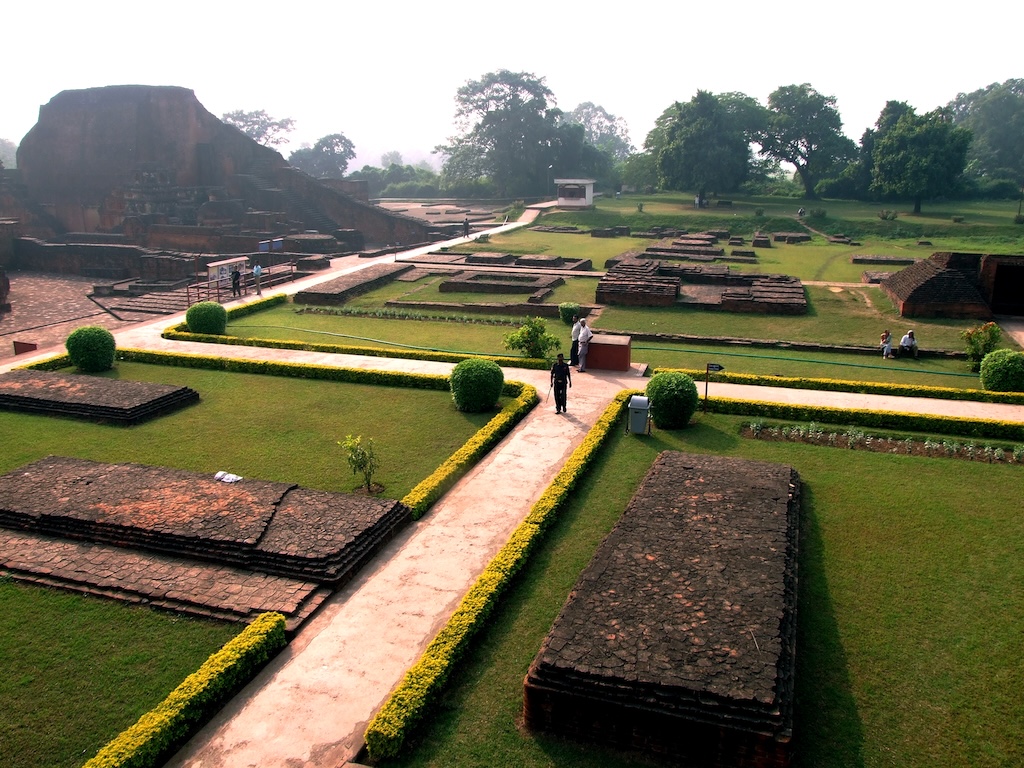
About twelve kilometers from Rajgir is the ruins of Nalanda University, one of the earliest universities in the world where there were some 30,000 students and 4,000 monks, when it was burned down by the Turkic Muslim invaders at the end of the 12th century CE, killing most of the students, monks and teachers. They also burned down the precious library. Adjoining the ruins across a river is the Nava Nalanda Mahavihara, the university revived by the government of India in 1951 where over 300 students from across the Asian region study today.
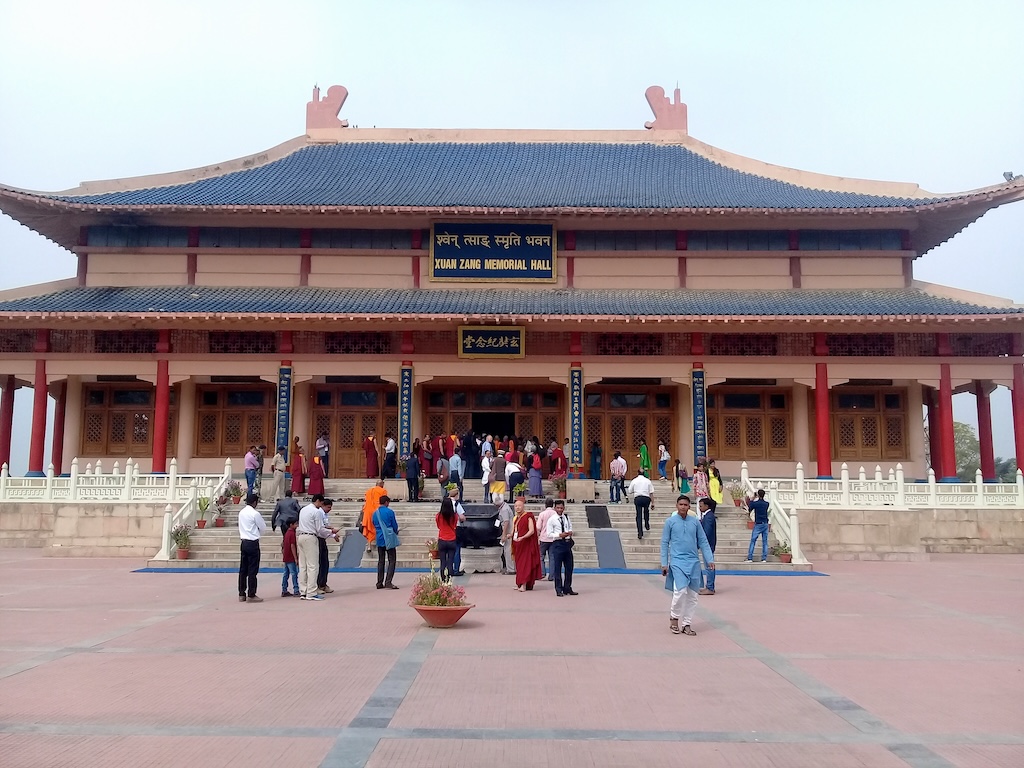
Important place to visit, for Chinese visitors in particular, is the Hiuen Tsang Memorial Hall near the ancient ruins of Nalanda built jointly by the Chinese and Indian governments to honour Chinese monk Xuanzang, who spent thirteen years at Nalanda University as student and lecturer, and then took Buddhist scriptures to China, where he translated them to Chinese. Many Indian scholars believe that if not for Xuanzang’s records of Nalanda, even the Indians would not have known today that a great university existed here.
Another important Buddhist pilgrim site is Sarnath, the site of the Buddha’s first sermon, which is very close to the Hindu religion’s most sacred pilgrim temples on the banks of the Ganges River in Varanasi. Best way to get here is by train from Gaya to Varanasi that takes just over four hours and a 15-kilometer road journey from there.
Sarnath is a smaller version of Bodhgaya, but more an archeological site that shows the ruins of a city burned down by the Muslim invaders. On 25 July this year, Sarnath was inscribed in the UNESCO World Heritage List. Dhamek Stupa that withstood the invaders’ destruction still stands there, and many Buddhist pilgrims chant and meditate at the stupa. You can see extensive ruins of what is believed to be Buddhist structures built between the 3rd century BCE and the 11th century CE, presenting the most expansive ruins among places on the Buddhist trail. The adjoining museum has the original Lion Capitol of Ashoke, recovered among the ruins here, which is today the official emblem of the Indian Republic.
A visit to Sarnath is incomplete without a visit to the Ghats (Ghat, a Hindi a term used in the Indian subcontinent, to refer to the series of steps leading down to a body of water or wharf, such as a bathing or cremation place along the banks of a river) on the banks of the Ganges in Varanasi, especially in early morning when hundreds of Hindu pilgrims gather there to have a dip in the river because they believe it could wash away their sins. Before doing it, scores of Brahmin priests sitting cross-legged on the banks conduct Hindu blessings and chanting. It’s a very colorful and vibrant scene, and one should also hire a small boat and take a ride along the river to complete the experience, where you may see dead bodies burned on top of a wooden pyre on the banks of the river.
Another important Buddhist pilgrimage site is Kushinagar (about five hours road journey from Sarnath) the site of the Buddha’s passing away, and about a two hour drive from there across the Nepali border should take one to Lumbini – the Buddha’s birthplace – where a Nepali visa is needed. China is investing heavily with three Buddhist temples built there recently. India is also building a huge Buddhist cultural center there. It is believed that a rail road across the Himalayas linking Lhasa to Lumbini is on the drawing board.
Other Buddhist sites in India worth a visit, are the Ajanta Caves (where colorful Buddhist paintings could be seen), and Sanchi (an iconic Buddhist stupa) whose architectural style has been copied across Asia. A replication of it is found in Luoyang, built by the Indian government.
New excavations, supported by ancient writings of Chinese scholar monks, are giving rise to new Buddhist tourist sites opening up in Odisha, and the Mauryan site of Emperor Ashoka’s Kalinga kingdom: a golden era of Indian Buddhist civilization.
As the two Asian neighbours, India and China, become global powers in the 21st century, Buddhist circuit tourism would be a powerful gel to rekindle ancient cultural ties between the two civilizations along the Silk Routes, where they traded and exchange cultures in peace and harmony for centuries.
Expanding Buddhist tourism could bring the two people closer together promoting mutual understanding. Indian tourists visiting ancient Buddhist sites in China should show them synergies between the two civilizations, especially Luoyang that resembles the Buddhist caves of Ajanta, and Xuanzang’s Wild Goose Monastery in Xian inscribed as an UNESCO World Heritage Site in 2014, which is today a major Chinese tourist attraction. If Tibet could be opened up, it could help to dispel some of the myths in India about Tibetan culture in China on the brink of extinction.
One hopes that Modi’s 2015 call for cultural exchanges could be revived, after it was derailed with the unfortunate clashes on the Himalayan border in Galwan Valley in June 2020. Promoting a two-way Buddhist cultural circuit could be an ideal vehicle to develop trust and dispel myths about each other. Buddhism could be a gel because of its non-evangelical nature. The Asian Buddhist community need to give a helping hand.
Dr. Kalinga Seneviratne is a Sri Lankan born Buddhist communication scholar who is currently working on a documentary series titled, “Indian Buddhist Journeys.” He is the author of recently published book ‘Protecting Buddhist Heritage of Asia’ (Atlantic Publishers India, 2026).
Related features from BDG
The IV International Buddhist Forum in Kyzyl: A Buddhist Bridge across Eurasia
Buddhistdoor View: Unity Over Division Amid the Nepal-Tibet Floods
From Enlightenment to Ashes and Awakening Again: The Rise, Fall, and Renewal of Buddhism in India