
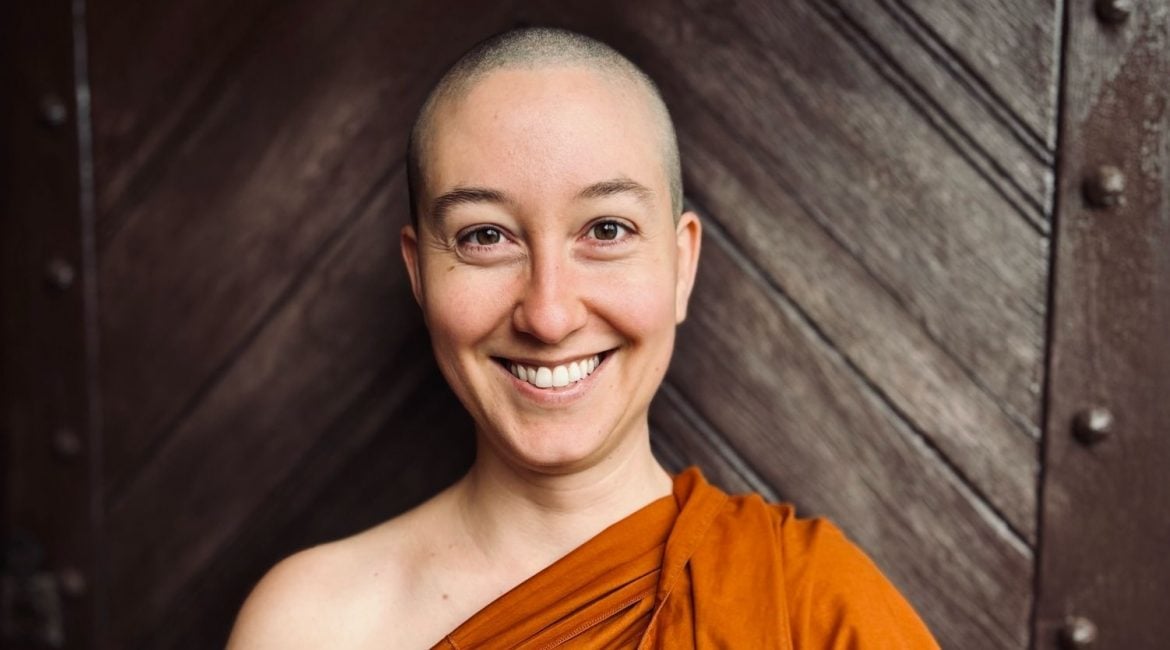
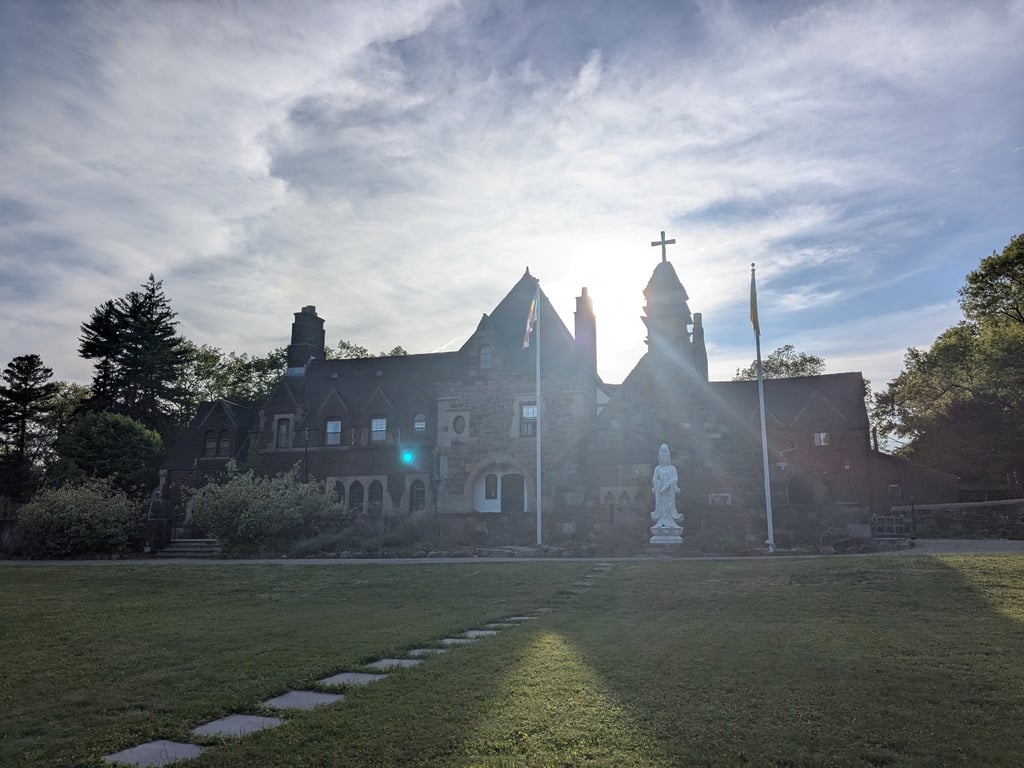
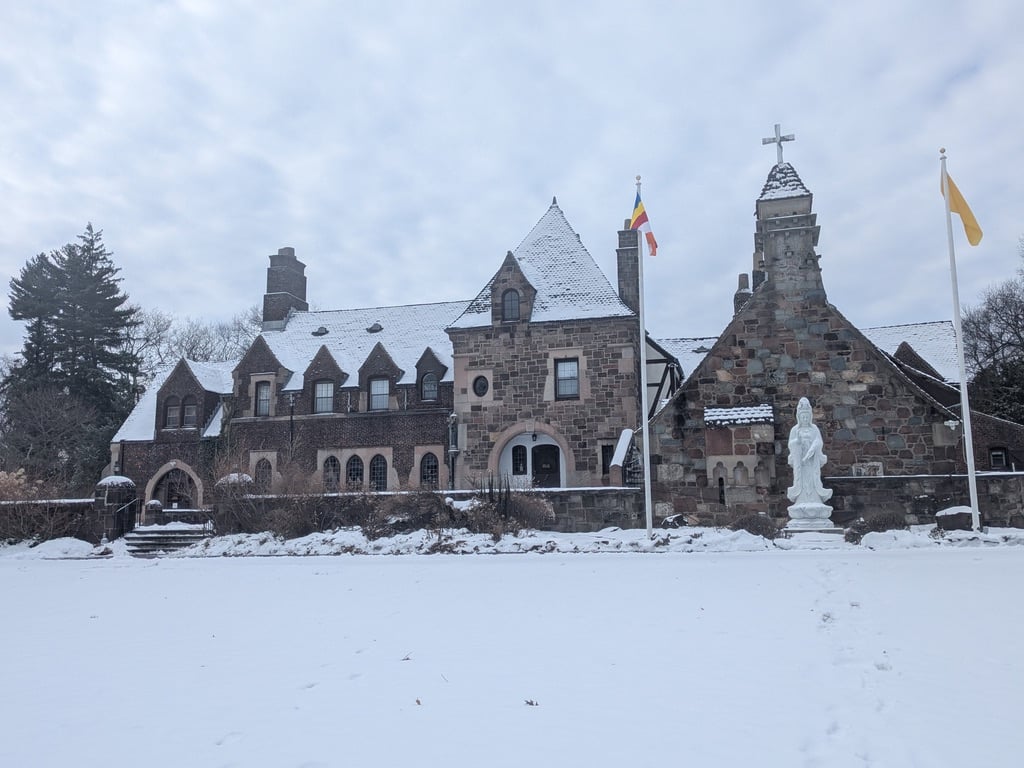
Empty Cloud Monastery in New Jersey is one of the more prominent Theravada monastic sanghas in the US. Under its co-abbots, Bhante Suddhāso and Ayyā Somā, Empty Cloud has become a growing community that is known for its professed adherence to the Theravada Vinaya, while also reaching out to a fresher, younger cohort of initiates. Among these initiates is a recent sāmaṇerī, Ayya Kevalā, who has spent about a year at the Monastery.
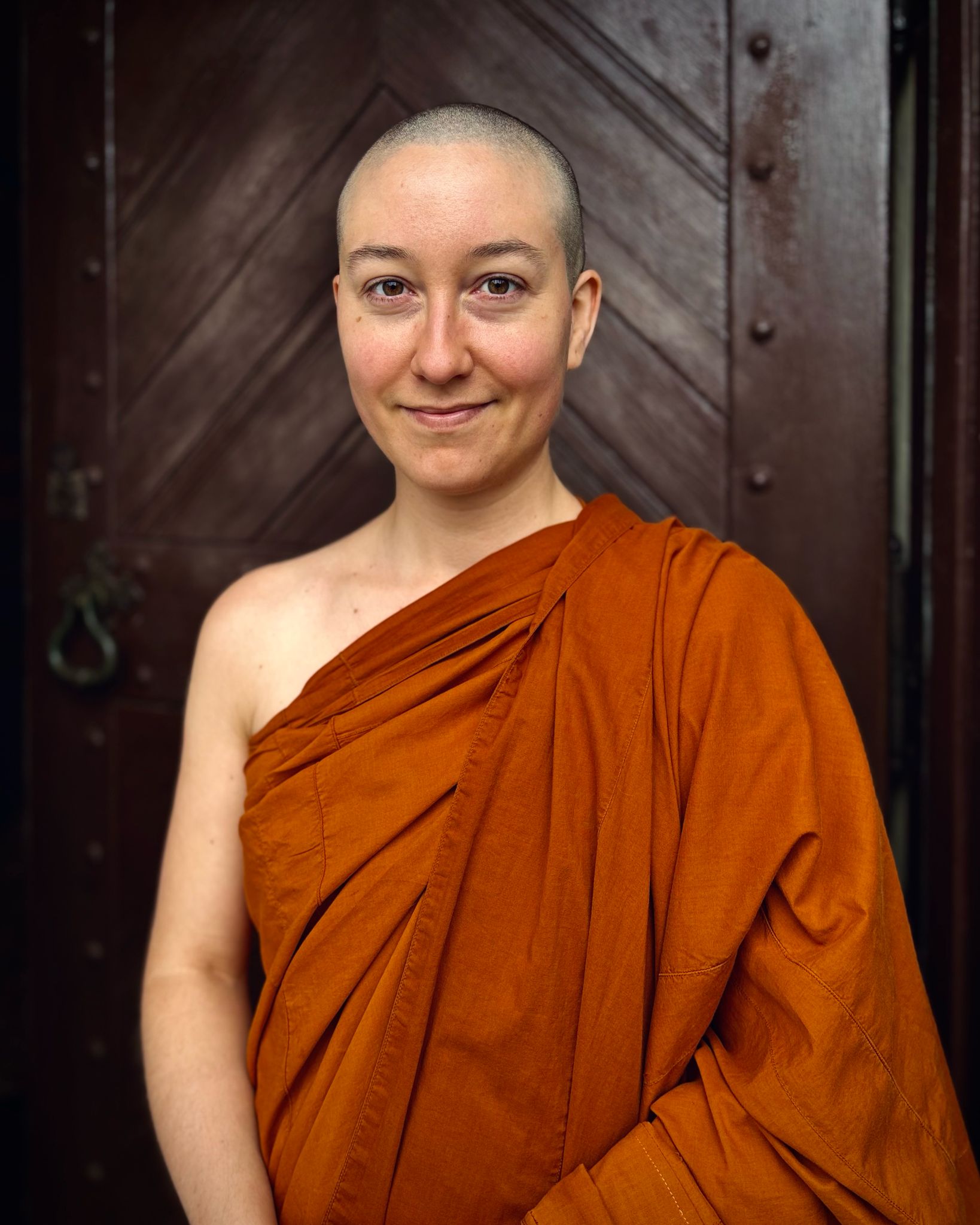
As a lay person, Kevalā became overwhelmed by the many existential risks facing the planet and went to a Mahayana meditation center seeking answers. “I lived and trained there for about three years, and while I was there, I had the opportunity to do a two-month solitary retreat in the woods. I suppose the aspiration had already become a little seedling by that point, but I remember very clearly the vision I received mid-retreat which irrevocably planted the longing to ordain in my heart,” she said.
“While meditating, I had a vivid image arise of myself in robes, just giving and giving. . . giving everything I had in service to others. It came along with this sense that I was touching the deepest integrity of my heart. It was also during that retreat when I saw my very first female monastic in person; when I saw her, I just knew: That’s what I have to become.”
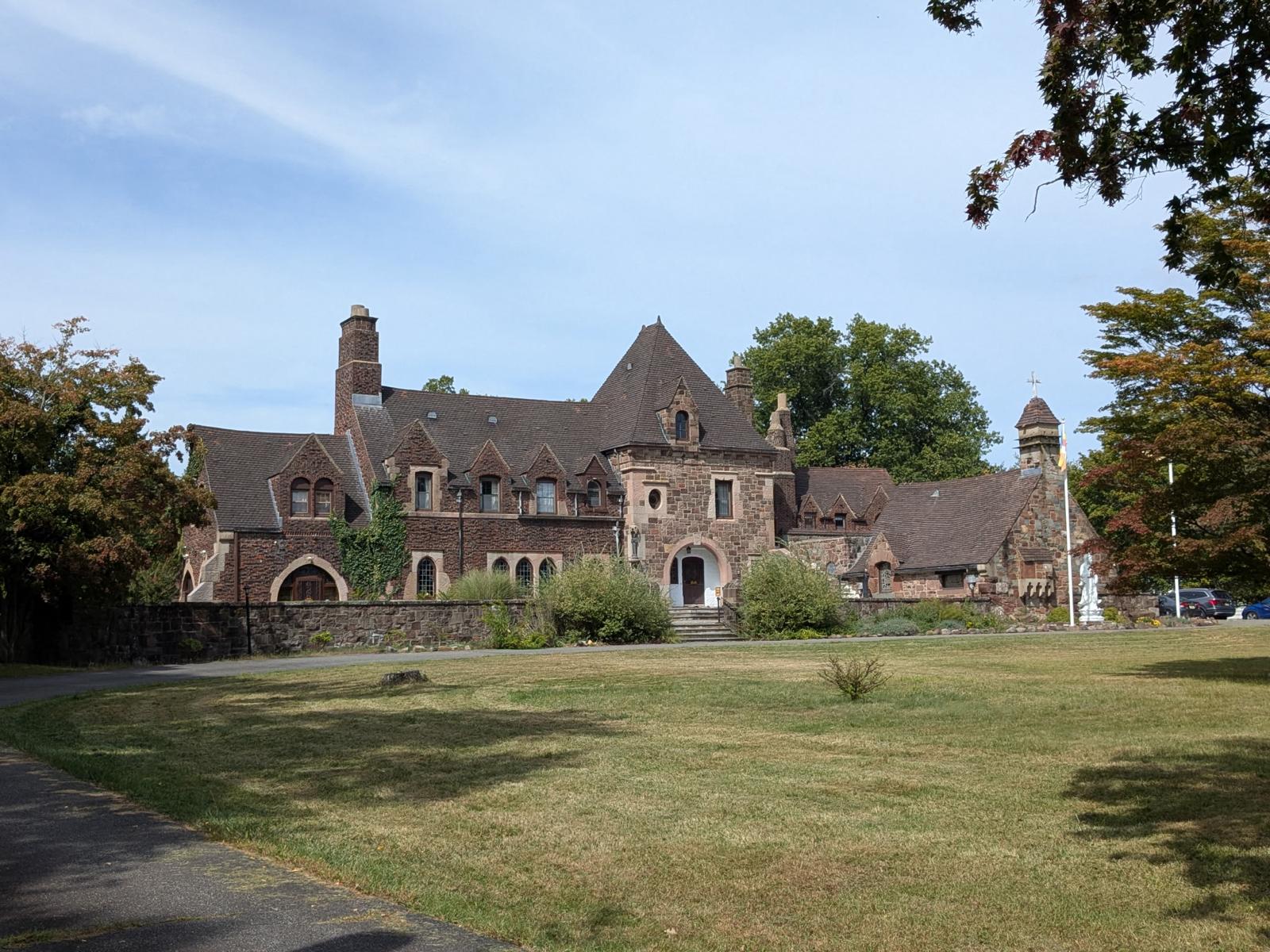
After a good deal of practice and more exposure to the Pāli Canon, a desire to save the world transformed into a desire to completely relinquish the world, while being in service as much as she could along the way to full enlightenment. She was therefore drawn to Theravāda, and Empty Cloud became an attractive option. “I chose Empty Cloud Monastery because I loved nearly everything about it from my first visits. The monastics were inspiring, the schedule fit me well, and the lay community was profoundly warm, welcoming, and vibrant. But most importantly, it felt like a perfect fit in terms of their views on the Buddha’s teachings,” she said.
“I really appreciate their commitment to staying as close as possible to the historical Buddha’s discourses, while still maintaining an open and friendly mind toward the views of other sects. As Ayyā Somā has alluded to before, it leads to them being progressive, and regressive, in all the right ways,” Ayya Kevalā further noted.
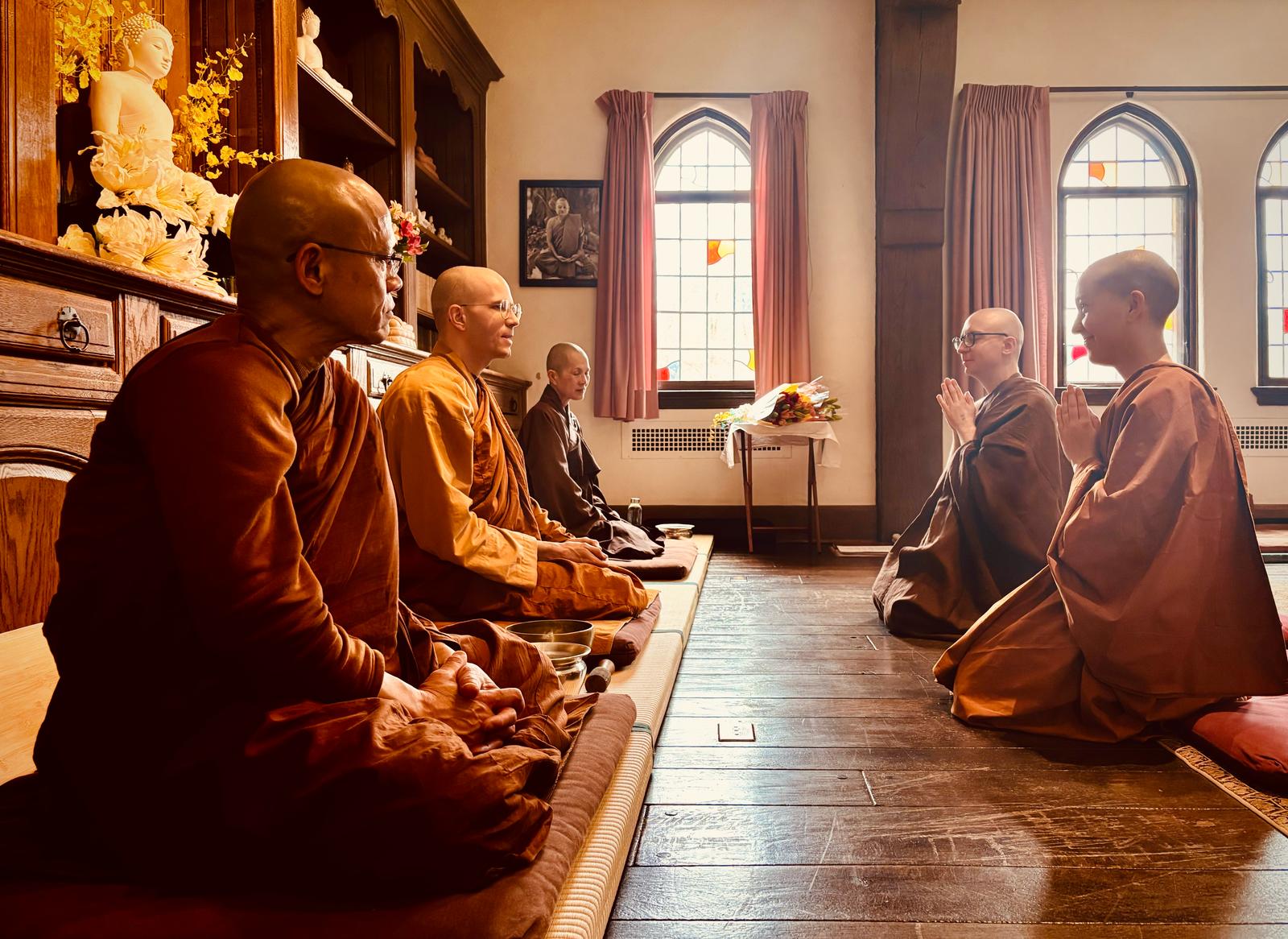
Her preceptor, Bhante Suddhāso, puts a very strong emphasis on becoming familiar with the Pāli Canon. He expects his students to study the suttas daily and to become proficient at reading Pāli, so novices can get as close to the Buddha’s words as possible. Then of course, it is up to the monastics to live as best as they can according to what the suttas dictate.
“These are the most important pieces, and the rest is as you’d expect: follow the schedule, do one’s best to live harmoniously with the other residents, follow the precepts, and devote oneself entirely to the practice. I suppose it sounds simple, but it’s far from easy!” laughed Ayya Kevalā.
Her intention is to receive bhikkhunī ordination when the time is right, which will likely be in a couple of years’ time. This is another strength of Empty Cloud Monastery, since Empty Cloud has a bhikkhunī as its co-founder. “One of the foundational aspects of this monastery since its founding is that it’s open to monastics of all genders. Bhante Suddhāso and Ayyā Somā see no justifiable reason for the obstruction of bhikkhunī ordination within the Pāli Canon or Vinaya Pitika,” said Ayya Kevalā.
“They often refer us back to the fact that one of the first intentions the Buddha stated after his enlightenment was to develop the fourfold assembly: enlightened bhikkhus, bhikkhunis, laymen, and laywomen who were all capable of carrying on his teachings. He said he would not pass away until this was complete, so it was clearly very important to him that all genders were included from the very beginning.”
Ayya Kevalā has currently not travelled to any Buddhist countries, making her very much an heir to an “Americanized” Buddhist tradition. Due to how Buddhism was transmitted to the US, any notion of complete “purity” is a construct. But the syncretic tendency of American Buddhism can be a strength, reflecting an openness to take what works from different sources.
“I’d say we have a really lovely, harmonious community at Empty Cloud. I think we all make an effort to take care of one another. Of course, community life always comes with some amount of friction, but it’s nothing compared to what I’ve experienced living in various non-celibate, non-Buddhist communities over the years! And that friction is an important part of the practice; it shows us that something’s off in our own minds which we have to address if we want to become happier and more loving,” said Kevalā.
“I’m always learning from the other monks and constantly impressed with their kindness, wisdom, patience, and equanimity. It shows how far I have to go, and how far I can go. It’s all very humbling.”
This future bhikkhunī’s hope for the Theravāda monasteries in the US is that the bhikkhunī sangha can receive more support so that they wouldn’t have to spend so much time working and teaching and could devote more time to deep practice in solitude. “Not that being of service through teaching and other community-engaging work can’t be a profound and beneficial practice; it’s just that the Buddha repeatedly exhorted his monks to devote significant time to seclusion so that they may cultivate the deep states of meditation necessary for liberating insight,” she noted.
“And for the global sangha, I wish especially for us to move away from the institutionalization and politicization of Buddhism towards a more grassroots approach which prioritizes the early suttas as its most essential guide.” She is adamant that this does not mean rejecting cultural wisdom or the insights of great masters. Rather, the oldest teachings from the Buddha-era form the bedrock of the dispensation, and she believes they should take precedence over the passing and corruptible dictates of any particular government or society.
As for any projects she is currently working on, Kevalā keeps her goals humble and personal. “All I am focused on is my own awakening, which is more than enough at present!”