
By Tshering Tashi
“I do not think that I am mistaken in saying that where Bhutan is concerned, Buddhism has had a great and subtle influence on all sections of the people—on their way of life and thinking. Each family is naturally religious and tries to adhere reverently to the Lord Buddha’s precepts.”
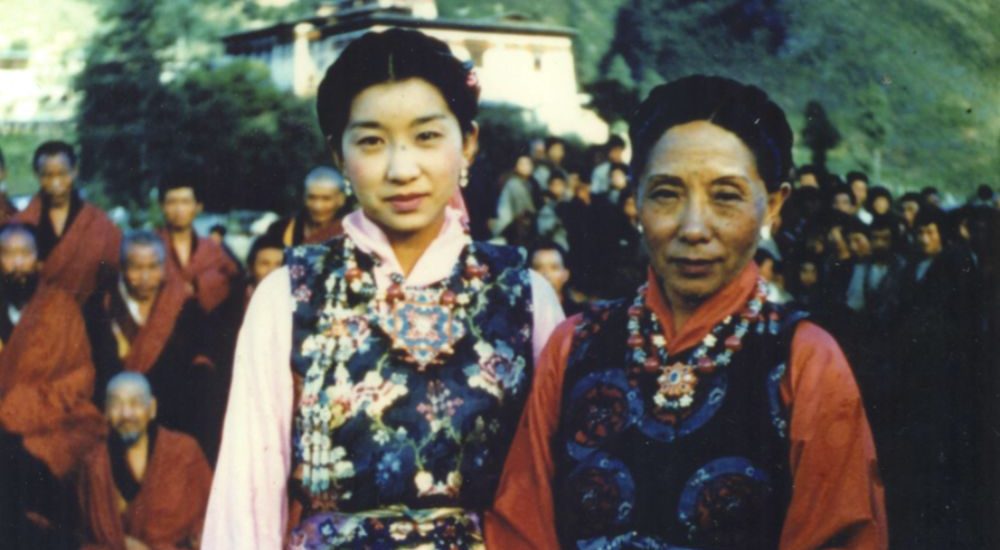
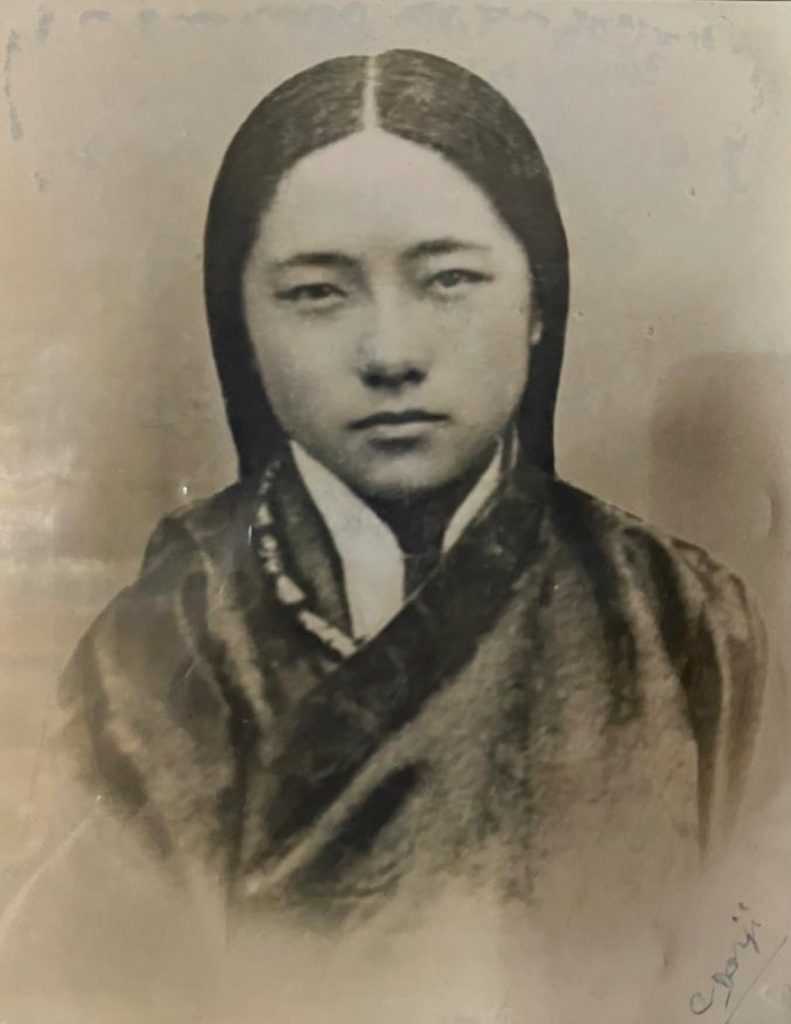
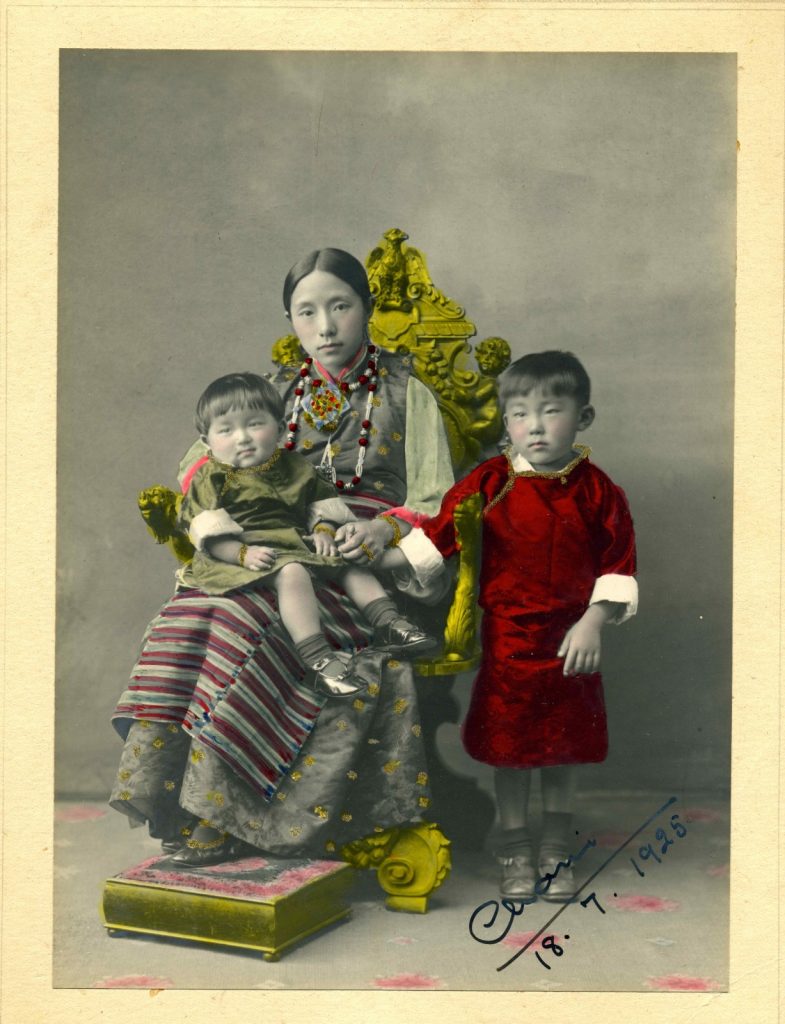
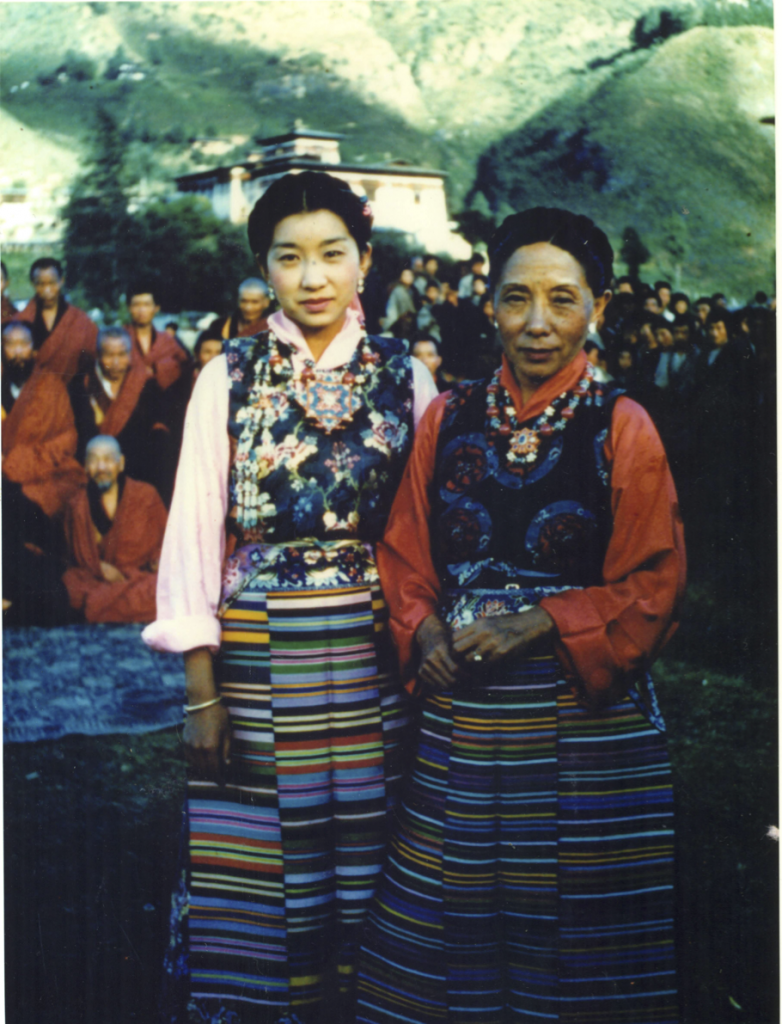
In a 1982 talk for All India Radio, the Sikkimese princess Rani Choeying Wangmo (1897–1994) offered her Indian audience an intimate look into the Bhutanese spirit. She guided them on a sweeping tour of the country’s history, tracing how Buddhism first arrived in the region and developed its unique character.
The record survives today thanks to the foresight of her daughter, Her Majesty Queen Mother Kesang Choeden Wangchuck, who had it transcribed.
In the four-page transcript, the Princess, daughter of the ninth King of Sikkim, Chogyal Thutob Namgyal, addressed the prevailing misperceptions of the time with a sophisticated defence of the Bhutanese way of life:
“While we may be considered backward in some ways, our people are more content and happier than a great many others. They have enough land and food and more time to spare, but this has not left them complacent or stationary for they have a philosophy which has been born through religious teachings and traditions, so that in some ways we have achieved what bigger and more civilized nations are striving to obtain: the general happiness and contentment of the people.”
Rani was able to challenge the prejudice prevailing at the time, because of her unique position. Appointed abbess of the Phensang nunnery in Sikkim at the age of 11, she was already set on an extraordinary path. Yet her own formidable will pulled her in a different direction. Defying the wishes of British officers, she ran away to study at a school in Dehradun, where she quickly mastered English. This equipped her to articulate her views with precision. Between her Sikkim heritage, her life in the cosmopolitan society of Kalimpong, her roots in Bhutan, and her worldly travels as a distinguished member of the Pan American Clipper Club (an exclusive airport lounge network for Pan Am passengers), Rani grew increasingly sensitive to how the outside world labelled Bhutan as “backward,” and openly challenged it on AIR.
Drukpa Kagyu
Rani then focused her talk on the history of Bhutan’s state religion, the Drukpa Kagyu. She traced the sect’s lineage to the celestial Buddha, Dorji Chang, explaining how the Mahamudra philosophy was passed down orally through a revered succession of masters like Tilopa, Naropa, and the famed Tibetan yogi, Milarepa. This chain of wisdom, she explained, eventually split into two main schools: the Karma Kagyu, which established a following in Tibet and Sikkim, and the Drukpa Kagyu, which became predominant in Bhutan.
Rani emphasized that while their practices differ, their core spiritual goal is identical. “Both sects, however,” she explained, “differ from one another merely in having different guardian divinities and different modes of prayers and Pujas. The aim is the same in both.”
Explaining how the Drukpa Kagyu sect received its name, which is rooted in auspicious prophecy, Rani shared the story of Pelden Drukpa Dogyon Tsangpa Gyalrey. The monk, a descendant of ministers of the great Tibetan King Songtsen Gampo, was advised by his gurus to build a monastery in Bo-Namkiphoo. It was prophesied that in doing so, he would greatly spread the Buddhist religion.
During the monastery’s opening ceremonies, a powerful thunder tore through the clear, sunlit sky. Taking this as a profound omen, Palden Drukpa declared, “My name is also Drukpa and my sect and doctrine shall hereafter be called Drukpa Kagyu.”
Continuing the story, Rani told her radio audience that before his death, Pelden Drukpa left his disciple with a final prophecy: “A boy will come from Kham. . . you will educate him and send him to the mountainous country in the south which was blessed by Guru Padma Sambava and he will do three great service for the Buddha Dharma.”
This came to pass with Phajo Dogyon Drukgom Shigpo. He travelled from Kham to meet the master, only to find he had passed away. Phajo became a student of Pelden Drukpa’s successor and was eventually sent south to the land that would become Bhutan. Rani reminded the audience that at the time, the Bhutanese primarily followed Bon or shamanistic traditions. Phajo became the first lama to spread the Drukpa Kagyu teachings, laying the foundation for the religion. The sect’s prominence was cemented by Zhabdrung Ngawang Namgyal, whose arrival in Bhutan fulfilled another prophecy and under whose leadership the religion flourished across the land.
The living tradition: Weaving faith into daily life
Rani Choeying then provided a detailed account of how this spiritual tradition is woven into the fabric of daily life through the country’s great monastic fortresses, or Dzongs. She described these Dzongs, such as Punakha’s “Thewa Chenpoi Phodang” and Thimphu’s “Tashi Chodzong” as dual-purpose centres, housing not only lay officials but also a monastic body of around 800 monks.
She said that these monks, known as Shung Gelongs (state monks), are supported by the state and divide their year between Punakha in the winter and Thimphu in the summer. Smaller Dzongs throughout the country also have their own monastic bodies, or Rabdeys, which collectively house another five to 600 monks.
Rani then detailed the intricate hierarchy of the Zhung Dratshang (the Central Monk Body), led by an Abbot known as the Je Khenpo, who is succeeded by a Dorji Lopon (Mahaguru). Within this structure, she explained, are several masters, or Lopons, each with a distinct role. The Lopon Omzey leads prayers and ceremonies, while the Yangpai Lopon instructs on the intricate gestures and rhythms of Tantric pujas. A third, the Da-pai Lopon, guides monks in theological study and debate. Further specialists teach everything from astrology and painting to the playing of ceremonial instruments, while two officials known as Kudrung are responsible for maintaining discipline. It is a complete, self-sustaining world of spiritual education.
Rani said that the monks’ duties extend far beyond the monastery walls. They say the daily prayers for the welfare of the country and all beings, and the people turn to them in times of distress, drought, sickness, and death. They are also central to all ceremonies connected with birth, marriage, and other festivities. In general, Rani noted, “they give spiritual guidance not only to the old but also to the young… They give the people and country moral and spiritual uplift and are a symbol of the religious and historical traditions of the country.”
This monastic community, Rani explained, is also the primary force behind Bhutan’s artistic heritage. The monks themselves create the sacred art that adorns the nation, from the magnificent embroidered and painted tapestries (Ku-thangs) to the intricate sculptures and costumes for religious dances. She pointed to the moving wall paintings in monasteries like Tango and Rigsum Goenpa which depict the 1,000 Buddhas and scenes from the lives of the masters. This art, she states, shows the profound “impulse and inspiration that faith in this religion gave to the artists, intellectuals and holy men of the country.”
This same devotion was poured into literary works. Among the most famous are Pema Karpo’s Kuen-Khen-Kah-Bum, which details the purest form of Kagyupa philosophy, and Jha-cheo-dhey-nga, a history of the religion beginning with Marpa. In the old days, an artist would spend a lifetime embellishing a single book of prayers, writing each letter in pure gold and decorating every page with exquisite miniature paintings.
Tragically, as Rani recounted, a great fire at Punakha destroyed much of this heritage, including priceless religious literature and their printing blocks. Yet despite this loss, she affirmed that the core philosophy endures in key texts and, more importantly, in the hearts of the people.
End object is the same
Rani Choeying Wangmo’s reflections articulated on All India Radio built a vital bridge between Bhutan’s ancient spiritual legacy (a history of celestial Buddhas and prophetic monks) and the living, breathing culture of the nation today. She made this connection tangible through her clear and steady command of English, which she used to demystify Bhutanese spirituality for the Indian audience.
In her words, this heritage was not a remote or esoteric practice, but the very source of Bhutan’s strength, character, and unique cultural identity. She argued that this inner wealth was a form of progress that transcended material development, a balance of civilization and culture that other nations seek. Her ultimate message, however, reached beyond Bhutan’s borders, speaking to a universal human quest for meaning: “For though we are Kargyupas, we fully realize all Buddhist Philosophies have but one beginning and end. The approach is perhaps different, but like all other religions, the end object is the same.”
Related posts from Tea House
Sarvanga Rishi: Tracing the Path of the Lotus-Born to Bhutan
Attending Your Own Funeral: The Extraordinary Case of a Reincarnated Lama