
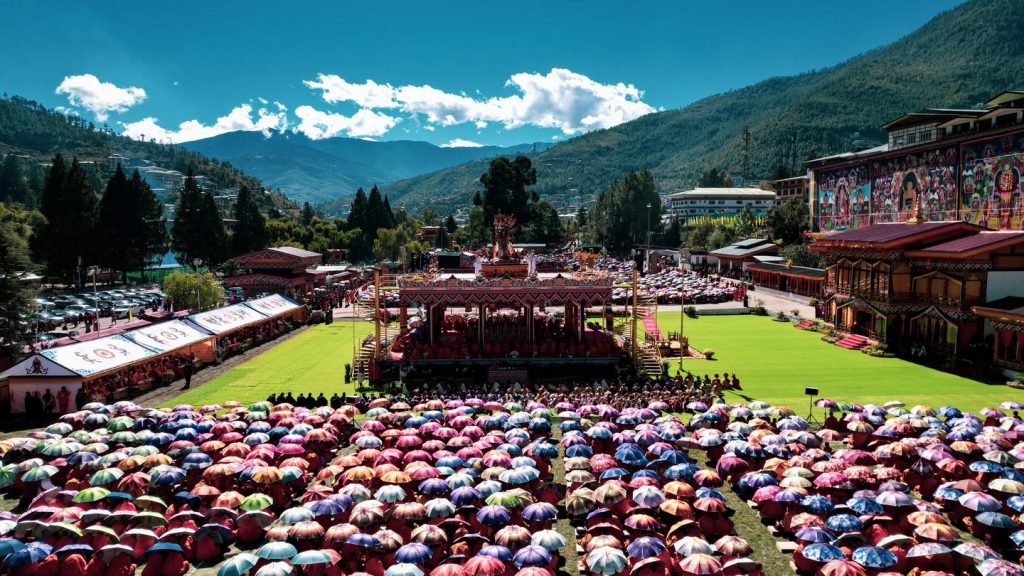
As 100,000 pilgrims knelt in silence at Changlimithang Stadium in Thimphu, last November, Bhutan’s chief abbot, the seventieth Je Khenpo, poured sacred water over the fifth king of Bhutan, HM Jigme Khesar Namgyel Wangchuck. This was during the final day of the Kalachakra empowerment, which took place from 12–14 November, out of a Global Peace Prayer Festival that ran from 4–19 November 2025.
What looked like a purely religious ritual was actually the closing chapter of a 300-year ideological saga that reshaped empires, fuelled the Great Game, and continues to define Buddhist politics across Asia today.
This wasn’t just another Buddhist initiation. The 14-day Global Peace Prayer Festival marked the first time in modern history that a sovereign nation has publicly embodied the ancient ideal of Shambhala—the mythic Buddhist golden age—without the imperial ambition that once turned this peaceful prophecy into a weapon of mass conquest.
For three centuries, Shambhala has been everything from a Qing emperor’s justification for genocide to a New Age fantasy of alien utopias. Now Bhutan has reclaimed it as something entirely new.
The story of Shambhala follows three distinct, overlapping phases. It began as an esoteric doctrine reserved for advanced Gelug tantric practitioners: a hidden kingdom where the pure Kalachakra teachings would be preserved until the world’s darkest hour. It was then weaponized into the ideological foundation of the Qing Empire’s expansion into Central Asia. Finally, after the empire’s collapse, it split into two competing visions: a stateless global spiritual ideal carried into exile by the Dalai Lama, and a commercialized New Age myth stripped of all religious meaning.
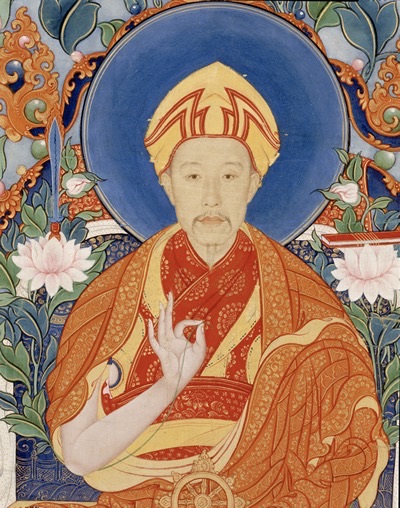
Formerly kept in the Forbidden City, Chengde, and Yonghe Palace. Depicts Qianlong wearing a pandita hat, holding the Kalachakra dharma seal and a dharma wheel. Revered as the Great Emperor Manjushri (a divine embodiment of the ruler within Tibetan Buddhism, linked to Kalachakra belief)
The saga began with the Yongzheng Emperor (1723–35), a secret tantric practitioner who styled himself Lord of Dharma but never embraced Shambhala or the Kalachakra. His son Qianlong changed everything. Receiving three full Kalachakra empowerments, he identified the Dzungar basin (modern northern Xinjiang) as the sacred gateway to Shambhala and framed his brutal 1755–1757 conquest of the Dzungars as a holy war to purify the path to the golden age.
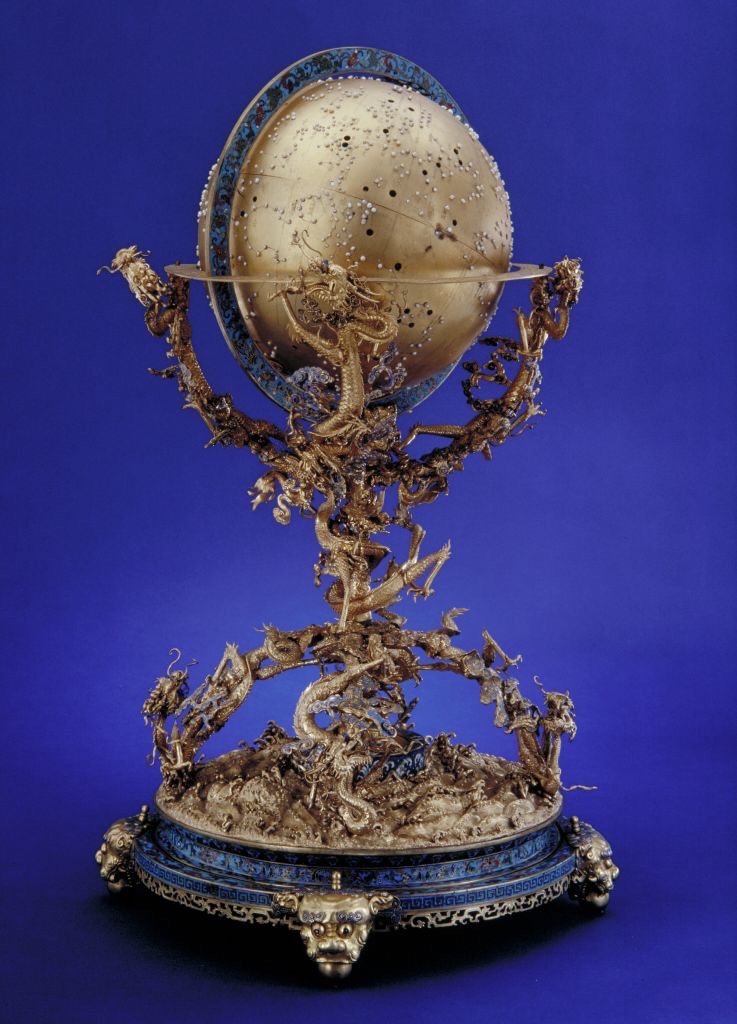
Made in 1744 by the Imperial Workshop. Pure gold, inlaid with pearls representing constellations. Corresponds to the Kalachakra cosmological system
For the next 150 years, Shambhala fuelled rebellions, imperial rivalries, and the Great Game between Britain and Russia, as both powers tried to position their rulers as the prophesied Kalki king. After the Qing collapsed in 1911 and the establishment of the People’s Republic in 1949, the Dalai Lama carried the tradition into exile, reimagining Shambhala as a global spiritual ideal unbound by territory. Meanwhile, New Age authors turned it into a fantasy of ascended masters and alien civilizations.
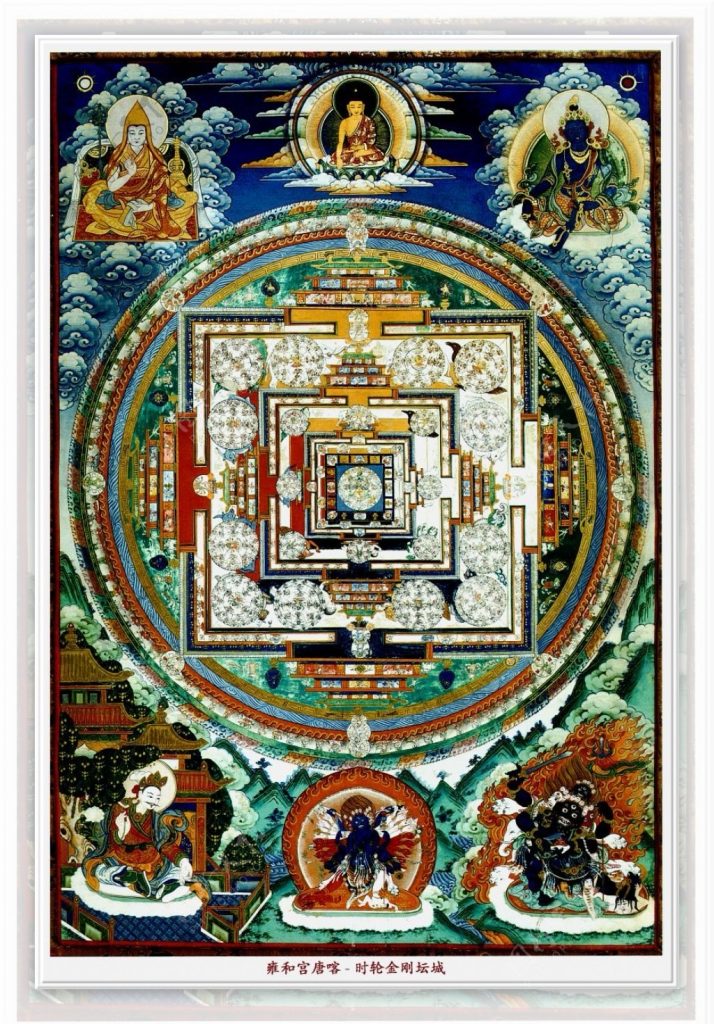
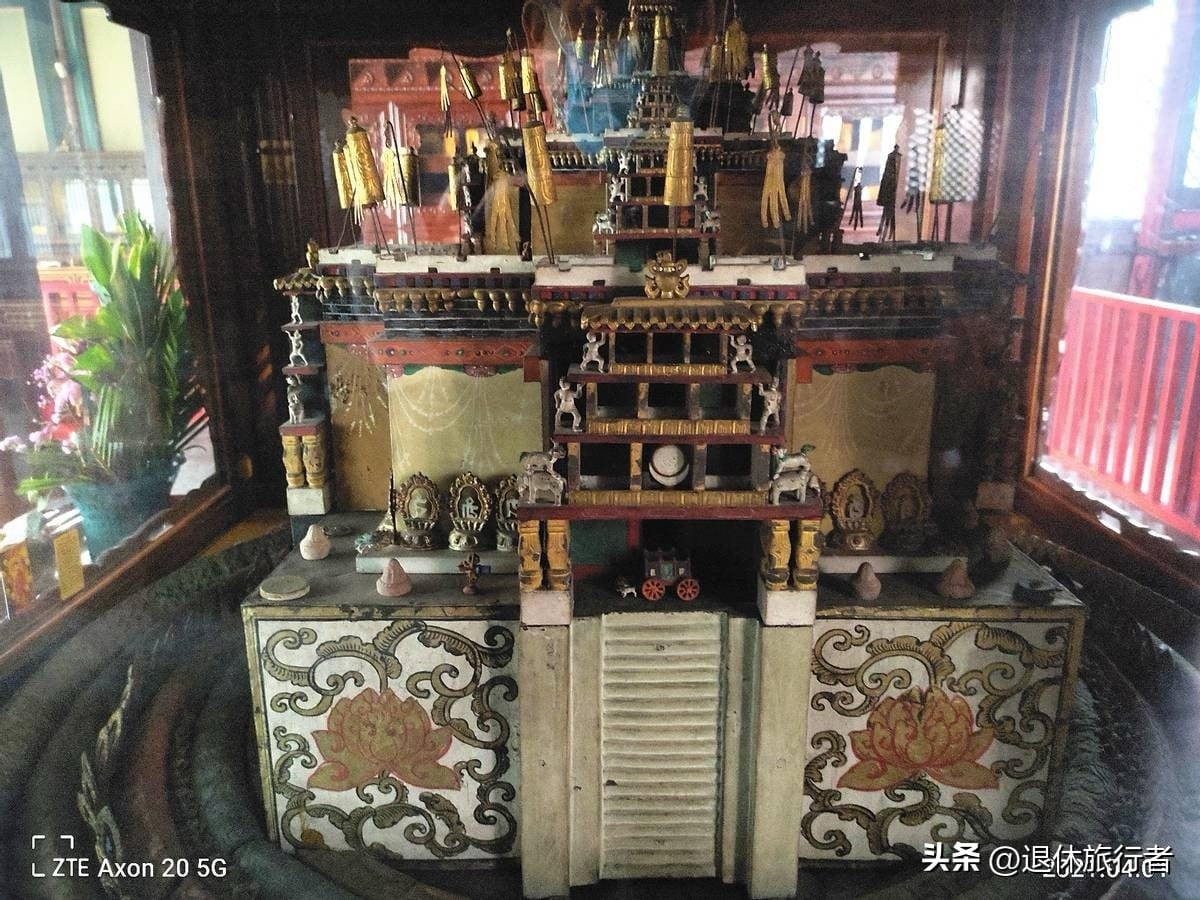
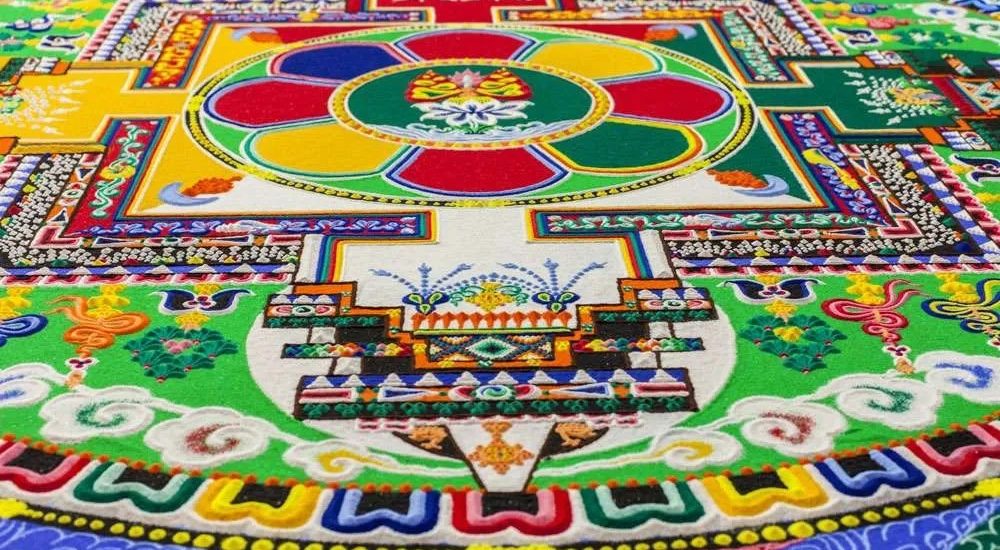
As the monks swept away the intricate sand mandala at the ceremony’s end—an ancient reminder of impermanence—they were also sweeping away the last traces of Qianlong’s imperial Shambhala. What remains is something far more radical: a small, peaceful kingdom proving that the Dharma king ideal can exist without conquest, and that Shambhala doesn’t have to be a myth or an empire. It can be a real place, where happiness matters more than power.
Related posts from Tea House
Signs of Shambhala: Unity of Purpose and Aspiration in Bhutan’s Central Monastic Body
Sights of Shambhala: The Global Peace Prayer Festival Begins in Thimphu
Global Peace Prayer and Kalachakra Empowerment
“Sign of Shambhala”—The Revolution of Bhutan’s Global Peace Prayer Festival