
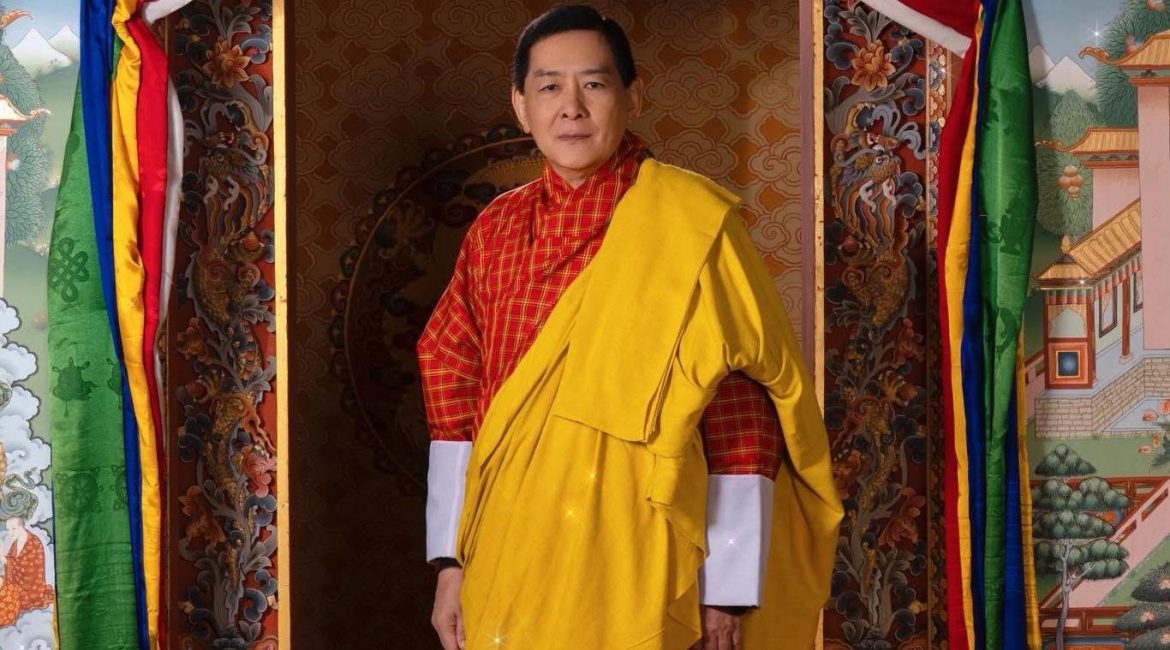
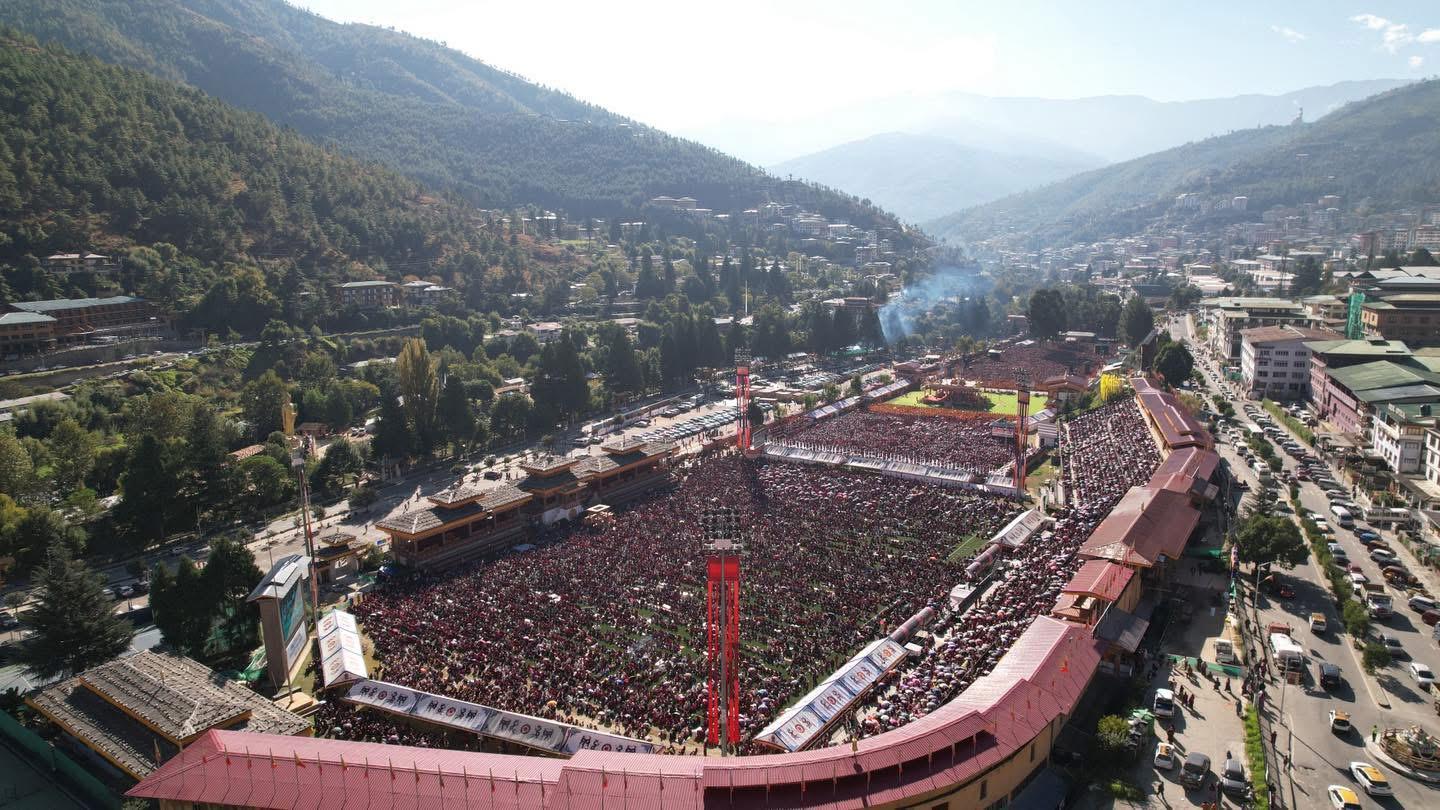
The Global Peace Prayer Festival, running in Thimphu from 4–19 November, coincides with the 70th birthday anniversary of the most transformative monarch in Bhutanese history. HM Jigme Singye Wangchuck (b. 11 November 1955) reigned from 1972 to 2006, and was the first king to voluntarily abdicate to make way for his son, HM Jigme Khesar Namgyel Wangchuck. His “king emeritus” status was part of a carefully thought-out, interconnected plan to steward his beloved kingdom into the modern world and preserve the inspiring yet fragile ecosystem of heritage, culture, and values embodied by the small but great population of the Himalayan kingdom.
This is a theme that constantly emerges in the king’s 60th birthday anniversary book, titled: The Bodhisattva King: His Majesty Jigme Singye Wangchuck of Bhutan (2015). In this most detailed and comprehensive book about the fourth monarch, Tshering Tashi and Thierry Mathou highlighted exactly why HM is so revered in his nation. “The measure of a king’s worth is gauged by his actions as a monarch and the effects of his reign on the history of his nation,” write the authors (92). This passage, among many others, has been quoted in various outlets such as print media and websites over the decade since 2015. As Bhutan faces ever more complex and interconnected issues on a global scale, the plans laid down by His Majesty in the 20th century and the first five years of the 21st, culminating in his voluntary abdication, look preternaturally wise and uniquely suited for Bhutan’s sense of nationhood.
The monarch emeritus is celebrated for a staggering series of modernizing accomplishments. Through a series of essays by different authors, The Bodhisattva King looks back on his entire life: from his birth, to his enthronement as the world’s youngest monarch at 16, and then the pioneer of a democratic nation and the place of a constitutional monarchy within it. He was the inventor of Gross National Happiness (GNH): the country’s current ideal of sustainable living that preserves Bhutan’s unique Himalayan environment and its people’s Buddhist lifestyle.
In an essay titled “The Buddhist Warrior,” Tsering Tashi highlights how this aspiration was tested to its most extreme limits when Bhutan fought a two-day war from 15–16 December 2003 with its much larger neighbor India. His Majesty deployed what could be called a Buddhist strategy: a fearless and decisive deployment of motivated small armed force against Indian insurgents that refused to leave sovereign Bhutanese land. Codenamed “Hotel Mike,” the king told his men:
We are like a weak boxer entering a ring to fight a strong opponent. We have to be the first one to strike and we have to do it with all our might, then pray that the monks had done their job too. [In support of the negotiations and the campaign, our monk body had chanted many prayers for a peaceful outcome.] If not then it would be the beginning of the end of the state of Bhutan.
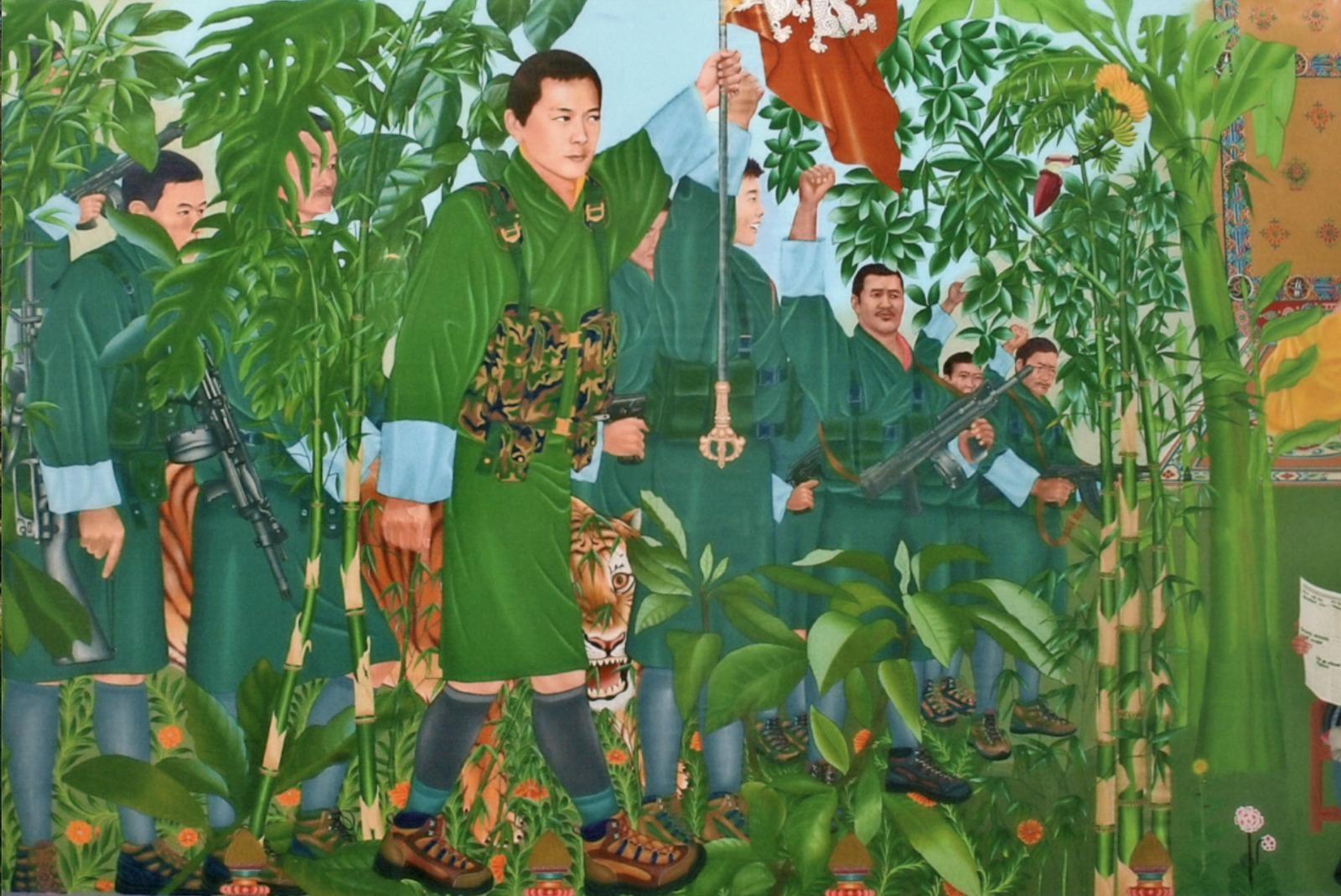
But after a surprise mortar barrage by Bhutanese artillery, the vanguard of the Bhutanese armed forces swept into the camps of the militants, and according to Tsering Tashi, who served as a volunteer during the conflict, “found most of them empty. The militants had deserted their camps in panic—as intended by the King’s strategy.” Those that had not been encircled fled to the regions of Assam, Meghalaya and Bangladesh. Yet the overall sentiment felt by His Majesty was one of somber regret, and an urge to cultivate genuine friendships and facilitate healing. There was no wish of perdition upon the enemy, only compassion and kindness in the wake of victory.
It was one of the most testing two days of His Majesty’s reign, a short period that nevertheless could have spelled the unspeakable for Bhutan. Yet it is genuinely doubtful if he ever speaks of it nowadays. In fact, he Majesty does not speak of his achievements at all, and is known to prefer to devote whatever tributes or attention offered to him to his greatest love: his kingdom’s people. Sources close to the royal household affirm that he has an effectively singular focus on maximizing the Himalayan kingdom’s position in the complex and competitive world of today.
I believe that His Majesty saw, and still sees Bhutan for what it was and is, with clear eyes unclouded by sentiment, even if always filled with deep love and devotion. Bhutan is a country quite literally unlike any other in the world, with characteristics that would make any statesman or strategist sweat: a tiny population, sandwiched between the two Asian colossi of China and India, and with an economy that needs to pivot without losing its cultural identity and environment. There is an underlying sense of fragility about Bhutan that His Majesty always attended to, like a loving father to an uncertain child.
Yet he was able to turn the qualities of that fragility into a veritable dzong (fortress) of advantages that other countries can only envy: its precious ecosystem becomes a resource to protect, its diplomats shrewdly balance its neighbors’ interests by being the indispensable borderland of both, and its Buddhist heritage becomes a source of wisdom that informs all aspects of statecraft.
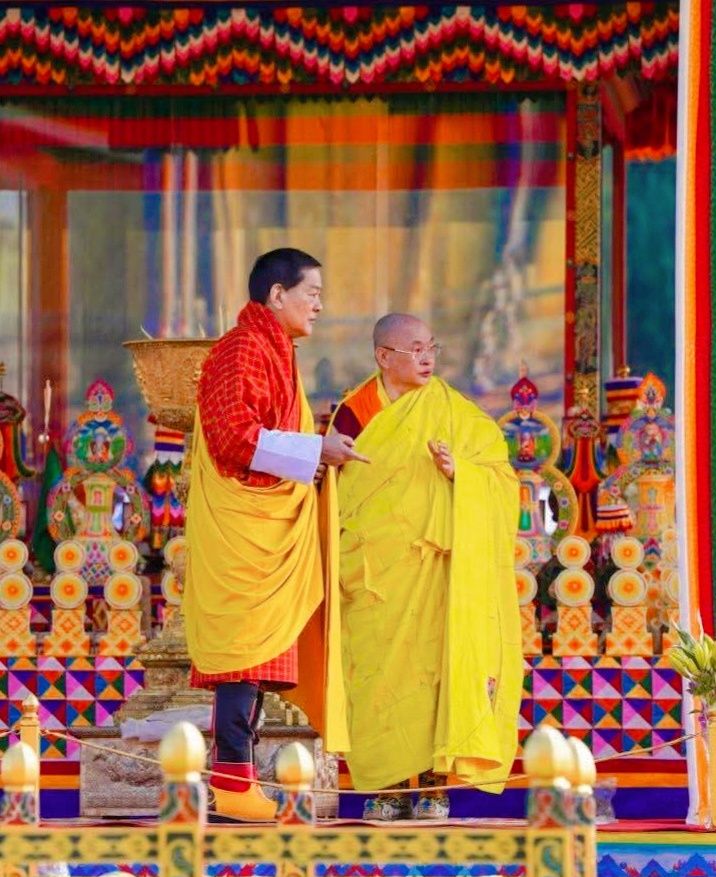
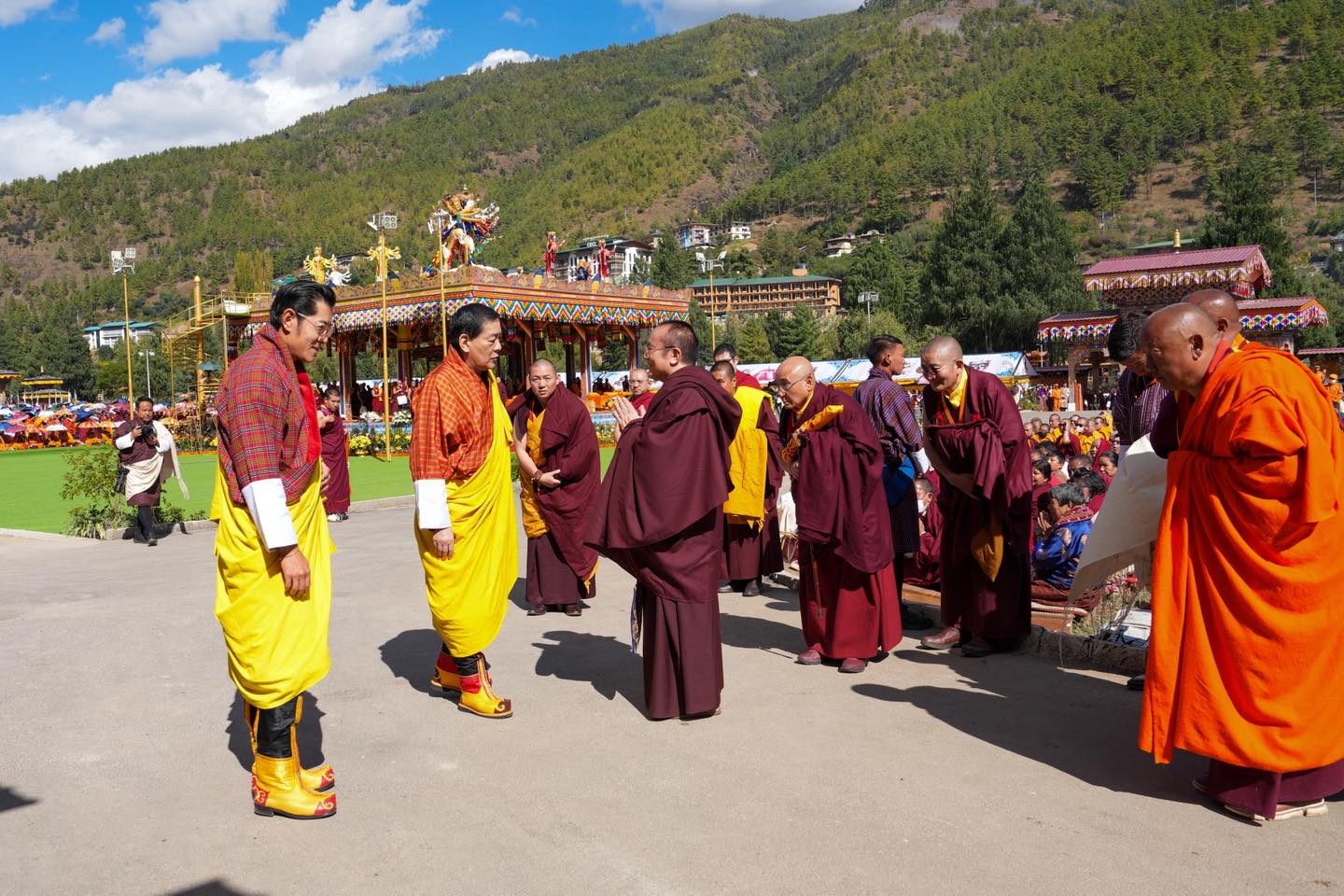
His Majesty was not only the cradle of the state, as his son is now. He is an emissary both protecting and protected by the Three Treasures. He is the benchmark by which all future Bhutanese leaders, be they royal, parliamentarian, religious (as in the Central Monastic Body), or military will measure themselves against. Most will fall short. Others that can be like him as much as possible, will be celebrated and also favored by the Three Treasures.
I would like to offer this article as a tribute to His Majesty Jigme Singye Wangchuck, the fourth Druk Gyalpo, on the day of his 70th birthday anniversary. To his son His Majesty Jigme Khesar Namgyel Wangchuck, the fifth Druk Gyalpo. And to the people of the Kingdom of Bhutan.
Related news reports from BDG
Bhutan Plans Historic Bhikshuni Ordination as Global Peace Prayer Festival Begins
Bhutan’s Laytshog Lopen Sangay Dorji Promotes Events of Global Peace Prayer Festival in November
Government of Bhutan to Host Landmark Global Peace Prayer Festival in November
Related features from BDG
Princess Ashi Kesang Choden T. Discusses Monastic Conservation
H.E. Sangay Dorji’s Vision for Global Buddhadharma: Bhutan Steers Buddhism Toward the Future
Preserving Bhutan’s Cultural Heritage: An Interview with Princess Ashi Kesang Choden T. Wangchuck
Related blog posts from BDG Tea House
Signs of Shambhala: Unity of Purpose and Aspiration in Bhutan’s Central Monastic Body
Sights of Shambhala: The Global Peace Prayer Festival Begins in Thimphu
Central Monastic Body Reaches New Milestones as Global Peace Prayer Festival Draws Near
“Sign of Shambhala”—The Revolution of Bhutan’s Global Peace Prayer Festival
Related videos from BDG on YouTube
The Global Peace Prayer Festival