
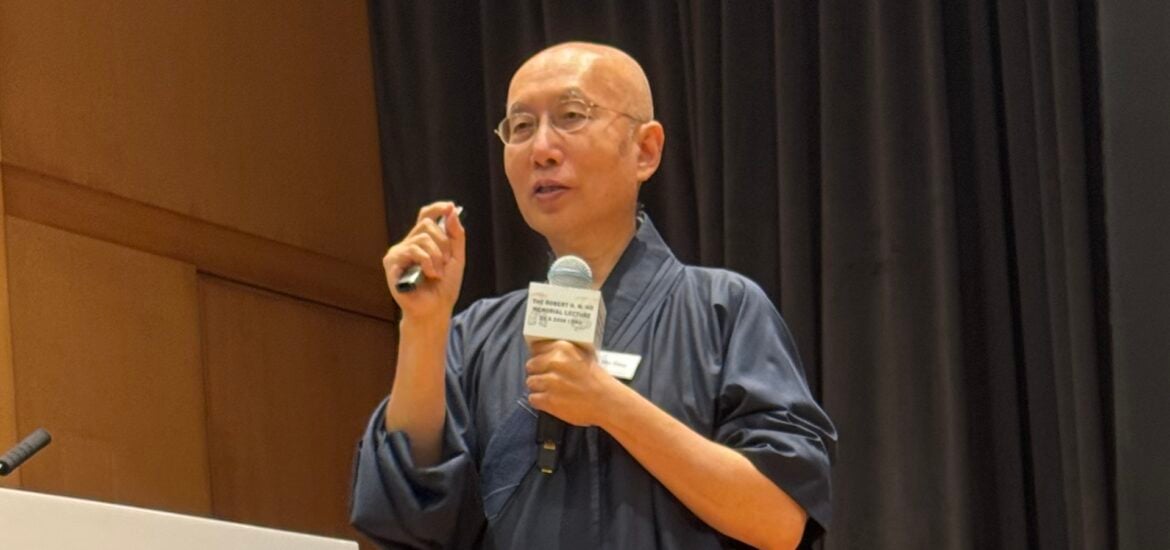
On 22 August, a new named lecture series was launched by the charitable organization Tung Lin Kok Yuen at The University of Hong Kong (HKU). The Robert H. N. Ho Memorial Lecture is an annual lecture that is given by a scholar of estimable merit and whose research constitutes groundbreaking significance. The inaugural speaker of this series was Ven. Hin Hung, Senior Fellow of the Centre for Buddhist Studies (CBS) at HKU, who re-examined the practice of mindfulness breathing from a novel perspective that integrated perspectives from early Buddhist texts (including the Ānāpānasati Sutta) about awareness and neuroscience.
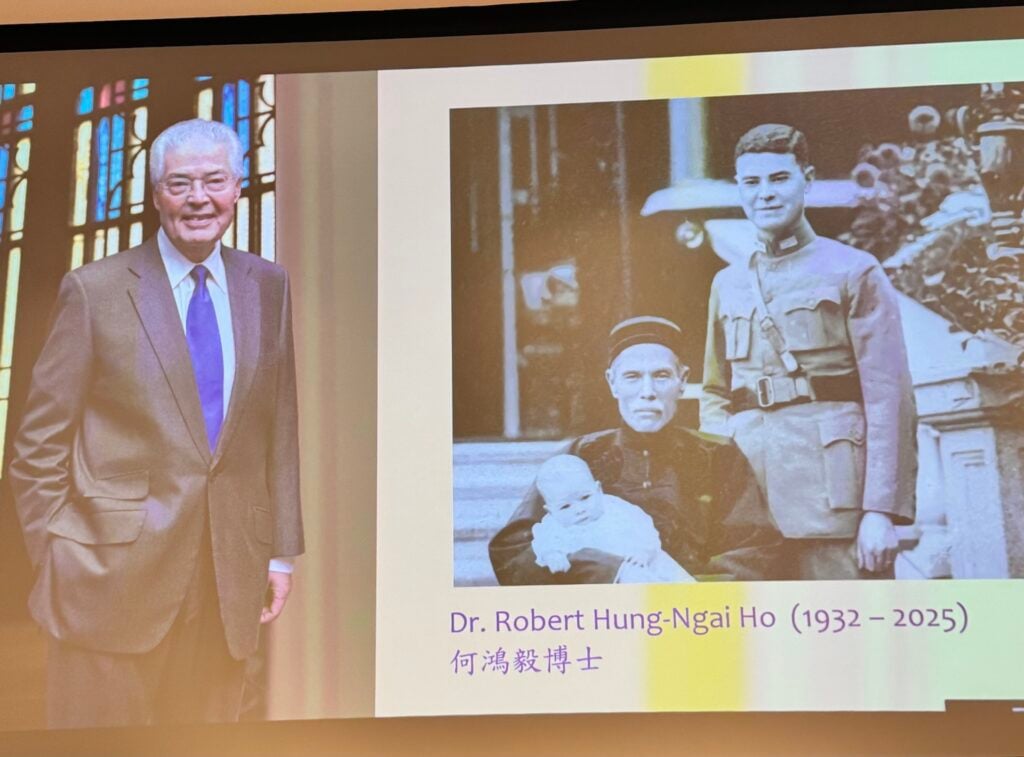
The Robert H. N. Ho Memorial Lecture is aptly named after Mr. Robert H. N. Ho, who was Honorary Chairman of Tung Lin Kok Yuen Hong Kong (TLKY) and founder of Tung Lin Kok Yuen, Canada Society (TLKYCS). In an opening speech, Prof. Lee Chack-fan, GBS, chairman of TLKY, highlighted the significance of Mr. Ho’s life as that of a seminal philanthropist for contemporary Buddhism. His outstanding contributions to Buddhist education, culture, and philanthropy included the establishment of many academic centers for Buddhist Studies around the world, which Prof. Lee highlighted in his opening remarks. He was also farsighted in his union of Buddhist interests and digital media, founding the Buddhistdoor network of websites in 1995. Ven. Hin Hung’s lecture, held at Rayson Huang Theatre and attended by a full house, unfolded in the backdrop of this reverential atmosphere.
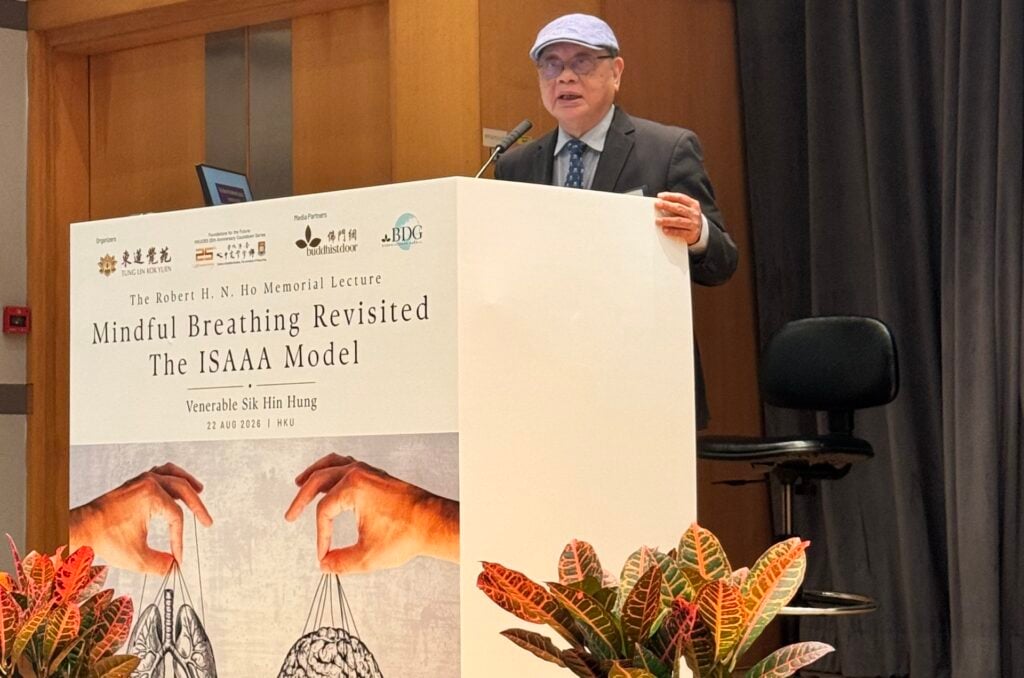
Ven. Hin Hung highlighted key findings in a recent paper titled, “Interoceptive Mindful Breathing: The ISAAA Model for Attentional–Autonomic Alignment.” It was published in Springer Nature’s prestigious Mindfulness journal. Ven. Hin Hung introduced the Interoceptive Sensitivity for Attentional–Autonomic Alignment (ISAAA) model as a structured, neurophysiology-informed framework that could address a number of difficulties meditators experience when trying to structure their progress into samadhi.
Ven. Hin Hung and his research team, consisting of Gao Junling and Sabin Maharjan, propose a a fresh way to understand mindful breathing, describing it as a two-step process that begins with simply noticing the breath before gently learning to guide it, separating concentration itself from a focus on the breath (Ven. Hin Hung emphasizes historical and new understandings of meditating on what ancient scriptures designate “in front,” while also likening the method to setting up a telescope). This approach, called the ISAAA model, suggests that mindfulness starts by observing natural breathing without trying to control it. Only after developing a fine-tuned awareness of bodily sensations and attention should practitioners introduce subtle adjustments to their breathing.
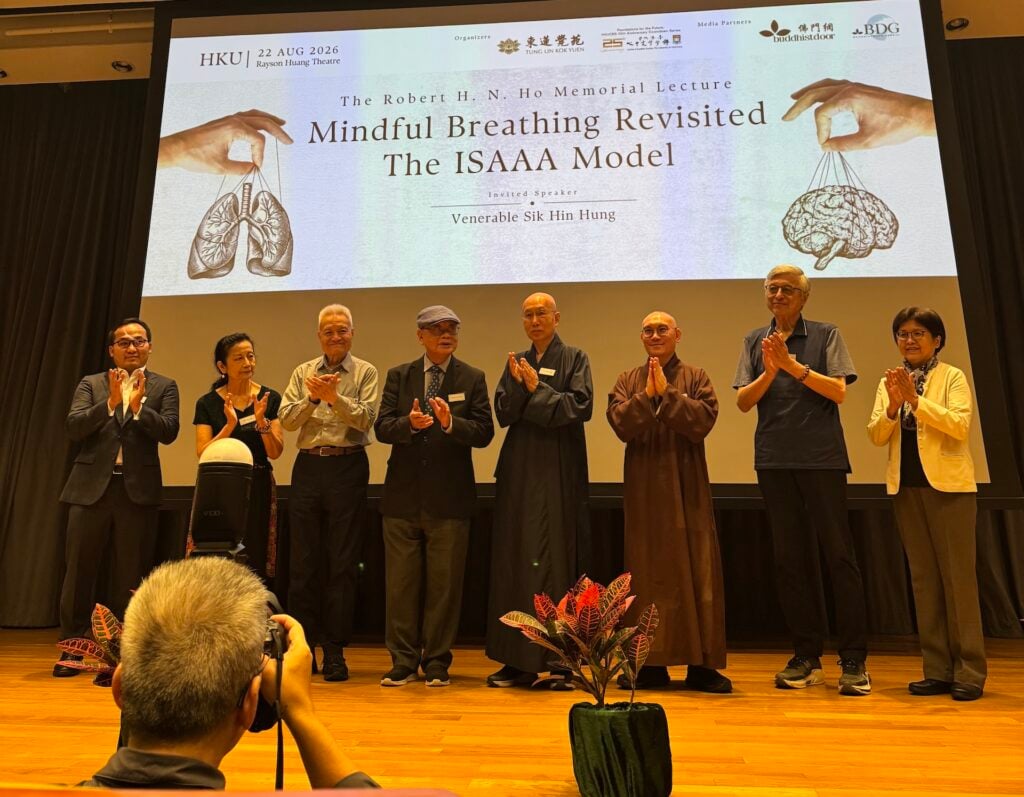
According to the study of Ven. Hin Hung’s team, jumping too quickly into deliberate control may actually disrupt the body’s natural rhythms, leading to a mismatch between attention and the automatic processes that regulate breathing. The researchers have set out four clear predictions to test this idea in future clinical trials.
By combining traditional Buddhist meditation techniques with modern brain science, the ISAAA model offers a practical framework for teaching mindful breathing. Ven. Hin Hung noted in his lecture how it could help explain how conscious attention and the body’s automatic systems gradually come into harmony. This neurophysiological perspective could make mindfulness training more effective—especially for beginners learning to balance effort and relaxation in their practice.
See more
Interoceptive Mindful Breathing: The ISAAA Model for Attentional–Autonomic Alignment