
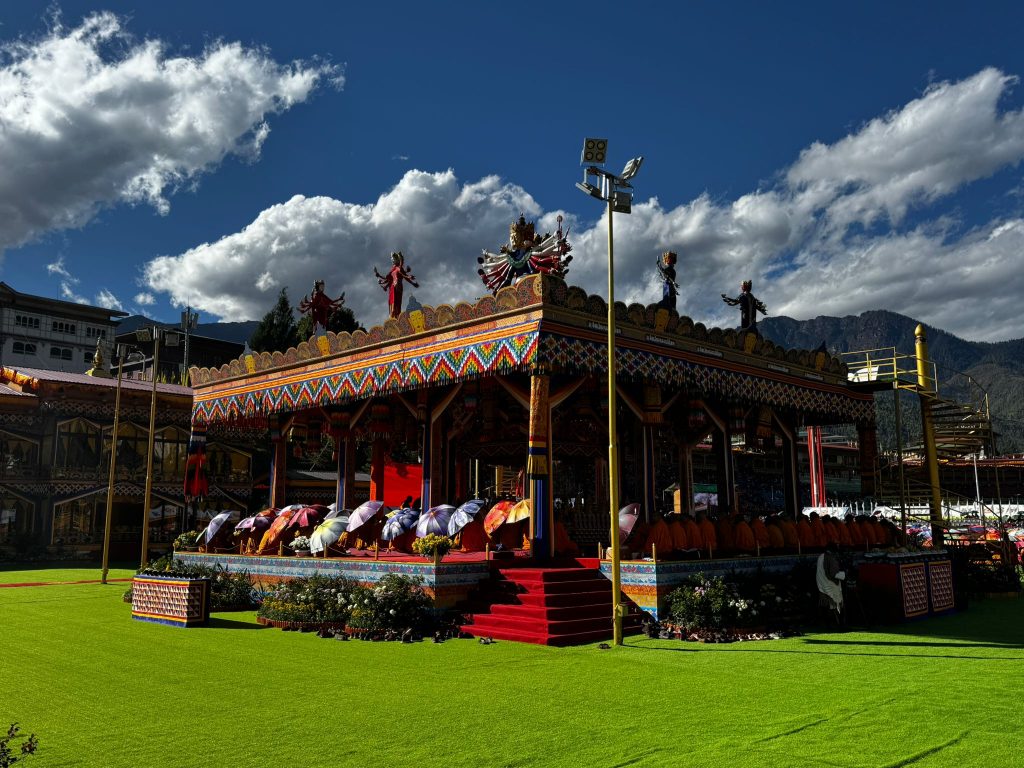
The Global Peace Prayer Festival from 4–19 November 2025 in Thimphu was hailed by its Bhutanese hosts and foreign observers as a milestone event and profound success. Much has been published about how the Festival brought together Vajrayana Buddhists from around the world to celebrate HM the Fourth King’s 70th birthday, along with the Festival’s other rich events. One of the most ambitious aspects of the Festival was the Kalachakra empowerment ceremony, which took place at Changlimithang Stadium from 12–14 November and was bestowed by His Holiness the Je Khenpo. The majestic square platform on which the Kalachakra empowerment was conducted was an engineering feat of considerable mastery and beauty, with two stories (the lower level being for Buddhist masters and the upper level offering expansive views of the field and stadium) and rotating Kalachakra images on the upper level.
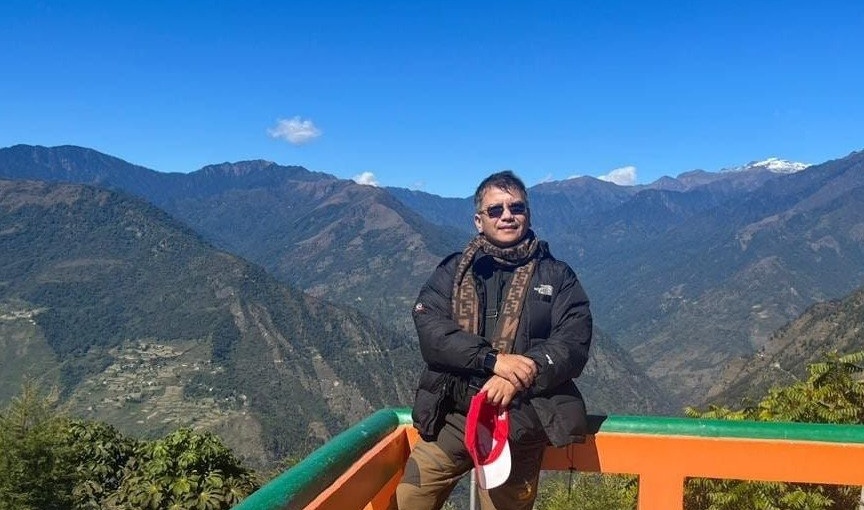
Based in the Indian state of Assam, Dr. Neel Konwar has advised private and government institutions as a professional trainer and mentor, working extensively in northeast India and Bhutan. He is a design specialist who advised on the construction of the Kalachakra platform. On one of the nights of the Festival, we met atop the platform, looking down on the grass and dispersing crowds and across to the royal pavilion, to discuss his team’s part in its design.
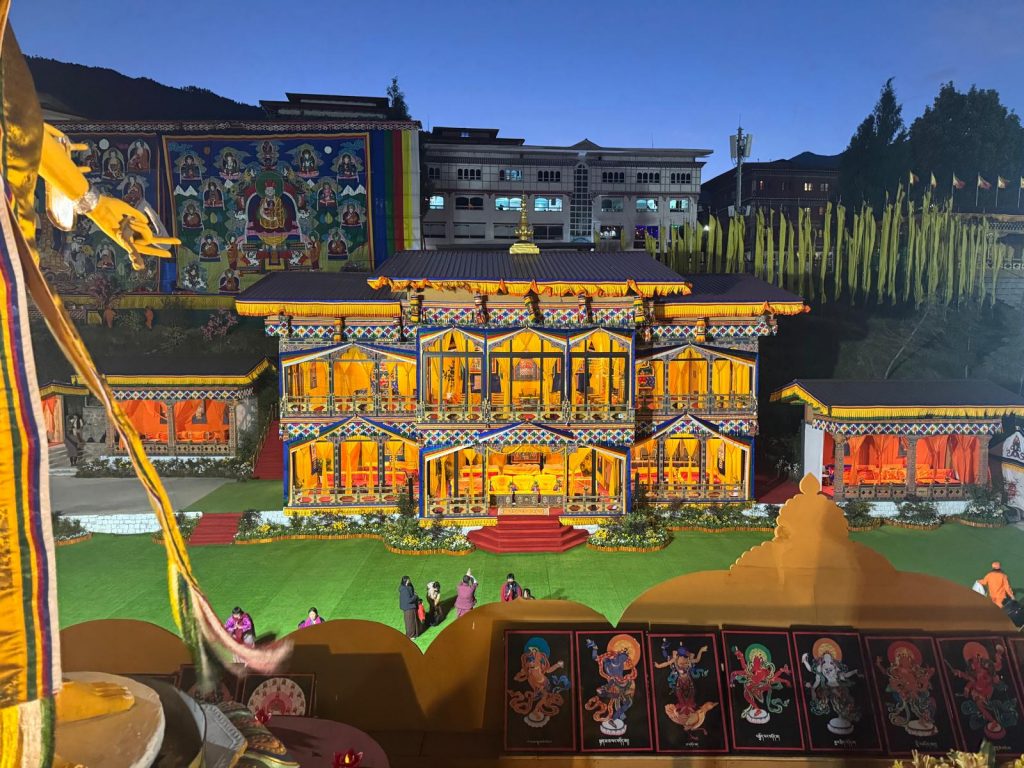
“It was an extraordinary experience,” he shared above the billowing wind. “The platform was made out of high-quality wood, but that means only a limited number of people can stand up here on the second level. I also had to make sure the carvings and layout corresponded to Bhutanese aesthetics as per traditional rituals around Kalachakra practice.”
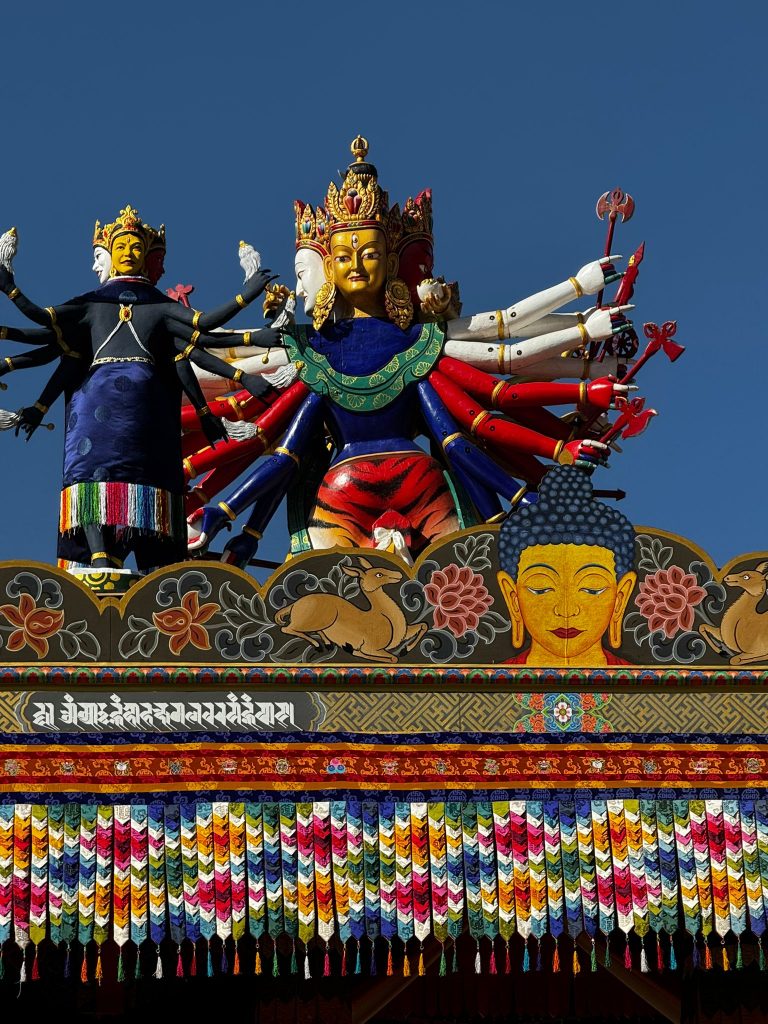
But the platform needed statues of Kalachakra, the design of which was not Konwar’s specialty. “We also designed eight of the statues, while a Nepalese artist took up the main sculpture. My colleague Indrani Laskar and I looked into the Kalachakra deities and corresponding statues, and from then on it was a three-month project. There were many challenges and roadblocks, but yet we managed to do it. On 11 August, we got a call from Dasho Karma Ura, President for the Center for Bhutan and GNH Studies, and he asked us to look for an artist from Assam,” he said. “After looking at who we could call upon, we approached Biju Kumar Das, a freelance sculptor from Guwahati. He is an acclaimed artist who has done a lot of work for the government, though he is not always involved with Buddhist art. He designed and created all eight deities for the Kalachakra initiation.”
The logistics of the GPPF are also noteworthy: they were far from simple, and the execution of every aspect required painstaking planning and cooperation among bright minds. Not only did Konwar need to bring Kumar Das to Bhutan on short notice; Kumar Das also needed to quickly absorb Dr. Ura’s instructions. “Dasho had to explain everything! What his team needed from Kumar Das, what the ideal outcome was to be, the art style of the Kalachakra deities, the colors, the dimensions. . . all of it. I think he really embedded as much as he could in his mind.”
There were only three months for Konwar’s team and Kumar Das to capture the essence of Kalachakra art and create the various deities’ statues. “There was a great deal of research into Buddhist aesthetics, art history, and so on. And, of course, the paperwork to get the project finished on time.” As a participant of this Indo-Bhutanese collective or team, Konwar had to coordinate with Dasho Ura’s needs throughout the three months. “It was a bit bumpy, but then it’s a true blessing that we were chosen to do this work. It’s certainly part of our accumulation of good merit.”
Konwar looks forward to working on further projects—especially since the Bhutanese government has plans to build big. “Bhutan and India enjoy a close brotherhood, and we have a long history of shared history and future goals together, especially with the Gelephu Mindfulness City initiative coming up. We are very grateful to His Majesty the Fifth King, and His Majesty the Great Fourth. We are grateful to the Central Monastic Body, and the whole country and its people. And we hope we have continued friendship with all our Buddhist brothers and sisters from across the world.”
Related features from BDG
Related news from BDG
Buddhist Women: His Holiness the Je Khenpo Ordains 265 Buddhist Nuns from 14 Countries During Bhutan’s Global Peace Prayer Festival
Sacred Relics of the Buddha Travel from India to Bhutan for the Global Peace Prayer Festival
Related blog posts from BDG